Does Pilates Tone Your Body?
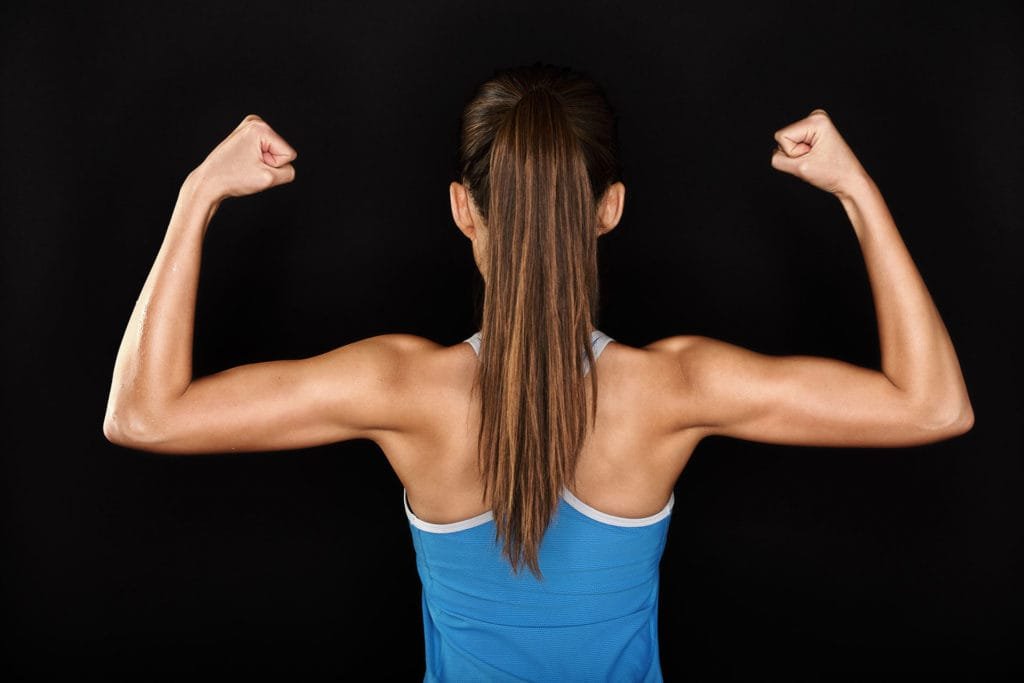
We’re often asked, ‘Does Pilates tone your body?’. If your primary goal is to tone your body, Pilates can certainly be an important part of your exercise and health routine. Here, we explore what toning actually means, what factors affect how toned we look and how Pilates can assist in reaching your goal of looking leaner.
Will Pilates 'Tone' My Body?
1. Pilates Can Enhance Muscle Definition Through Resistance and Eccentric Training
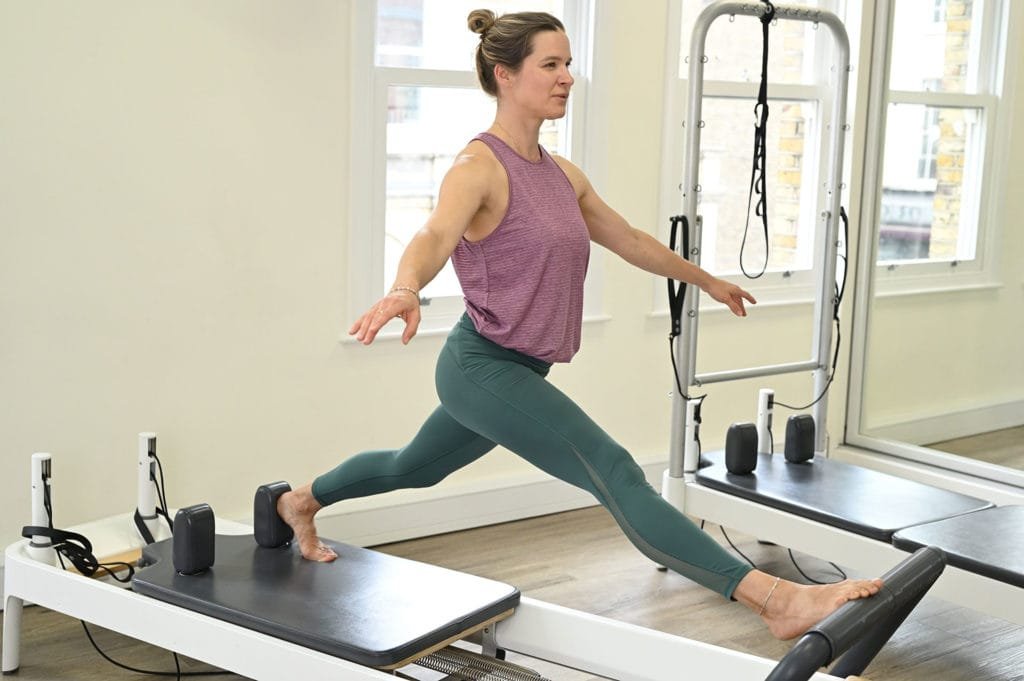
While traditional Pilates doesn't use heavy weights, it incorporates resistance—especially with equipment like the Reformer—and focuses on eccentric muscle contractions (lengthening under tension), both of which can strengthen muscles. This contributes to a firmer, more defined appearance even without significantly increasing muscle bulk.
2. Pilates Improves Posture and Body Awareness, Enhancing the Appearance of a Toned Physique
Pilates emphasizes alignment, control, and posture. As posture improves, the body naturally appears leaner and more lifted. Better muscle engagement and movement efficiency may give the impression of being more “toned,” even without significant fat loss or hypertrophy.
3. “Toning” Results Depend on Combined Factors Including Fat Loss and Muscle Development
Visible muscle tone comes from both building lean muscle and reducing body fat. Pilates alone may not be the most efficient path to fat loss, but it prepares the body for higher-intensity exercise and supports better movement patterns. For optimal toning, Pilates works best alongside cardiovascular exercise and dietary changes.
What Does 'Toning' Actually Mean?
So what do we mean by toned? The term ‘toned’ can have different meanings for different people. Some people use it to mean looking long and lean whilst others use it to mean having good muscle definition. We might also think of it as having a firmer body rather than a softer one.
In the world of medicine, physiology and sports science there is actually no such term as ‘toned’ or ‘toning’. There is the concept of a muscle having a resting ‘tone’ but this has nothing to do with how you look or how strong you are. Tone refers to the amount of tension in a muscle at rest. Resting muscle tone is a spectrum and very high or very low muscle tone could be problematic as in the medical world it could indicate a problem with the brain and nervous system. This is quite different to the concept of tone when we are thinking about exercise and aesthetics.
The term “toning” as applied to exercise was likely introduced to the fitness world as a marketing term. Its purpose? To encourage women to do strength training during decades when the concept of gaining muscle bulk was considered unfeminine and therefore off putting to women. Thankfully, times are changing and strength training is becoming popular for women as people understand the benefits. In addition, not all types of strength training lead to gains in muscle bulk so you can train in a way that suits your goals.
If we think of being ‘toned’ as meaning that someone has good muscle definition then we want to know how to get muscle definition. Muscle definition results from two things - both having an increase in lean muscle tissue and having low body fat, so that you can see the contours of the muscles.
In order to improve muscle definition, it would seem the best route to muscle definition is through strength training and through fat loss, which would require dietary changes as well as cardiovascular exercise. An important fact to acknowledge is that you can’t lose fat from selected body parts. If you lose body fat, you will lose it all over.
Take note though - not all fat is bad. We need body fat for vital biological processes and to provide a protective layer around our most precious organs. Women naturally have more body fat than men. A healthy percentage of body fat is not less than 14% for women and not less than 10% for men.
Is Pilates Good For Toning?
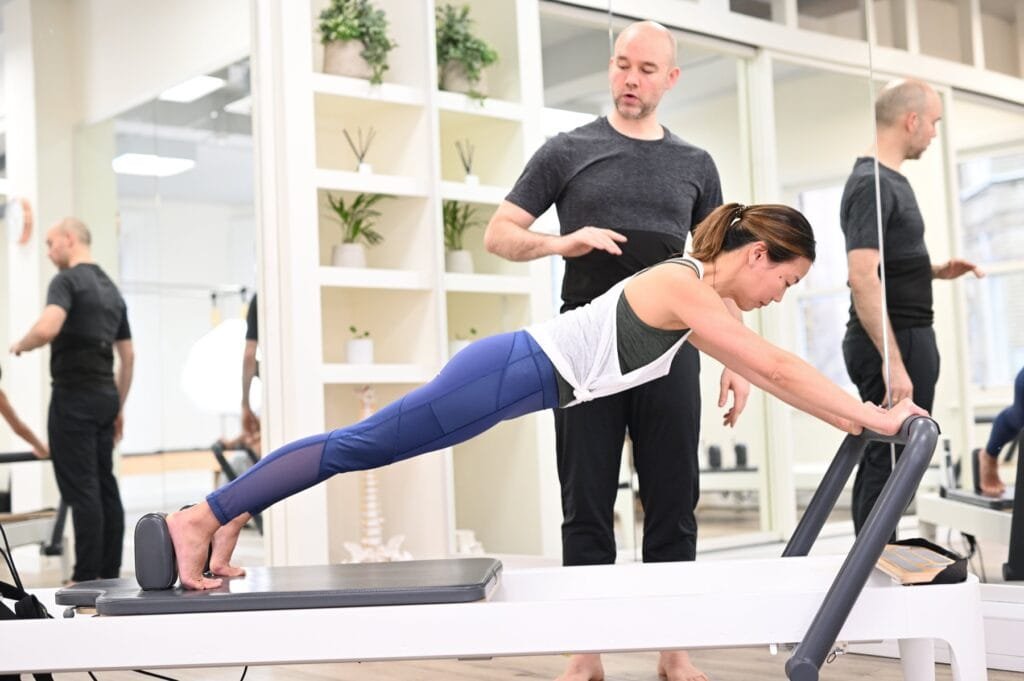
Whilst Pilates theoretically is not the quickest route to increasing muscle mass, anecdotally many people do feel that they look more ‘toned’ when they do Pilates. There are a few reasons why this may be.
Firstly, whilst Pilates does not use heavy loads there are many exercises which utilise resistance particularly if working with the large Pilates equipment. It is generally accepted in strength and conditioning circles that heavy loads are necessary for increasing muscle mass but there is some research which suggests lighter loads may also lead to an increase in muscle tissue and strength.
Performing Pilates regularly means that you are repeatedly using your muscles and the more that you contract your muscles, the better your brain gets at telling them to move. This is known as neuromuscular adaptation. Firing up your muscles in this way is likely to make you feel different and you may experience this as a feeling of being stronger.
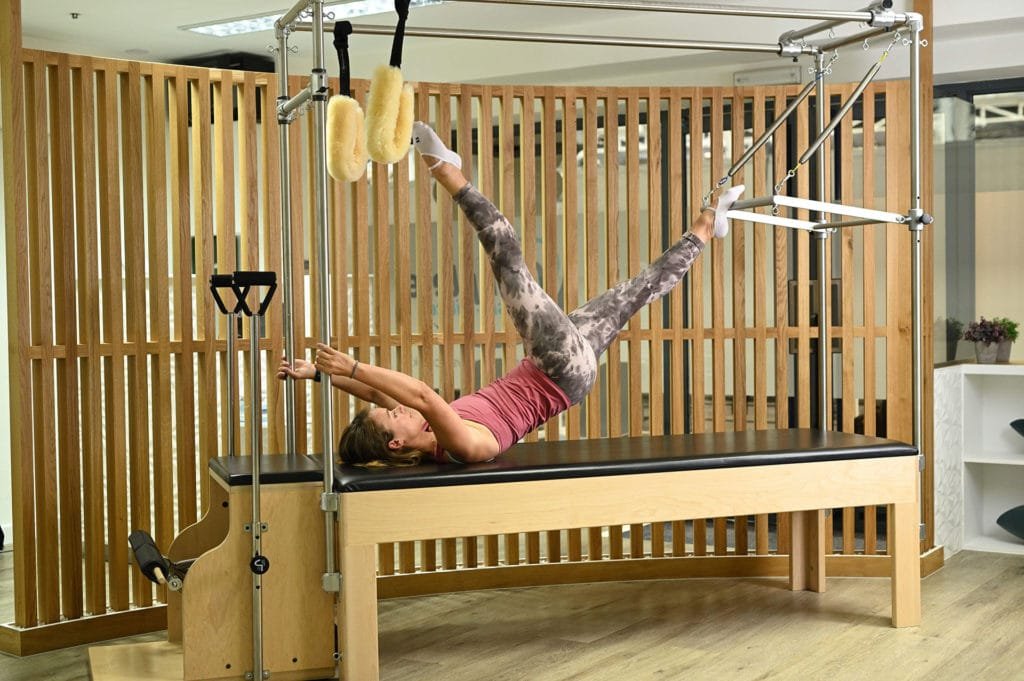
If you are doing Pilates with equipment, such as the Reformer or Trapeze Table, you may often be working the muscles in a way that they are lengthening under tension. This is in contrast to contracting and shortening the muscles. This lengthening work (known as ‘eccentric’ training) encourages long and strong muscles. This may help to strengthen without adding muscle bulk.
Another way that Pilates may help you to have the appearance of becoming more toned is by improving the way that you carry yourself. As you become more aware of your body you may naturally alter your posture to look longer and leaner. For example, it is common for people to stand in a resting position with their lower back arched, which means that their stomach protrudes. Standing in a way that reduces the arch of the lower back prevents the stomach from sticking out.
What Are The Best Pilates Moves To Tone Your Muscles?
So, again, there aren’t any if you look at this medically! Muscle definition occurs as a result of increasing the amount of muscle mass relative to the amount of body fat you have.
In order to achieve muscle definition, the fastest way would be to get down to the gym and lift heavy weights in order to stimulate the necessary changes for muscle growth - and of course alter your diet.
We can’t promise these will ‘tone’ you but here are some great exercises which challenge your muscle strength.
Pilates Press Up
The focus on this version of a press up is to keep the elbows close to the sides. This is super challenging for your triceps as it means that you use your chest muscles less.
Side Plank With Leg Lift
This will work you hard through the supporting shoulder, side of the trunk and also challenge your glutes - especially with the leg lift.
Hundreds
Forget sit ups - try Hundreds for a serious abdominal challenge.
Leg Pull (Supine)
This is a great exercise for working hamstrings, glutes, back muscles and triceps, all at once. For an added challenge, see if you can lift one leg.
Does Pilates Help You To Lose Weight?
So, does Pilates help you to lose weight? The reality is, doing Pilates on its own will not be sufficient exercise to lose weight. If you are after the most direct strategy to losing weight a combination of diet and exercise is needed. In choosing exercise, activities that increase your heart rate and get you out of breath are more effective at helping weight loss.
If traditional Pilates exercises are performed at a fast rate with less rest in between, you may find that your heart rate does go up and you get warm, indicating that you are burning off more energy. However, you should not rely on this method of exercise if you are keen to lose weight. There are some classes that combine cardiovascular exercise and Pilates and these may be more appropriate.
Strengthening exercise to increase the amount of muscle you have is also valuable, since muscle tissue uses more energy than fat. This means even at rest you are burning more calories. Pilates can prepare your body for strength training and cardiovascular exercise by waking up your muscles and improving the efficiency of your movements.
What Our Experts Say
Pilates changes the way your body moves and carries itself. Improved posture, better muscle coordination and stronger postural muscles can make you look leaner and more defined, while also creating a stronger foundation for other forms of exercise that contribute to muscle definition.

What Are The Benefits Of Pilates?
There are so many benefits of Pilates! One of key things Pilates helps with is your breathing efficiency. The muscles that you use for breathing, such as your diaphragm, are linked to the muscles of your core. When your breathing works properly, so does the core. When the core muscles work well, so do your other muscles. We can think of it like links in a chain, where each muscle function is interconnected with the next.
Whilst Pilates isn’t generally considered strength training, we do use resistance, particularly when using Pilates equipment. When you contract your muscles against resistance, your muscles communicate with your brain and vice versa.
Improving the connections between your muscles and brain will prepare you for strength training.
Pilates improves the way you move. When you move well your movement efficiency improves. Efficient movement will help all types of exercise be more effective.
Pilates focuses on slow, controlled, flowing movements which helps with coordination. It focusses on precision which means that the forces produced during movement are equally distributed between joints and muscle groups. This reduces the likelihood of imbalance between muscle groups.
Whilst Pilates isn’t so good at building muscle bulk or power, what it is great at is utilising your postural muscles. These are deep muscles that tend to be closer to the skeleton that hold us up against gravity and provide stability around the joints whilst we are moving. This is really important for efficient movement and also to help us stand up taller which can help you look slimmer..
Pilates is great for improving general body awareness and this is helpful for improving your form and technique when you are doing other types of exercise.
Key Takeaways
- Muscle definition depends on both increasing lean muscle and reducing body fat—Pilates can contribute to this but is not the only factor.
- Pilates improves posture, body awareness and movement efficiency, helping you stand taller and often creating the appearance of a leaner, more toned physique.
- Reformer and equipment-based Pilates provide resistance and eccentric muscle training, helping strengthen muscles without necessarily increasing muscle bulk.
- Pilates prepares the body for strength training and cardiovascular exercise, making it an excellent complement to a well-rounded fitness programme.
- For the best body-toning results, combine Pilates with resistance training, regular cardiovascular exercise and a balanced diet.
Join the newsletter
Good news stories, exercise tips and short classes. One email a month.
Conclusion
Pilates can absolutely help you achieve a more toned appearance by improving posture, muscle control and functional strength. While it may not be the fastest route to building muscle mass or losing body fat on its own, it plays an important role in developing lean, efficient movement and supporting other forms of exercise. For the best results, Pilates should be part of a balanced programme that includes strength training, cardiovascular exercise and healthy nutrition.
Feeling Inspired
If you want to experience the Complete difference and discover the benefits of one-to-one or small group Pilates, book a session at one of our London or Norfolk studios today. Not able to make it to one of our studios? We've got online options to suit you anywhere, anytime.
Our physiotherapist-led Pilates studio in West London, our North London Pilates studio, our Pilates studio in London City, and our Norfolk Pilates studio in East Anglia, offer a highly tailored approach to your Pilates training. Whether your goal is to manage a health condition, rehabilitate from an injury or to improve your strength and fitness, Complete Pilates is the studio for you.
Education is key
These blogs are designed to give information to everyone, however, it is important to remember that everyone is different! If you have not seen one of our therapists and have any questions about injuries, what you have read or whether this may be useful to you, please just ask. We are more than happy to help anyone and point you in the right direction. Our biggest belief is that education is key. The more you understand about your injury, illness and movement, the more you are likely to improve.
If you are not sure whether this is for you, simply get in touch. We are here to help!
FAQs
Does Pilates tone your body?
Pilates can help create a more toned appearance by improving muscle strength, posture and body awareness. However, visible muscle definition also depends on reducing body fat and developing lean muscle through a combination of exercise and nutrition.
What does Pilates do for your body?
Pilates is a versatile and mindful form of exercise. Rooted in principles like breath, concentration, and control, it enhances overall body strength, flexibility, alignment, and balance. It supports spinal and joint health, stimulates lymphatic drainage, improves circulation, and boosts energy levels without overfatiguing the body. By cultivating a strong mind-body connection, Pilates also promotes mental well-being, stress reduction, and improved breathing patterns, making it a truly holistic practice.
Can you get toned from just Pilates?
While Pilates may not rapidly increase muscle mass, it often leads to a more toned appearance due to several factors. Regular practice improves neuromuscular control, enhances posture, and incorporates resistance—especially with equipment like the Reformer or Trapeze Table. This includes eccentric training, which lengthens and strengthens muscles without adding bulk. Improved body awareness and alignment also contribute to a leaner, more upright look.
Does reformer Pilates tone your body?
The Reformer uses springs to add resistance to exercise, and can be used for a range of strength and postural exercises. For most people, the springs alone won’t be enough to challenge their muscles in a way that builds tone and should be complemented by weights or other resistance training. However, while using the Reformer, weights can be added to some exercises where appropriate. Reformer Pilates is a great way to improve posture and body alignment, which as we’ve said can contribute to a more toned appearance.
Is Pilates good for building muscle?
Pilates builds muscular endurance, coordination and functional strength. While it can increase strength, it is generally less effective than heavy resistance training for significantly increasing muscle mass.
Why do people look leaner after doing Pilates?
Pilates improves posture, spinal alignment and body awareness, helping people stand taller and move more efficiently. Combined with improved muscle activation, this often creates the appearance of a longer, leaner and more defined physique.
Published 15 May 2025 · Updated 18 Sep 2026