Key Contributor: Helen O’Leary, Chartered Physiotherapist, Clinical Director
Complete Pilates, the Physio-led Pilates company, has released a new survey to uncover the state of the UK’s movement, muscle pain, and posture habits.
The survey sheds light on the ‘hidden everyday dangers’ causing people around the UK to experience muscle pain and stiffness, the disconnect between how people perceive their posture and the reality of their physical health, as well as the lack of systemic literacy around the health implications of poor posture.
- 50% of workers say muscle pain or discomfort affects their productivity, with those impacted losing an average of 2 hours per workday, equivalent to a whole workday each week.
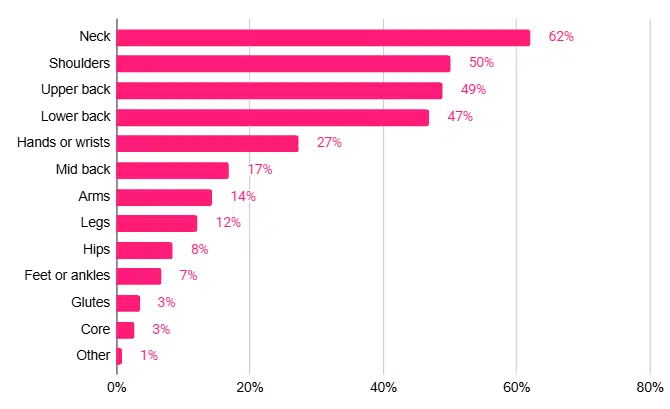
- 62% report experiencing neck pain from working or sitting at a computer desk, the single most affected body part by a wide margin.
- Over half of people experience lower back pain from doing the ‘hidden workout’ of household chores, while almost 40% experience upper back pain.
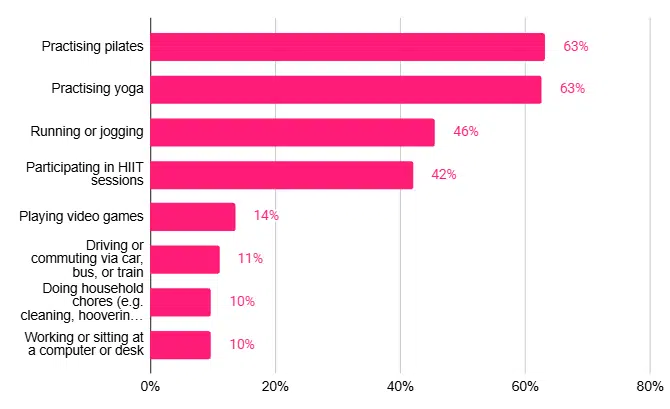
- Pilates has been named, alongside yoga, as the top activity for improving posture. However, while more than half of respondents believe Pilates can improve posture, only around 1 in 10 practise Pilates in a typical week, highlighting a clear intention-action gap.
- Two-thirds of Brits don’t know that slouching can impact breathing, energy levels and digestion.
Helen O’Leary, physiotherapist at Complete Pilates, says: “The UK seems to be facing a silent posture crisis where everyday habits, from desk work to dusting, are leaving the nation in chronic pain. When only 1 in 3 people recognise the wider health risks of poor posture, it is no longer just a backache problem but a growing public health blind spot.
“The encouraging news is that we know posture is changeable, with the right guidance and small, consistent adjustments. This means we can help the UK move with greater strength, confidence and resilience! As a physio-led clinic, Complete Pilates exists to bridge the gap between intention and action, ensuring people safe, evidence-based ways to move better and prevent pain before it becomes persistent.”
The Ultimate Pain in the Neck: Desk workers are losing up to a whole day of productivity each week, thanks to muscle pain.
The UK’s productivity crisis isn’t just about slow WiFi or meeting fatigue; it’s also physical. The survey reveals desk work to be the most widespread reason for muscle pain, with 50% of the workforce being affected.
As a result, the average desk worker is losing two hours of productivity every single day due to muscle pain, equivalent to a full workday each week. This ‘Pain Tax’ adds up to one full working week lost every month:
- Only 22% of workers say they are unaffected by physical discomfort.
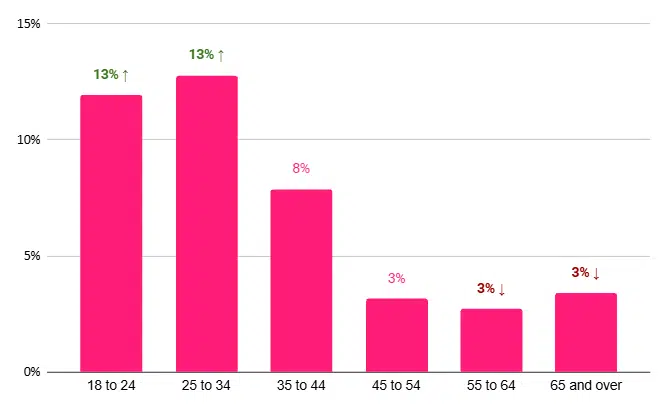
- The ‘mid-career slump’ is no longer just a feeling; 1 in 2 people aged 25 to 44 say they have experienced pain from working or sitting at a computer desk.
- 55% of 45-54 year olds spend over 21 hours sitting at their desk each week, the longest out of all demographics. While there’s a higher number of people aged 25-44 working at a desk each week, they may make better use of standing desks, walking pads or regular breaks.
The data confirms that muscle pain is no longer a niche health complaint; it’s a national economic drain, and Helen agrees that it genuinely can impact cognitive performance: “Pain is not just a sensation but is processed by the brain in many different parts. These are the same areas responsible for attention, working memory and decision-making. When pain is present, the brain will allocate a proportion of its capacity towards monitoring the threat.
“This results in slower processing speed, reduced working memory and reduced sustained attention. This makes pain metabolically ‘expensive’ for the brain. It consumes attentional bandwidth, increases stress physiology, and reduces executive function.”
But what exactly is causing this productivity leak?
The rise of ‘Tech Neck’
According to the survey, 62% of workers report neck pain from working or sitting at a computer desk, the single most affected body part by a wide margin.
Helen explains, “This is likely to be due to sustained loads, postural habits and low movement.
“Working at a desk doesn’t look difficult, but it requires prolonged postural muscle work at a low level. This means the muscles rarely relax and therefore contribute to the aching stiffness pain.”
Online searches for ‘neck pain at work’ have also increased by 203% over the past 12 months. Nicknamed ‘tech neck’, Helen warns that it’s not a formal diagnosis but describes a cumulative effect of a forward head posture and sustained screen time: “Physiologically, when the head moves forward, the cervical extensors work continuously to prevent the head from falling further forward.
“When this happens for hours at a time, you can get tissue sensitisation. You will also often get underactive deep neck flexors, and the superficial muscles overwork. Due to sustained postures, you can place posterior cervical structures under a prolonged stretch, which can increase compressive loading posteriorly at lower cervical levels.
“As a result, local tissues become more sensitive, pain thresholds can be reduced, and the nervous system amplifies the perception of stiffness and tightness. This is why symptoms often feel disproportionate to structural findings.”
Neck pain is followed by shoulder, upper back and lower back pain, suggesting further that this is a sitting posture issue.
How can we reduce muscle pain at work?
According to Helen, “the good news is that this can all be altered with simple changes:
- Move more regularly. You can set a timer on your computer which will automatically pause your work so that it encourages you to take a moment. In these breaks you don’t need to do an entire workout, or even leave your desk, but variability is the key. Try sitting and twisting to stretch your mid back, reaching your arms overhead to stretch, stretching your neck by putting your ear to your shoulder or side bending. You can also get up to walk to get a drink.
- Ensure your screen is at the right height and you are getting regular eye tests. If you have not had an eye test recently, you will be more prone to leaning forwards and straining to look at the screen, particularly as your eyes get tired. Ensuring that the screen is at the right level will also mean you don’t have to overly look up or down. Learn more about ergonomic desk set ups for reducing back and neck pain.
- Take a breath. Try slowing your breathing down and spending two minutes focusing on it. Aim for breathing through your nose and doing a 4 secs inhale and 6 secs exhale.
“The main thing to remember is that movement will lubricate your joints and encourage the body to work more naturally. Ideally, move before you get stiff in sitting, and sore in standing! Once you already have that feeling, it is harder to get rid of. If you’re a desk worker, try the following four Pilates exercises:
Sit & Twist
Seated Extension
Shoulder & Neck Stretches
Seated Glue Stretch
The ‘Hidden’ Home Workout: A third of people experience muscle pain or stiffness from doing household chores.
While desk work might be the most common cause of muscle pain, there’s another often-overlooked, ‘hidden workout’ the majority of people do, which is also causing stiffness and muscle pain.
84% of respondents say they do chores such as cleaning, ironing and hoovering each week, with this rising to 9 in 10 people aged 55+.
Often broken down into individual tasks such as dusting, folding laundry, or doing the washing up, it’s easy to think chores are a quick 10-minute job. However, an astonishing 2 in 5 people spend between 4-20 hours doing housework in a typical week, equivalent to doing a part-time job involving low-level manual labour.
Without realising it, people are swapping weights and resistance bands for hoovers and feather dusters. But, what is the true cost of cleanliness? Shoulder and back pain are the most common sources of muscle pain when cleaning the house:
- Over half of people experience lower back pain from doing housework, while almost 40% experience upper back pain.
- More than 2 in 5 people suffer from shoulder pain or stiffness after completing housework, which could come as a result of persistently reaching overhead to dust high places like shelving.
- Pain in the lower back and hips is more pronounced for the 65+ segments doing chores, while people aged 18-24 are more likely to experience pain in the upper back than lower back.
Why do chores tend to trigger lower back and shoulder pain?
“Chores often combine awkward positions, repetitive movement, and low endurance demands, which can overload tissues that are already deconditioned from desk-based work. They also often require sustained flexion (bending) with rotation,” Helen reveals.
“Cleaning windows, dusting and hanging washing means the arm has to repetitively go overhead. We are often stiff in our mid backs from sitting still, and therefore our shoulder range of motion can be limited. This can then lead to shoulder irritation.”
Helen’s top three Physio-approved ways to clean without injury
- Clean little and often. Rather than trying to do everything all at once, try to spread it out during the week so that you aren’t suddenly increasing your load over a space of a few hours.
- Add these movement patterns into your Pilates or gym workout. This will help you build tolerance to these positions so they overall become easier.
- Shorten the lever. The further the load is away from your body the harder it is to lift! Try to keep your elbows a bit bent, walk the hoover around rather than overstretching and use a step to help you with high shelves.
Take a look at our shoulder pain relief exercises for improving movement.
The Posture Paradox: More than half of people believe Pilates can improve overall posture, but only 1 in 10 practise Pilates in a typical week.
With the neck, back and shoulders being among the most common sources of muscle pain for many people in the UK, posture is a recurring issue that needs to be addressed. However, the survey reveals a disconnect between how we feel we look and the reality of our physical health.
While a majority of the UK population (41%) describes their posture as merely ‘Average’, there looks to be a crisis of overconfidence among young people, and men:
- Despite more 25-34 year olds experiencing muscle pain from desk working and driving/commuting than 45-54 year olds, those under 35 are four times more likely to perceive their posture as ‘Excellent’ compared to those over 45.
- Women are significantly more critical of their posture than men. 20% of women rate their overall posture as ‘Poor’ or ‘Very Poor,’ compared to just 15% of men. Conversely, 42% of men rate their overall posture as ‘Excellent’ or ‘Good’, while only 36% of women do the same.
Common misconceptions about posture and posture perception
Helen lifts the lid on the misconceptions around how we perceive posture:
- Most people are surprisingly poor at judging their own spinal position, especially over time, as your nervous system adapts to whatever position you spend most time in. People also assess posture based on whether they’re slouching, how they look in the mirror, and cultural ideas of “good posture”. However, load tolerance depends on muscle endurance, movement variability, and the duration in a position.
- Often, younger people have better mobility, more flexible tissues and fewer degenerative changes, but not as good endurance. It is likely they feel like they have ‘good posture’ because they can actually achieve the positions that equate to this. However, they cannot sustain these positions without fatigue and therefore experience more pain. Younger adults often use screens more, so the overall load may be higher, hence experiencing more pain.
- Most people believe poor posture ‘wears out’ the spine or causes permanent misalignment, but the bigger issue is how sustained positioning affects endurance, load tolerance, and nervous system regulation. It also reduces our movement choices and creates a fear loop, which means we move less.
- The most dangerous misconception about posture is that there is a perfect posture and a correct way to move. The reality is, everyone will move differently based on age, injury history, habits, hobbies, illnesses, the list goes on. We also move differently on different days.
What are the best activities for improving posture?
In terms of improving posture, the public consensus is clear. Pilates and Yoga are viewed as the most effective activities for postural correction. While 40% of people believe high-intensity activities like running or HIIT can help, more than half of the nation (54%) identifies the gold standard as being Pilates for improving posture.
What makes Physio-led Pilates different from generic classes? Helen explains, “Generic classes generally don’t give you a tailored approach but work more on the premise that one-size-fits-all. There may be some modifications offered during the class, but you will not get the individualised attention.”
“With Physio-led Pilates, you are often looking at a 1:1 approach. The instructor often knows a lot about what is happening inside the body and can give you more rounded advice as it is within their scope of practice.”
“Your sessions will not just be tailored around feeling better, but should have objective goals and measures in place which ensure you can see how you are improving as well as feeling it.”
Check out our 15-minute online Physio-led Pilates class, specifically aimed at improving posture.
And, how long does it realistically take to improve posture? According to Helen: “The short answer is that you can feel better really quickly. However, strength, and therefore more meaningful change, takes time.
“It takes around 4 weeks for our body to make an adaptation, 6-8 weeks to build some strength and 12 weeks to make a visible and identifiable change. This is with consistency and commitment.”
The Pilates intention-action gap
However, the survey also reveals the alarming ‘aware but stagnant’ attitude many people in the UK have when it comes to improving posture and reducing muscle pain:
- 2 in 5 say they would seek to improve posture in order to reduce pain and improve health. However, despite more than half of people believing that Pilates can improve overall posture, only around 1 in 10 practise Pilates in a typical week, demonstrating an ‘intention-action’ gap.
When talking about why people believe in Pilates but don’t practise it, Helen says: “This is less likely to be about belief but more about behavioural patterns as the gap is sitting between intention and execution.
“Motivation to change something is often reactive. Pain is often episodic. When the pain spikes and flares, people often want to make changes. But when the pain isn’t there the urgency disappears.
“Pilates is often also seen as maintenance and a long term commitment. Whilst HIIT and the gym can feel intense and goal driven, Pilates is often subtle, corrective and preventative which doesn’t give the same dopamine hit that the gym does.
- People overwhelmingly rely on self-instructed or self-administered solutions to muscle pain rather than expert interventions, with 48% opting to stretch, and 44% using pain relief methods.
- Even though so many people turn to exercises such as stretching to help support muscle pain, 3 in 5 people worry that exercising without the right technique could cause injury, yet only 5% of people consult personal trainers when experiencing muscle pain.
“When people rely only on stretching and painkillers, it will often help to manage someone’s symptoms, but not help to improve their capacity. As a result, it will be a pattern which is harder to fix,” warns Helen.
“If we continuously use these methods then we may become more deconditioned and therefore have increased flare up cycles.”
Looking to improve your posture? Complete Pilates offers 1:1 and group beginner Pilates classes.
Beyond the Backache: Only 1 in 3 respondents recognise systemic health effects of poor posture.
Perhaps the most concerning insight from the survey is the UK’s lack of systemic literacy around the health impact of poor posture:
- While more than half of people are aware that poor posture can lead to back and neck problems, only around 1 in 3 respondents recognise systemic health effects of poor posture, including poor balance, lack of sleep and joint damage.
Helen says: “Posture doesn’t just matter at your desk; it influences muscle tone, breathing mechanics, pain sensitivity, and nervous system regulation, all of which affect sleep quality. If baseline muscle tone remains elevated into the evening, the body struggles to fully down-regulate. This can make it harder to relax into a deep sleep.
“Poor breathing patterns are often associated with lighter sleep and more frequent waking. Sleep disruption then increases next-day pain sensitivity, which creates a cycle.”
Discover 8 expert tips for improving your sleep.
- Just 2% of people associate a change in testosterone levels with poor posture, yet 3% falsely believe nosebleeds to be a side effect.
- Also, 74% of people are unaware that having poor posture can lead to more serious side effects, such as reduced lung capacity.
According to Helen, “Poor posture, particularly sustained thoracic flexion and forward head positions as we have at our desk, alters rib mechanics, diaphragm function, and respiratory efficiency. Increased thoracic flexion reduces the ability of the rib cage to expand properly during your inhale.
“Poor posture → shallow breathing → increased neck muscle activation → more forward head posture → more tension. It becomes cyclical.”
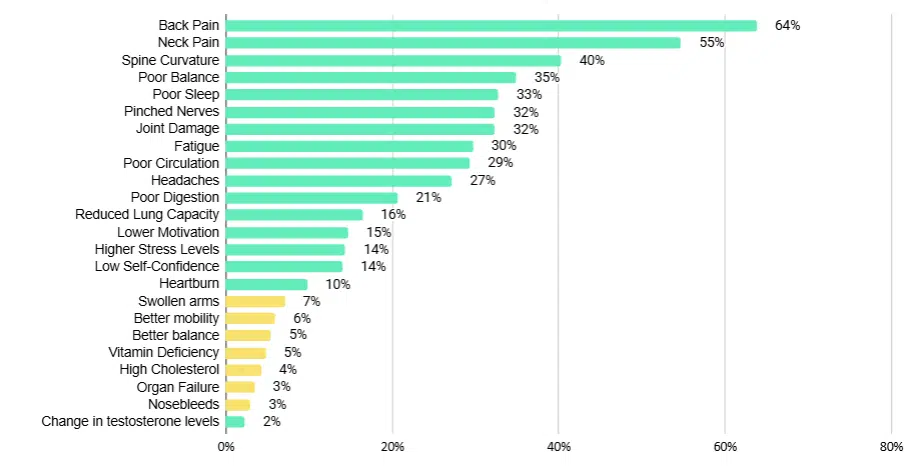
Green represents side effects of poor posture. Yellow represents false side effects of poor posture.
There are nearly 60 million videos on TikTok using the hashtag #Fitness, while #GymTok has almost 43 million, and #Workout has just over 41 million. However, while social media platforms offer endless inspiration, they are also fueling a surge in DIY-disasters across the capital.
- 52% of Londoners say they’ve been injured from trying a viral workout at home, compared to 21% of those living in the rest of the UK.
- Plank challenges, TikTok dance workouts, and 75 hard challenges are more commonly associated with injury. The 75 Hard challenge has had a resurgence in popularity recently, with online searches up 51% over the last three months.
Helen says: “I find it really scary that so many people are getting injured due to social media. The reality is that there is not enough quality control in what we do, across most of the wellness space. This means that the level of training that people get can be really variable.
“However, people equate more followers to more knowledge. These are often the platforms that people follow and are not necessarily right for them. These challenges are designed to get you interacting more with their profiles rather than being healthy for you. Although the aim to create habitual changes can be good, they may not be pitched at the right level.”
Survey Notes:
Carried out by OnePoll on behalf of Complete Pilates on 4th February 2026, with 2,000 UK Adult respondents.
Age, gender and regional data were captured as part of this representative survey. If you would like to compare age, gender or regional differences in stats, please get in touch.
About Complete Pilates
Founded in 2015, Complete Pilates is a physiotherapist-led clinical Pilates company, with three studios across London, in Chelsea, Angel and London City, a studio in Norfolk, and online Pilates classes to suit everyone.
They specialise in 1-to-1 and small group Reformer Pilates with tailored programs to suit individual needs. The physio-led approach is open to everyone, whether injured, on the road to recovery, or those wanting to improve their overall health and lifestyle.
Education is key:
These blogs are designed to give information to everyone, however, it is important to remember that everyone is different! If you have not seen one of our therapists and have any questions about injuries, what you have read or whether this may be useful to you, please just ask. We are more than happy to help anyone and point you in the right direction. Our biggest belief is that education is key. The more you understand about your injury, illness and movement, the more you are likely to improve.