
Single Leg Glute Bridge: Guide, Benefits & Video
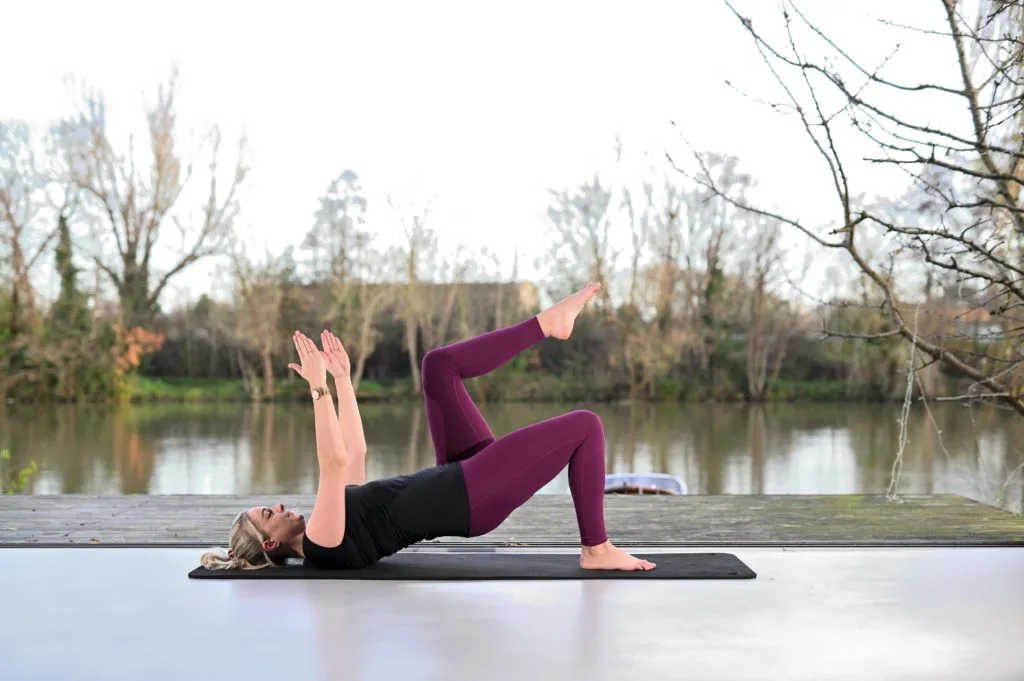
Are you a runner who is returning from an injury? Do you get back pain when you walk for a while? Maybe you’ve been getting lower back pain in the gym or simply want an exercise progression? Or do you want to save time and get stronger whilst you stretch out your hip flexors at the same time? If so, then the single-leg glute bridge is perfect for you.
The single-leg bridge is a progression of the traditional glute bridge that challenges you to control your pelvis and trunk while producing force through one leg. It primarily works the glutes and hamstrings while also requiring control from the trunk and muscles around the pelvis.
Whether you're looking for a single leg bridge Pilates exercise, a way to progress your glute strength or an exercise to support your running, this guide explains how to perform the movement, the muscles it works and how to modify it if needed.
You don't require any equipment for the one leg glute bridge, so it can be performed at home, the gym or even if you’re travelling, making it a great exercise to incorporate into your regime.
In this article, we’ll be discussing:
- What is the single leg glute bridge?
- What Muscles Does the Single-Leg Glute Bridge Work?
- How To Do The Single Leg Glute Bridge?
- Common Single Leg Glute Bridge Mistakes
- How to Progress or Modify the Single Leg Glute Bridge
- What Are The Benefits Of A Single Leg Glute Bridge?
- Who Is The Single Leg Glute Bridge Suitable For?
- Who Should Avoid or Modify the Single Leg Glute Bridge?
- When Should You Add the Single Leg Glute Bridge to Your Workout?
- How Physiotherapists Use the Single Leg Glute Bridge
What Is The Single-Leg Glute Bridge Exercise?
The 1-legged glute bridge is an advanced bridge exercise. Unlike a standard glute bridge, the single-leg variation requires you to support the movement predominantly through one leg, so it’s a bit more intense. This isolates and increases the demand, and strengthens the all-important glutes, hamstrings, and muscles responsible for controlling the pelvis, while firing up the core. It also introduces a greater balance and coordination challenge than a two-legged bridge.
What Muscles Does the Single-Leg Glute Bridge Work?
The single-leg glute bridge primarily works the gluteal muscles and hamstrings, while also requiring the trunk and pelvic stabilising muscles to control the movement. Because you're working predominantly through one leg, the exercise also challenges your ability to keep the pelvis level and stable.
The main muscles involved include:
- Gluteus maximus: helps extend the hip as you lift your pelvis.
- Hamstrings: assist with hip extension and help control the position of the leg.
- Abdominal and trunk muscles: help maintain control of the pelvis and spine.
- Hip stabilisers: help prevent the pelvis from rotating or dropping as you work on one side.
How To Do A Single Leg Glute Bridge
Follow the steps below to learn how to perform a Pilates single-leg glute bridge with good control. The key is to keep your pelvis level throughout the movement and avoid relying on your lower back to lift your hips.
- Lie on your back with your knees bent up onto a chair or table. Keep your feet shoulder-width apart.
- Lift your left leg into a tabletop position away from the chair or table, keeping your foot flexed.
- Keep your upper back on the floor, engage your glutes and drive through your right heel, raising your hips off the ground until your knee, hips, and shoulders form a straight line.
- Keep your core engaged the entire time.
- Pause at the top, squeezing your glutes for one to two seconds.
- Then gently lower back down to the start.
- Repeat 3-4 times and then switch legs.
Single Leg Glute Bridge Form & Technique Tips:
-
- Remember your pelvic clock.
Try to keep your hip bones level. Knowing your pelvic clock will help with this. If you feel it in your back, see if you can tilt your pelvis towards 12 a little more. Your 3-9 on the clock needs to remain level! - It is all in the feet.
Press your heels down into the floor to activate the back of your legs rather than lifting from your back. Your feet should trigger the movement in your hips and spine. By pressing harder into one foot, it also allows the other to lift more easily. A great tip for those harder exercises to come. - Let your spine move freely.
Rather than peeling off the floor, try to create space. Pull your heels towards your glutes and send your knees over your feet to create space in your hips. Try to go back down by going along the mat rather than just down. - Let your legs do the work.
Feel your body hang off your legs. If your shoulder blades are on the floor and you can breathe, this will help. - Go parallel.
If your knee is falling across your body when you lift the leg, try to re-stack your pelvis in 3-9 on the clock and pull the leg out. This requires hip differentiation.
- Remember your pelvic clock.
Common One Leg Glute Bridge Mistakes
The single-leg glute bridge can become less effective if you compensate elsewhere in your body. Common mistakes include:
- Allowing the pelvis to rotate or drop: Try to keep your hip bones level throughout the movement.
- Overarching the lower back: Reduce the height of the bridge and focus on driving through the heel.
- Pushing through the toes rather than the heel: Think about pressing the heel into the floor to encourage the glutes and hamstrings to contribute.
- Lifting too high: The aim is controlled hip extension rather than getting your pelvis as high as possible.
- Holding your breath: Continue breathing normally while maintaining control of your trunk and pelvis.
How to Progress or Modify the Single Leg Glute Bridge
The 1-legged glute bridge is already a progression from the standard bridge, but the exercise can be made easier or more challenging depending on your strength, control and experience.
If you're finding it difficult, start with a standard glute bridge and focus on keeping your pelvis level. You can then progress to lifting one leg while maintaining the bridge position before performing the full single-leg variation.
To make the exercise more challenging, you could increase the number of controlled repetitions, add a pause at the top or introduce external resistance where appropriate. The priority should always be maintaining good movement quality rather than simply increasing the difficulty.
Benefits of a Single Leg Glute Bridge
The single-leg glute bridge exercise has many benefits! Just like with your standard glute bridge, the single-leg glute bridge targets all the glute muscles; lifting one leg adds work to your hamstrings, making it that bit more intense. It’s also a great way to improve your hip mobility, decrease knee pain and strengthen your lower back - improving posture, making it perfect for any desk-bound worker.
Single-leg glute bridges are great for:
- Building strength in the glutes
- Improving hip mobility and lower-back strength
- Stabilising the spine
- Strengthening the core
- Improving single-leg stability
- Developing hip extension strength
- Improving pelvic control
- Challenging coordination and balance
- Strengthening the posterior chain
Without strong glutes, you run the risk of putting unnecessary strain on your back and other parts of the body, which can then cause injury and affect performance. Strong glutes are essential for everyone but especially important for runners and those who lift weights to help prevent injury in other areas of the body, which take over if the glutes are weak.
Who Is The Single Leg Glute Bridge Suitable For?
- People looking to develop hip/glute strength: The single-leg glute bridge is suitable for anyone who wants to build strength in their hips, glutes, lower back and core.
- Runners: It’s the perfect exercise for any athlete who needs strong glute muscles, such as runners.
- Office workers: It's especially great for anyone who spends a lot of time sitting behind a desk all day, where the hip flexors can become tight and result in the glutes effectively switching off – this movement counteracts that.
- People progressing from a standard glute bridge: The single-leg glute bridge is a great exercise to increase the challenge of a regular glute bridge.
Who Should Avoid or Modify the Single Leg Glute Bridge?
Not every exercise is appropriate for every person or every stage of rehabilitation. The single-leg glute bridge may need to be modified or temporarily avoided if it causes pain or if you have an injury or condition affecting your ability to perform the movement safely.
- Pregnancy: If you are in your second and third trimester of pregnancy, then the single-leg bridge exercise may not be suitable for you. This movement is performed lying on your back, which is advised against during these stages.
- Injuries: Additionally, if you have any injuries to your neck, back, or ankle, you should talk to your doctor or exercise specialist, such as a Clinical Pilates Instructor, for your own individual advice, as this movement may not be right for you.
When Should You Add the Single Leg Glute Bridge to Your Workout?
Essentially, the single-leg glute bridge is a great way to target a number of muscle groups throughout your body, such as the glutes, hamstrings, hip flexors and lower back muscles. As already mentioned, they are especially ideal for runners and jumpers, people who lift weights or anyone who sits down for long periods of time during the day.
The single leg glute bridge can be useful when you're ready to progress from a standard bridge and can maintain good pelvic and trunk control. It can be included within a lower-body strength session, Pilates session or running strength programme.
If you are new to exercise at Complete Pilates, we would advise you to always speak to your doctor or physiotherapist before starting a new exercise routine, especially if you have any health concerns or are new to fitness.
If you would like more information, do reach out to our team of clinical Pilates instructors here at Complete Pilates, who are all trained to safely treat and create manageable plans to keep you healthy.
How Physiotherapists Use the Single Leg Glute Bridge
Physiotherapists and Clinical Pilates Instructors may use single leg bridge variations as part of an exercise programme when appropriate for an individual's goals and movement capacity. The exercise can be used to develop strength around the hips and challenge pelvic control, but the exact variation, repetitions and progression will depend on the individual.
At Complete Pilates, our physiotherapists and Clinical Pilates Instructors can assess your movement and adapt exercises to your needs, particularly if you're returning from an injury or experiencing pain.
Related Reading: Your Guide To Why Physio And Pilates Are So Effective Together
What Our Experts Say
The single leg bridge is a great exercise for developing glute strength, pelvic stability and core control. By reducing our base of support to one leg, we challenge the body to maintain alignment and stability, which is particularly relevant for everyday activities such as walking, running and climbing stairs.
It's important to focus on the quality of the movement rather than how high you can lift your hips. Keeping the pelvis level and avoiding excessive movement through the lower back helps ensure the right muscles are doing the work. If you're struggling to maintain control, start with a traditional bridge and gradually progress as your strength improves.
Rose Batala - Physiotherapist and Clinical Pilates Instructor

Key Takeaways
- The single-leg glute bridge is an advanced bridge progression that strengthens the glutes, hamstrings and trunk while challenging single-leg control.
- It is particularly useful for runners and athletes, as strong glutes help support efficient movement and reduce unnecessary strain on the lower back, knees and hips.
- Good pelvic control is essential, so the aim is to keep the hips level and avoid dropping or rotating through the pelvis.
- The exercise can help counteract prolonged sitting by strengthening the glutes while encouraging hip extension and opening through the front of the hips.
- It may not be suitable for everyone, especially those in later pregnancy or people with neck, back or ankle injuries, unless modified by a professional.
Join the newsletter
Good news stories, exercise tips and short classes. One email a month.
Conclusion
The single-leg glute bridge is a simple but powerful exercise for building strength, stability and control through the hips, glutes, hamstrings and trunk. Because it requires no equipment, it can be done at home, in the gym or while travelling, making it an easy addition to a regular exercise routine.
It is especially useful for runners, desk workers and anyone wanting to progress from a standard bridge. However, because it is more challenging, technique matters. Keeping the pelvis level, pressing through the heel and allowing the legs to do the work will help you get the benefits without overloading the lower back.
If you are returning from injury, pregnant or unsure whether this exercise is appropriate for you, it is best to seek advice from a physiotherapist or clinical Pilates instructor.
Related Reading: Pilates moves for legs
Try Out A Pilates Class
If you want to experience the Complete difference and discover the benefits of physio-led one-to-one or small group Pilates, book a session at one of our London or Norfolk studios today. Not able to make it to one of our studios? We've got online options to suit you anywhere, anytime.
Our physiotherapist-led Pilates studio in Chelsea, our Angel Pilates studio, our Pilates studio in City, and our Norfolk Pilates studio in East Anglia offer a highly tailored approach to your Pilates training. Whether your goal is to manage a health condition, rehabilitate from an injury or to improve your strength and fitness, Complete Pilates is the studio for you.
Related Blogs:
- Basic Bridge Exercise – Your Step By Step Guide With Video!
- Want A Stronger Back and Bum? Try The Pilates Bridge Exercise
- How to Do The Pilates Bridge on a Stability Ball?
- Glute Bridge March – Your Step by Step Guide with Video!
Education is Key
These blogs are designed to give information to everyone;, however, it is important to remember that everyone is different! If you have not seen one of our therapists and have any questions about injuries, what you have read or whether this may be useful to you, please just ask. We are more than happy to help anyone and point you in the right direction. Our biggest belief is that education is key. The more you understand about your injury, illness and movement, the more you are likely to improve.
If you are not sure whether this is for you, simply get in touch. We are here to help!
FAQs
What is the single-leg glute bridge in Pilates good for?
The single-leg glute bridge is good for strengthening the entire back of the body, including glutes, hamstrings and trunk, while improving hip stability and pelvic control. It can also help improve hip extension and lower limb strength.
Is the single-leg glute bridge good for runners?
Yes, it is particularly useful for runners because running requires repeated single-leg control. Strong glutes and good pelvic stability can help improve running efficiency and reduce unnecessary strain on the lower back, hips and knees.
Why do I feel the single-leg glute bridge in my lower back?
You may feel it in your lower back if your pelvis is dropping, your back is over-arching, or your glutes and hamstrings are not doing enough of the work. Try reducing the height, pressing more through your heel and keeping your hip bones level. You can also try doing the movement with your feet on a box or step. This will start you off in a more hip-flexed position, which will mean you do not hit your end of range hip extension as quickly.
Is the single leg glute bridge harder than a normal bridge?
Yes. The single leg glute bridge is more challenging because you are supporting your body on one leg rather than two, which increases the demand on the glutes, hamstrings, trunk and pelvic stabilisers.
Who should avoid the single leg glute bridge?
You may need to avoid or modify this exercise if you are in your second or third trimester of pregnancy, have acute neck, back or ankle injuries, or experience pain during the movement. If you do have an acute injury or you find this movement always causes you pain or discomfort, it is worth seeking help from a Clinical Pilates instructor or physiotherapist who can help with your technique.
Can I Do a Single Leg Glute Bridge If I Have Back Pain?
It depends on the cause and severity of your back pain and how you respond to the exercise. If the movement causes or increases your pain, stop and seek advice from an appropriately qualified healthcare professional. A physiotherapist or Clinical Pilates Instructor can assess your movement and help determine whether the exercise should be modified or whether another exercise would be more appropriate.
Reviewed by Nabila Farzi, Physiotherapist & Clinical Pilates Instructor
Published 27 Apr 2022 · Updated 13 Oct 2026