The Benefits of Pilates For Stress Management
Today is National Stress Awareness Day. To coincide with it, we’ve put together the benefits of Pilates for stress relief.
Stress is something all of us have experienced at some point in our lives. In small doses, and despite feeling unpleasant, stress can be helpful rather than harmful as it enables us to rise to many challenges.
Unfortunately, many of us suffer from constant stress brought on by day-to-day things like work deadlines, family responsibilities, relationship worries or simply feeling like there is never enough time. When stress becomes frequent or prolonged, it can have a significant effect on both our mental and physical health.
This is because the stress response is designed to help us deal with short-term threats. It can increase heart rate, raise blood pressure, change our breathing pattern and increase muscle tension. In the short term, this can help us respond quickly. But when our body stays in this heightened state for too long, it can leave us feeling exhausted, tense and overwhelmed.
Long-term stress is also linked to anxiety, low mood, poor sleep, headaches, digestive issues and increased muscle pain or stiffness. Many people also notice that when they are stressed, they hold tension in certain areas of the body, especially the neck, shoulders, jaw, back and hips.
But, when it comes to stress management, there are ways you can help yourself. For example, using meditation, spending time outdoors, prioritising sleep or taking up a form of mindful movement can all be beneficial. Practising these methods regularly can help you feel calmer and respond to stressful situations in a healthier way.
One form of movement that can be particularly helpful is Pilates.
1. Mindful movement
Science has proved the benefits of mindfulness and exercise for relaxation. When these movement and meditation are combined, the positive effects are even more profound. Active meditation is also perfect for those who struggle with traditional forms of meditation that require you to stay still.
This is why Pilates – a form of mindful movement – is so effective for stress relief.
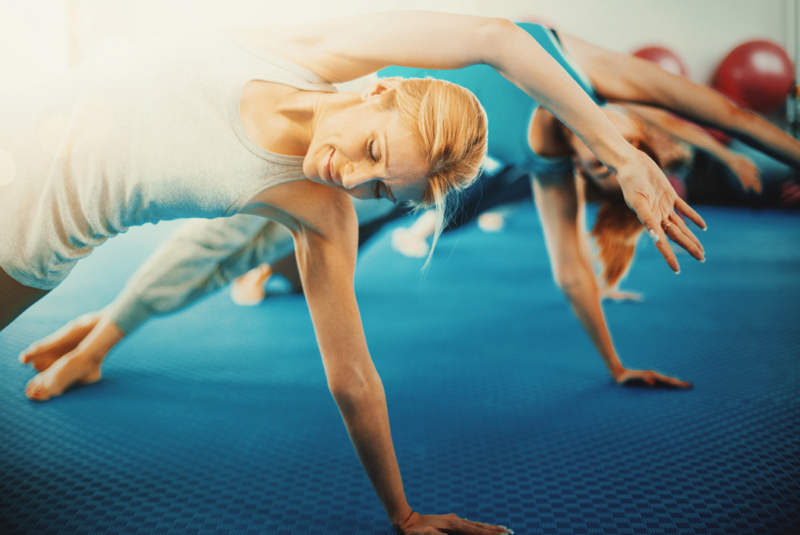
Rather than rushing through the movements to get your heart pumping and muscles burning, Pilates forces you to move slowly and move with intention. This brings your awareness to your body as it moves and how it feels in the moment.
Practising mindful movement can make you more present, which can help you manage stress more effectively. To get these benefits, however, it’s important you practise regularly. This is why committing to a regular mat, reformer class or 1-2-1 session is a good idea.
If you’re struggling with stress and anxiety, Pilates is a great place to start. Other avenues to explore include the mental health charity www.mind.org and meditation apps, such as Calm or Headspace.
2. Pilates helps regulate your breathing
Breathing is one of the most important links between the body and the nervous system.
When we are stressed, our breathing often becomes shallow, fast or held without us even realising. This can contribute to feelings of tension, anxiety and fatigue.
Pilates places a strong emphasis on breath. In a Pilates session, you are encouraged to coordinate your breathing with your movement. This helps you avoid bracing or holding your breath and encourages a more efficient breathing pattern.
Deep, controlled breathing can help the body shift away from a heightened stress response and towards a calmer state. It can also help reduce unnecessary tension in the neck, shoulders and upper chest, which are common areas where people hold stress.
At Complete Pilates, we often cue clients to breathe into the sides and back of the ribs, rather than just into the upper chest. This can help improve rib mobility, reduce gripping and create a greater sense of ease in the body.
3. Pilates reduces muscle tension
Stress does not just affect how we feel mentally. It can also show up physically.
Many people experience stress as tight shoulders, a stiff neck, jaw tension, lower back discomfort or a feeling of heaviness and fatigue in the body. This can be made worse by long hours sitting at a desk, commuting, carrying children or not moving regularly throughout the day.
Pilates can help by gently moving the spine, shoulders, hips and pelvis through different ranges of movement. This helps reduce stiffness, improve circulation and encourage muscles to relax.
Exercises that involve spinal mobility, such as cat-cow, spine stretch, rotation and gentle extension work, can be particularly helpful for people who feel physically tense when they are stressed.
Pilates also helps you become more aware of where you are holding tension. For example, you may realise that you grip your jaw during abdominal exercises, lift your shoulders when using your arms or hold your breath when concentrating. Once you become aware of these patterns, you can begin to change them.
4. Pilates builds strength and confidence in your body
Stress can often make us feel disconnected from our body. You may feel tired, tense, weak or unsure of what your body needs.
Pilates can help rebuild that connection.
Because Pilates is progressive, it allows you to start at the right level and build strength gradually. You do not have to push through pain or exhaustion to benefit from it. Instead, you can work on control, alignment, mobility and strength in a way that feels supportive.
This is particularly important for people who are recovering from injury, managing persistent pain or returning to exercise after time away. Feeling stronger and more in control of your body can have a positive effect on confidence, mood and overall wellbeing.
At Complete Pilates, our small group classes and 1:1 sessions allow exercises to be adapted to the individual. This means you can move in a way that feels appropriate for your body, rather than feeling pressured to keep up with a large class.
5. Pilates supports posture and reduces physical stress from daily life
Modern life can place a lot of physical stress on the body.
Many of us spend long periods sitting at a desk, looking down at a phone, driving or working in fixed positions. Over time, this can contribute to stiffness, reduced mobility and muscle imbalance.
When you combine these physical demands with emotional stress, the body can start to feel tight, tired and uncomfortable.
Pilates works on postural awareness, spinal mobility, shoulder organisation, pelvic control and strength. This can help your body cope better with the demands of daily life.
Rather than thinking of posture as simply “sitting up straight”, Pilates helps you develop the strength and awareness to move between positions more efficiently. This can reduce the feeling of strain and help you feel more comfortable in your body.
6. Pilates gives you time for yourself
One of the most underrated benefits of Pilates is that it gives you dedicated time to focus on yourself.
For many people, stress builds because they are constantly looking after other people, meeting deadlines or rushing from one thing to the next. A Pilates session creates space in the week where your only focus is your body and your wellbeing.
This routine can be incredibly grounding.
Whether you attend a weekly class, book a 1:1 session or practise at home, creating a regular movement habit can provide structure and consistency. Over time, this can help you feel more resilient and better able to manage stressful periods.
7. Pilates can improve sleep and recovery
Stress and poor sleep often go hand in hand. When the nervous system is heightened, it can be harder to switch off, fall asleep or stay asleep.
Gentle, mindful movement like Pilates can support better sleep by helping to reduce physical tension, regulate breathing and calm the mind. While Pilates is not a replacement for medical support if you are experiencing significant sleep problems, it can be a useful part of a wider stress management routine.
A slower Pilates session in particular can be helpful for people who feel wired, restless or physically uncomfortable at the end of the day.
Conclusion
Stress is a normal part of life, but when it becomes constant, it can affect how we feel, move, sleep and function.
Pilates offers a practical way to reconnect with your body, calm your breathing, reduce muscle tension and build strength in a controlled and mindful way. It encourages you to slow down, focus on the present moment and move with awareness.
If you are struggling with stress, Pilates can be a great place to start. Whether you choose a mat class, equipment class or 1:1 session, regular mindful movement can help you feel calmer, stronger and more in control.
If you are experiencing persistent stress, anxiety or low mood, please remember that support is available. Charities such as Mind, meditation apps such as Calm or Headspace, and your GP can all be useful sources of help alongside movement-based approaches like Pilates.
Key Takeaways
- Pilates combines movement with mindfulness, helping you focus on your body, breath and control rather than racing thoughts.
- Breath-led movement can help calm the nervous system, reduce bracing and ease tension in areas such as the neck, shoulders and upper back.
- Pilates can reduce physical symptoms of stress, including stiffness, muscle tension and poor posture caused by long periods of sitting or emotional strain.
- Regular Pilates can build strength, confidence and body awareness, helping you feel more in control of your movement and wellbeing.
- Pilates is a useful part of a wider stress-management routine, especially when combined with sleep, outdoor time, social support and professional help if needed.
Feeling inspired
If you want to experience the Complete difference and discover the benefits of one-to-one or small group Pilates, book a session at one of our London or Norfolk studios today. Not able to make it to one of our studios? We've got online options to suit you anywhere, anytime.
Our physiotherapist-led Pilates studio in Chelsea, our Angel Pilates studio, our Pilates studio in City, and our Norfolk Pilates studio in East Anglia, offer a highly tailored approach to your Pilates training. Whether your goal is to manage a health condition, rehabilitate from an injury or to improve your strength and fitness, Complete Pilates is the studio for you.
Education is key
These blogs are designed to give information to everyone, however, it is important to remember that everyone is different! If you have not seen one of our therapists and have any questions about injuries, what you have read or whether this may be useful to you, please just ask. We are more than happy to help anyone and point you in the right direction. Our biggest belief is that education is key. The more you understand about your injury, illness and movement, the more you are likely to improve.
If you are not sure whether this is for you, simply get in touch. We are here to help!
Join the newsletter
Good news stories, exercise tips and short classes. One email a month.
FAQs
Is Pilates good for stress relief?
Yes, Pilates can be very helpful for stress relief because it combines mindful movement, breath control and body awareness. This can help calm the mind, reduce muscle tension and encourage a greater sense of physical and mental ease. It also gives you some time for yourself which will help downregulate your nervous system.
How does Pilates help reduce stress?
Pilates encourages you to move slowly and with intention, which brings your attention to the present moment and work on your mind-body connection. It also helps regulate breathing, reduce bracing and release tension commonly held in the neck, shoulders, back and hips.
Can Pilates help with stress-related tension?
Yes. Many people hold stress physically in the body, especially around the shoulders, jaw, neck and lower back. Pilates helps by improving mobility, posture and muscle control, which can reduce stiffness and discomfort.
How often should I do Pilates for stress relief?
Consistency is more important than intensity. To see the quickest change, going at least 2x per week to a Pilates class or 1:1 session will be the most beneficial. Ideally, moving for short periods in between with a focus on gentle movement, breathing or mobility work between sessions will help reduce tension.
Is Pilates enough if I have anxiety or chronic stress?
Pilates can be a valuable tool for managing stress and supporting wellbeing, but it is not a replacement for professional support. If you are experiencing ongoing anxiety, low mood or feel unable to cope, it is important to speak to your GP, a mental health professional or a trusted organisation.
Published 7 Nov 2018 · Updated 2 Jul 2026