Here’s Why This Professional Squash Player Swears by Pilates

Since its invention, Pilates has been the exercise method of choice for dancers and gymnasts. More recently, elite athletes from all different sports have started to use Pilates for performance enhancement and to keep them injury-free. Alison Waters, a professional squash player, is one such athlete. Here she shares the benefits of Pilates for her squash game.
1. Why did you start taking Pilates lessons?
I play squash professionally and it’s very demanding on the body. I also had a herniated disc (when a soft cushion of tissue between the bones in your spine pushes out) in my back a few years back. I’ve have had a few relapses since then.
We fly around the world, so the combination of squash and travelling means my back tends to stiffen up. That’s why I thought Pilates would be a fantastic thing to do. I see it as one of the most important sessions of my training week.

2. How do you find Pilates benefits your sport?
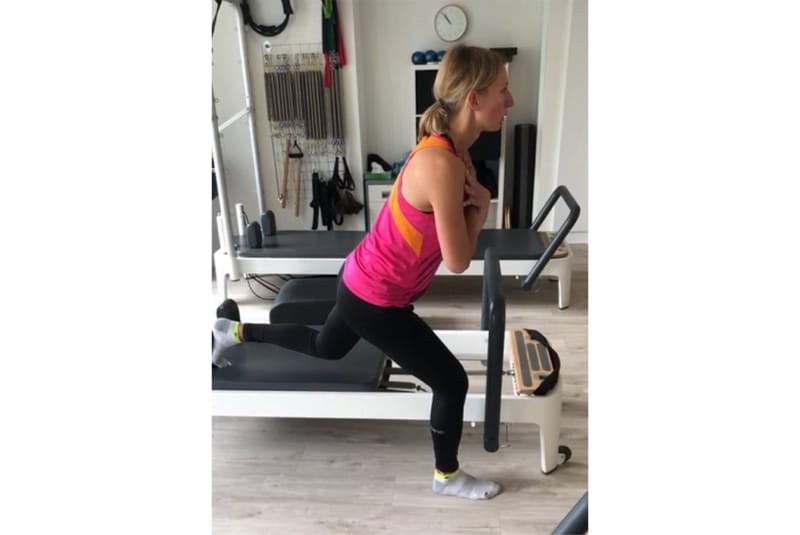
Squash involves lots of twisting and turning. So, in my Pilates sessions, we work a lot on rotational exercises and getting my back moving as much as possible. It’s also great for my overall strength and flexibility and for making sure my core is strong. I have found muscles that I never knew I had!!
3. Have you noticed an improvement in your sports performance since you started Pilates? Do you feel you are injured less frequently because of it?
From when I started about three months ago, my back feels so much looser and it’s able to rotate more.
I’m also finding my overall strength is better as well and on court I’m feeling much stronger in my movement. It’s amazing how after just a short time I’ve made such good progress. I wish I had started Pilates sooner in my career. I make sure I’m practicing some of the exercises every day to keep on top of things.
4. What aspects of Pilates do you enjoy the most?
I really enjoy Pilates with Roxy (one of the Complete Pilates clinical instructors) and find my sessions go so quickly. I’ve found it so nice to have something new in my training week. It’s been great to learn about new movements and understanding about my body more. I love all the rotation and hip exercises as well and find these the most beneficial for me.

5. What does your weekly fitness routine consist of and how does Pilates fit into that?
I train twice a day for 5 1/2 days a week. A lot of it [is spent] on court hitting and in games. [My training also includes] routines and fitness work. I do weights 2-3 times a week as well.
I now do an individual Pilates class once a week and feel this really links in well with my other training. After seeing the amazing benefits from it, it’s now a session I make sure I fit in every week.
6. Which exercises do you practise at home? Do you use any for activation before a game?
As I travel a lot I make sure I practise my Pilates when I’m away. I do lots of the rotation exercises and hip and glute activation. I find this especially useful after a long flight. I also use these exercises as part of my warm up and cool down routine when I’m playing.
Thank you to the Complete Pilates for all your help and support. A special thanks goes to Roxy who has been absolutely fantastic.
You can find out more about Alison by following her on Twitter. See how Pilates can also help you!
What Our Experts Say
Squash places enormous demands on the body, requiring strength, speed, rotation and quick changes of direction. Pilates helps athletes develop the movement control and stability needed to use that power efficiently. At Complete Pilates, we tailor programmes to each player's sport, previous injuries and performance goals, helping them move better while reducing unnecessary strain.
Conclusion
Alison's experience highlights why Pilates has become such an important part of many elite athletes' training programmes. By improving mobility, stability and movement efficiency, Pilates can help squash players move more freely, perform more consistently and better manage the physical demands of training and competition. Whether you're playing professionally or simply enjoy a weekly game at your local club, Pilates can help you build a stronger, more resilient body both on and off the court.
Key Takeaways
- Pilates is an excellent complement to squash training. It develops the strength, mobility and movement control needed for the rapid changes of direction, rotation and acceleration required on court.
- Improving hip and spinal mobility can enhance performance. Better movement through the hips and thoracic spine may help players rotate more efficiently and reduce unnecessary strain on the lower back.
- Pilates supports both performance and injury management. A personalised programme can help address previous injuries, improve movement quality and build resilience alongside regular training.
- Pilates works alongside strength training—not instead of it. While gym sessions develop power, Pilates helps improve stability, flexibility and the control needed to transfer that strength into sport.
- Consistency is key. Regular Pilates sessions, combined with simple mobility and activation exercises while travelling or before competition, can help players maintain their progress throughout the season.
Join the newsletter
Good news stories, exercise tips and short classes. One email a month.
Feeling Inspired?
If you want to experience the Complete difference and discover the benefits of one-to-one or small group Pilates, book a session at one of our London or Norfolk studios today. Not able to make it to one of our studios? We've got online options to suit you anywhere, anytime.
Our physiotherapist-led Pilates studio in Chelsea, our Angel Pilates studio, our Pilates studio in City, and our Norfolk Pilates studio in East Anglia, offer a highly tailored approach to your Pilates training. Whether your goal is to manage a health condition, rehabilitate from an injury or to improve your strength and fitness, Complete Pilates is the studio for you.
Education is Key
These blogs are designed to give information to everyone, however, it is important to remember that everyone is different! If you have not seen one of our therapists and have any questions about injuries, what you have read or whether this may be useful to you, please just ask. We are more than happy to help anyone and point you in the right direction. Our biggest belief is that education is key. The more you understand about your injury, illness and movement, the more you are likely to improve.
If you are not sure whether this is for you, simply get in touch. We are here to help!
FAQs
Is Pilates good for squash players?
Yes. Pilates develops the mobility, stability, balance and movement control needed for squash. It can help players move more efficiently around the court while supporting strength and reducing injury risk.
Can Pilates help prevent squash injuries?
While no exercise can completely prevent injuries, Pilates can address common risk factors such as poor movement control, muscle imbalances, reduced mobility and inadequate stability. This may help reduce the likelihood of overuse injuries.
Can Pilates help with lower back pain caused by squash?
For many people, yes. Improving hip mobility, spinal movement and trunk stability can help reduce unnecessary stress on the lower back. If you have persistent back pain, you should first seek advice from a healthcare professional.
Should squash players do Pilates or strength training?
Both. Strength training develops power and force production, while Pilates improves movement quality, coordination and control. Together they provide a well-rounded programme that supports both performance and resilience.
How often should squash players do Pilates?
One to two sessions per week can provide significant benefits alongside squash training. Many players also include short Pilates-based mobility or activation exercises before matches, after training or when travelling to help maintain movement quality and reduce stiffness.
Published 1 Nov 2018 · Updated 11 Jul 2026