
Spine Injections – Your Questions Answered
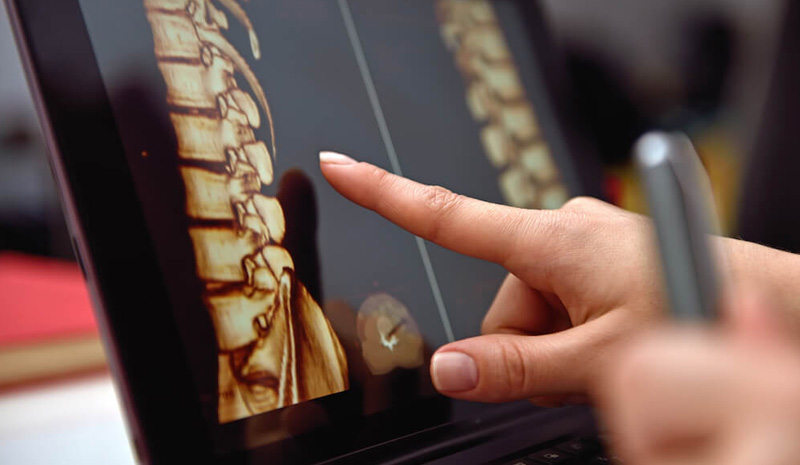
Have you recently had a spine injection to relieve pain? Maybe you have been told you need one and want to know more about it? Or maybe you are worried about exactly what this means?
At Complete Pilates we see hundreds of people who are saying the same thing.
Join the newsletter
Good news stories, exercise tips and short classes. One email a month.
Meet Mr Alexander Montgomery. Below, he is answering all the questions we hear on a daily basis in the studio and online! Remember, if you want to know more just ask us.

Do I need a Spine Injection?
Spinal steroid injections are given for two reasons; therapeutic and diagnostic.
A therapeutic injection is used when you have persistent symptoms and pain in your arms, legs, back or neck despite committing to physiotherapy or Pilates with an appropriate practitioner. It may also be used if your pain or other symptoms are too significant to complete your rehabilitation. This pain may be caused by a herniated disc, narrowing of the spinal canal (stenosis) or joint degeneration (a natural age-related process).
Diagnostic injections can help us determine which structure around your spine is causing your symptoms and helps your Consultant plan your long-term care.
What does a Spine Injection do?
Injections aim to reduce the localised swelling and inflammation in the area with the goal of reducing pain and stiffness. It gives your therapist a window of opportunity to help improve your flexibility, stability and strength and gives you a break from the pain cycle. In general, it aims to make you feel better so you can do more.
Are Spine Injections Painful?
The injected area can be painful in the first few hours or days following the procedure. Injections are often administered with local anaesthetic to help to reduce the localised pain. Your doctor may also give the injections with sedation which aims to minimise any discomfort you feel during the procedure itself. You will likely be given advice about your medications before or after discharge. If you do not understand any of this make sure to ask questions before you leave.
How Long do Spine Injections Last?
Contrary to what many people are told, there is not a definitive amount of time for which they will help. Unfortunately, in some people it does not make any difference. In a minority of people, it can last for years, but for most patients it lasts between weeks and months. A second injection may be needed, depending on your symptoms, to give the rehabilitation process more time to work.
What Should I do after a Spine Injection?
Although you may be sore after the injection, you should keep as mobile as possible within your pain limits. The local anaesthetic is administered with the steroid to reduce this initial soreness. However, you should be able to walk around within an hour of the procedure. Patients are encouraged to go back to work the next day.
General rules after an injection are:
- Keep mobile but stay away from any sport, exercise or heavy lifting for the first week following the injection. This allows time for the steroid to settle in and have its maximum effect.
- Some patients do get a “steroid flare” where the pain increases in the first week. Stay away from impact sports such as running, cycling, or weights until these symptoms have settled.
- Continue with any pain medication you were taking prior to the injections for at least two weeks. If the pain has settled consult your Consultant before stopping them.
- Book to start your rehab with your physiotherapist or osteopath 7-10 days after your injection.
- Make sure you have a follow up with your Consultant to assess how you are progressing following the injection. This is used to help plan the rest of your treatment and answer any questions you have. This is normally between 3-6 weeks after but depends on your Consultant.
When can I drive after a Spine Injection?
You can generally drive the following day.
When can I fly after a Spine Injection?
Generally, you are safe to fly a few days after your injection.
If you have a headache when standing upright after the injection you should not fly. This could be a small spinal fluid leak so please seek advice from your Consultant. The risk of spinal fluid leak is about 0.2 to 0.04%, so very low. The symptoms are headaches when you stand up which go away when you lie down and normally settle over 2-7 days.
Will my Pain Come Back After a Spine Injection?
The pain can come back after a spine injection. The aim of the injection is to reduce the swelling and inflammation around the disc, nerves and joints. If you continue to put your back under the stress that you did before the injection, then it can get inflamed again. The idea of the injection is to give you less pain so that you can rehabilitate and hopefully offload the area. If this is successful, then the pain will hopefully not come back. If the pain does return, then you may need more injections.
When can I Return to Exercise After a Spine Injection?
We normally advise people to not do too much for a week. This does include gentle exercise as well. This gives the steroid time to work and reduce your symptoms as much as possible. Some people do get a ‘steroid flare’ after the injection. This is unfortunately something that cannot be prevented and will mean that your symptoms get temporarily worse. If this happens it is important that you are given the right exercises and do it well. It is always important to return to exercise with some supervision to make sure you are doing things well. Your Physiotherapist or Consultant should be able to help you with this.
Should I see a Physiotherapist After a Spine Injection and if so, when?
In short yes. One of the main reasons for a steroid injection is to give you a pain free period of time to allow you to do rehabilitation. It is important that you use this time to strengthen, mobilise and stabilise, which will offload the affected area.
You will be recommended to go back to your rehabilitation about a week after the injection, but you should discuss this with your consultant.
How Do You Do a Spine Injection?
A spine injection is normally done in hospital as a day case which means you will be in and out in a day. It is done with the help of X-ray to make sure that we inject the exact level, and often with sedation to make you comfortable.
On the day, your Consultant will go through a consent form with you and tell you exactly what is going to happen. For any injection to your lower back, you will normally lie on your front. For any neck injections, you are generally on your side or back.
The area is cleaned with a special liquid which makes it sterile and often you will have surgical drapes surrounding the area. The injection normally takes 5-10 minutes depending on what is done. You will usually spend 15-20 minutes in the recovery bay before going back to the ward.
Are there any Side Effects to Spine Injections?
Like all medications there are potential side effects. Some are minor and temporary and some rare but more significant.
- Localised bruising to the skin
- Whitening, or pigmentation of the skin
- Reduction of fat in that area (fat atrophy)
- Dizziness (1.2%)
- Flushing with a period of warmth for several days (2.6%)
- Increase pain
- Increased or lower blood pressure
- Mood swings
- Irritability
- Anxiety
- Insomnia
- Instability in your blood sugar (diabetic patients should inform their primary care physicians about the injection prior to their appointment)
- A reduction to your immune system
- Spinal fluid leak
Excessive or prolonged usage of steroids (not a single steroid injection) can cause cataracts – a rare result of excessive and/or prolonged steroid usage, or severe arthritis of the hips or shoulders (avascular necrosis).
Data collection and research has shown that the risk of severe injection is reported to be 0.1-0.01%. The risk of damage to nerves is between 0.1% and 0.001%. In many of these cases the symptoms do resolve within a few weeks or months.
Steroid injections should not be performed on patients who have a local or systemic bacterial infection, are pregnant (if fluoroscopy is used), or have bleeding problems.
What Our Experts Say
Many people think a spinal injection is the treatment itself, but it's really an opportunity. The temporary reduction in pain gives us a valuable window to improve mobility, strengthen the muscles that support the spine and change the movement patterns that may have contributed to the problem. Rehabilitation is what delivers the long-term results.

Conclusion
A spinal injection can be a valuable part of managing back or neck pain, but it is most effective when combined with a structured rehabilitation programme. The aim is to reduce pain sufficiently to allow you to restore movement, build strength and address the underlying causes of your symptoms.
By working closely with your consultant and physiotherapist, you can make the most of the period of pain relief and improve your chances of achieving long-term recovery rather than simply managing recurring pain.
Key Takeaways
- Spinal injections are designed to support rehabilitation, not replace it. They can reduce pain and inflammation, creating an opportunity to begin or progress physiotherapy and exercise.
- They may be used for diagnosis or treatment. Spinal injections can help identify the source of pain or provide temporary symptom relief when conservative treatment alone hasn't been enough.
- Recovery doesn't end with the injection. Staying gently mobile, following your consultant's advice and restarting rehabilitation at the appropriate time are key to achieving the best long-term outcome.
- Pain relief varies from person to person. Some people experience weeks or months of improvement, while others may notice little benefit. The effectiveness depends on the underlying condition and rehabilitation.
- Physiotherapy is an essential part of recovery. Strengthening, improving mobility and correcting movement patterns during the pain relief window can help reduce the likelihood of symptoms returning.
Feeling Inspired?
If you want to experience the Complete difference and discover the benefits of one-to-one or small group Pilates, book a session at one of our London or Norfolk studios today. Not able to make it to one of our studios? We've got online options to suit you anywhere, anytime.
Our physiotherapist-led Pilates studio in Chelsea, our Angel Pilates studio, our Pilates studio in City, and our Norfolk Pilates studio in East Anglia, offer a highly tailored approach to your Pilates training. Whether your goal is to manage a health condition, rehabilitate from an injury or to improve your strength and fitness, Complete Pilates is the studio for you.
Education is Key
These blogs are designed to give information to everyone, however, it is important to remember that everyone is different! If you have not seen one of our therapists and have any questions about injuries, what you have read or whether this may be useful to you, please just ask. We are more than happy to help anyone and point you in the right direction. Our biggest belief is that education is key. The more you understand about your injury, illness and movement, the more you are likely to improve.
If you are not sure whether this is for you, simply get in touch. We are here to help!
FAQs
1. Do spinal steroid injections cure back pain?
No. Spinal steroid injections are not a cure. Their main purpose is to reduce inflammation and relieve pain, creating an opportunity to progress with rehabilitation. Long-term improvement depends on addressing the underlying cause through treatments such as physiotherapy, exercise and lifestyle changes.
2. Can I have more than one spinal steroid injection?
Yes, if your consultant feels it is appropriate. Some people benefit from a repeat injection if the first provided meaningful pain relief but symptoms return. However, the number and frequency of injections are carefully limited because repeated steroid use carries potential risks.
3. Why hasn't my spinal injection worked?
Not everyone responds to spinal steroid injections. In some cases, the injection may not target the structure causing your pain, or the inflammation may not be the main source of your symptoms. If your pain persists, your consultant may recommend further investigations or an alternative treatment plan.
4. What are the signs I should seek medical advice after a spinal injection?
It is normal to experience some soreness after the procedure. However, you should seek urgent medical advice if you develop a high temperature, increasing redness or swelling at the injection site, severe or worsening weakness, loss of bladder or bowel control, or persistent numbness that does not improve. These symptoms are uncommon but require prompt assessment.
5. Are spinal injections safe?
Spinal injections are generally considered safe when performed by an experienced specialist. As with any medical procedure, there are potential side effects and risks, including temporary soreness, bruising, steroid flare and, more rarely, infection or nerve irritation. Your consultant will discuss the benefits and risks before treatment.
Published 29 Nov 2023 · Updated 17 Jul 2026