
6 Ways Pilates Improves Sports Performance
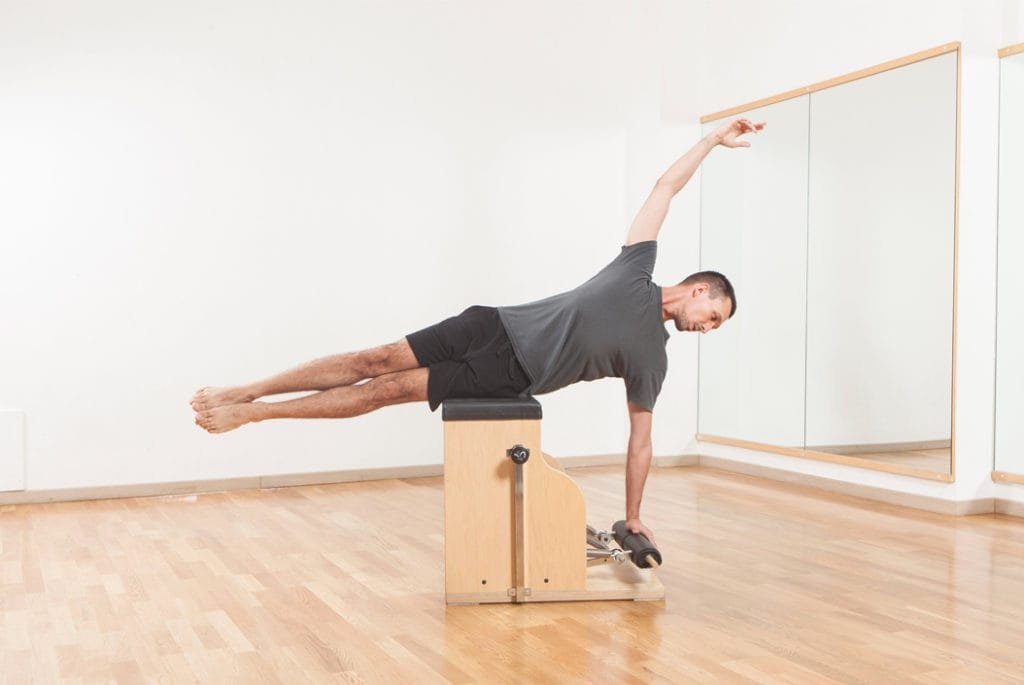
For decades now, Pilates has been a fundamental part of the fitness regime of professional dancers. Ballet dancers especially are known for using Joe Pilates’s exercises to stay efficient and strong.
More recently, elite athletes from all different sports are turning to Pilates to optimise their performance. Cristiano Ronaldo and Serena Williams are just two high-profile athletes that swear by the method to keep them injury-free and at the top of their game.
To find out why this method is becoming so popular among athletes, read on and discover the
6 Ways Pilates Improves Sports Performance:
1. Flexibility
Short hamstrings are a common side-effect of sports that involve short intervals of explosive power and speed, such as football and sprinting. This is bad news for athletes performing in these fields because shortened, stiff muscles can have a negative impact on agility and speed.
To illustrate this point, a recent study on footballers found that hamstring flexibility was a key factor for performing football-related skills like sprinting, jumping and kicking. However, regular Pilates practise can combat these problems as it is known to improve flexibility in the hips and hamstrings.
Pilates exercises are also effective at improving the flexibility of the upper body. This is especially important for golfers whose sport requires the sudden rotation of the spine under force. A stiff mid-back may cause the lower back to overwork during the swing motion in a way that increases unwanted pressure on the spine. This means that improving the flexibility of the mid-back through Pilates can protect a golfer’s spine from injury.

2. Rebalance the Body
Most sports require the use of the same muscles in the same way repeatedly. Some sports, like running, force the body to move in a single direction. This makes it strong in one plane (straight ahead), but weak when it comes to movements in other planes, such as twisting, bending and side-stepping. All of this leads to imbalances in the body, which leave it more susceptible to injury.
But Pilates is the perfect solution to these problems because it moves the body in all planes and orientations, strengthening any underused muscles. Pilates also includes many unilateral movements (exercises that work each side of the body separately) to ensure that muscles are strengthened evenly. This makes it a helpful practice for creating equilibrium in the body.
3. More Power
Pilates creates strength and stability in the hips, trunk and targets the deep stabiliser muscles. This helps tennis players and footballers to find stability and generate power – even when they’re thrown off-balance.
A powerful trunk – developed through Pilates – can also help with energy transference. This helps a cyclist generate more power, allowing them to travel faster and further.

4. Efficiency of Movement
Pilates is designed to teach the body to move in an optimal way. This benefit is advantageous in most sports, and especially those that require endurance.
Triathletes, for example, need efficiency of motion to be able to perform well in three different consecutive events. Pilates’s focus on optimal biomechanics is also of huge benefit to triathletes as it prevents overuse – and potential injury – to certain muscles. Its emphasis on functional strength and flexibility means that Pilates can also help with energy conservation. Obviously, this is a big plus for athletes competing in endurance events.
Pilates also helps develop strong core musculature, which aids cycling efficiency. Without it, stability on the saddle is compromised and leads to a side-to-side rocking motion. This lack of stability means that the cyclist has to compensate for the movement and, as a result, may lose power in their legs. This constant motion can also lead to other problems, such as back pain and saddle soreness. All of this is why cyclist need to strength their pelvis, lower back and abdominals through Pilates.
5. Injury Prevention and Recovery
Injuries are a common and costly problem in sport today. Although some causes are unavoidable (tackling in some sports, for instance), imbalances, inflexibility, weaknesses and overuse of certain muscles are also contributing factors.
However, these issues can be easily solved through regular Pilates classes with an experience instructor. And so, incorporating a regular session of Pilates into a training programme is a great way of prehabbing the body – as many elite sportspeople are discovering.
For those unavoidable injuries, clinical Pilates (like the kind we offer at Complete Pilates) is also an effective way of rehabbing the body back to full health.

6. Refine Your Sport
Using the Pilates equipment as part of a sports-specific training programme has many advantages. For one, it provides lots of useful feedback for the person using it. This can be especially helpful when trying to fix an athlete’s faulty movement pattern.
For another, the equipment is more versatile than the alternatives, such as gym equipment, free weights or resistance bands, which are traditionally used to train athletes. The detachable springs, various pulleys and adjustable pedals that make up the studio equipment can be set up to simulate certain sport-related actions. For example, through standing work on the reformer or the chair athletes can optimise their running style. Using springs attached to the trapeze table can also enable a tennis player to perfect their swing.
This is particularly important for golf players because of the complex movement pattern involved in the sport. Hitting a golf ball requires the player to move in an unnatural way: during the swing, their head turns in the opposite direction to their arms and mid-spine.
These non-functional movements leave golfers vulnerable to upper body injuries.
But there is an answer: practising using the Pilates equipment. Doing so strengthens and stabilises the body during these motions, which helps to protect it from injury. It also optimises this action to create a more powerful swing.
The Final Word:
Pilates benefits athletes – but it’s not just for them. For recreational tennis players, footballers and golfers, taking up Pilates can have huge benefits.
Increasingly sedentary lives mean that bodies everywhere are becoming stiffer, weaker and more imbalanced. It leaves weekend warriors playing sports at the end of a desk-bound week at risk of injury. But Pilates can help undo the damage of days spent hunched over your computer and keep you mobile enough to play the sports you love.
Plus, as with the sporting elite, Pilates can make your swing, kick or stride better and more efficient. So, practise it with Ronaldo-esque dedication and you too can take your game to the next level.
What Our Experts Say
The best athletes don't just train harder—they train smarter. Pilates helps develop the movement quality that underpins every sport, improving control, coordination and resilience alongside strength. Whether you're competing at an elite level or simply enjoy staying active, moving more efficiently can enhance performance while helping to reduce the risk of overuse injuries.

Conclusion
Pilates has earned its place in elite sport because it develops the qualities that every athlete needs: strength, mobility, control and efficiency. Whether your goal is to run faster, swing more freely, cycle more efficiently or simply stay injury-free, Pilates provides an excellent complement to sport-specific training. And you don't need to be a professional athlete to benefit—anyone who enjoys being active can use Pilates to move better, perform better and keep doing the sports they love for longer.
Key Takeaways
- Pilates helps athletes move more efficiently. By improving strength, mobility and movement quality, Pilates can enhance sporting performance while reducing unnecessary energy expenditure.
- Better mobility can improve performance. Increasing flexibility, particularly through the hips, hamstrings and thoracic spine, can contribute to more powerful, efficient movement in sports such as football, golf, tennis and running.
- Pilates addresses the imbalances created by sport. Unilateral exercises and multi-directional movement help strengthen underused muscles, improving balance, coordination and overall resilience.
- Strong foundations generate greater power. Developing stability through the hips, trunk and deep postural muscles allows force to be transferred more effectively during explosive sporting movements.
- Pilates is as valuable for injury prevention as it is for performance. Whether you're an elite athlete or a weekend warrior, improving movement quality, flexibility and strength can help reduce injury risk and support recovery.
Join the newsletter
Good news stories, exercise tips and short classes. One email a month.
Feeling Inspired?
If you want to experience the Complete difference and discover the benefits of one-to-one or small group Pilates, book a session at one of our London or Norfolk studios today. Not able to make it to one of our studios? We've got online options to suit you anywhere, anytime.
Our physiotherapist-led Pilates studio in Chelsea, our Angel Pilates studio, our Pilates studio in City, and our Norfolk Pilates studio in East Anglia, offer a highly tailored approach to your Pilates training. Whether your goal is to manage a health condition, rehabilitate from an injury or to improve your strength and fitness, Complete Pilates is the studio for you.
Education is Key
These blogs are designed to give information to everyone, however, it is important to remember that everyone is different! If you have not seen one of our therapists and have any questions about injuries, what you have read or whether this may be useful to you, please just ask. We are more than happy to help anyone and point you in the right direction. Our biggest belief is that education is key. The more you understand about your injury, illness and movement, the more you are likely to improve.
If you are not sure whether this is for you, simply get in touch. We are here to help!
FAQs
1. Why is Pilates good for athletes?
Pilates develops strength, mobility, balance and movement control simultaneously. This helps athletes move more efficiently, generate more power and reduce compensations that can contribute to injury.
2. Can Pilates improve sports performance?
Yes. Pilates can improve flexibility, trunk stability, coordination and movement efficiency, all of which contribute to better performance in sports ranging from running and cycling to golf, football, tennis and swimming.
3. Does Pilates help prevent sports injuries?
While no exercise can eliminate injury risk entirely, Pilates addresses many common risk factors such as poor movement patterns, muscle imbalances, reduced flexibility and inadequate stability. This makes it an excellent addition to an injury prevention programme.
4. Is Pilates useful if I already do strength training?
Absolutely. Pilates complements strength training by improving movement quality, joint mobility, balance and control. These qualities help you get more from your gym training while reducing unnecessary stress on your joints and soft tissues.
5. Is Pilates only for elite athletes?
Not at all. Although many professional athletes use Pilates, recreational runners, cyclists, golfers, tennis players and gym-goers can benefit just as much. Whether you're training for competition or simply want to enjoy your sport with fewer aches and pains, Pilates can help improve your performance and resilience.
Published 2 Oct 2018 · Updated 28 Jul 2026