
Pilates for Golf: The Benefits of Pilates for Golfers
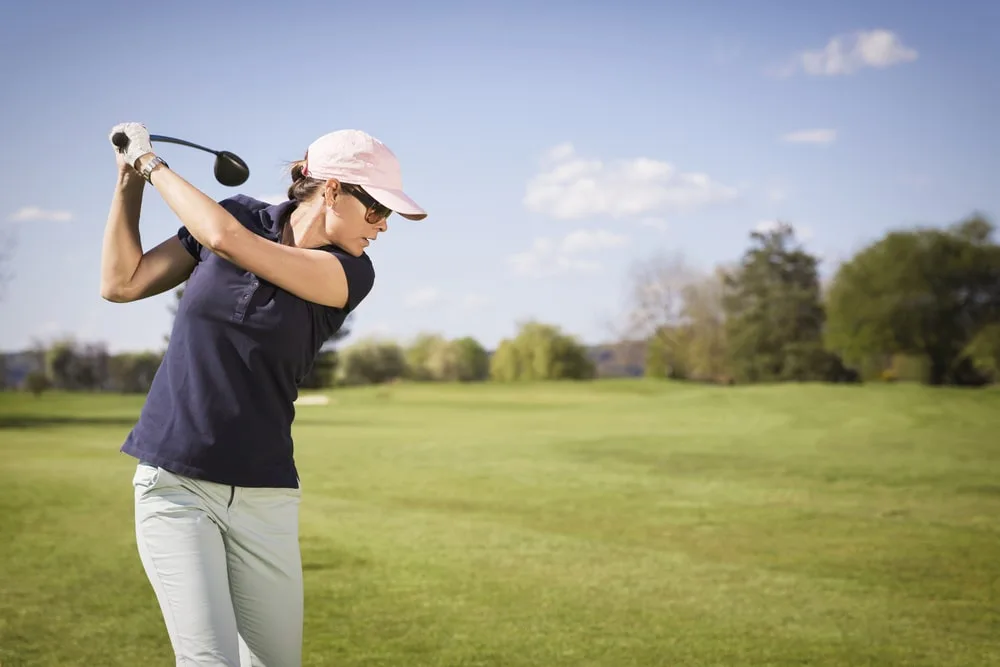
Golf and Pilates might not seem like a natural partnership. But, in fact, the emphasis in Pilates on rotation, spine flexibility and trunk stability means that players - both professional and recreational - can gain a lot from practising this method.
Not forgetting that Pilates can help golfers with injury prevention and injury recovery. With each repetitive movement - rotate, tilt, shift and extend - taken on a drive, golfers put themselves at risk of overusing particular muscles. This is where Pilates for golf becomes an attractive solution.
Join the newsletter
Good news stories, exercise tips and short classes. One email a month.
In this article, we talk in depth about the benefits of Pilates for golf, get an expert physiotherapist’s point of view (who regularly works with elite athletes such as Ryder cup golfers) and give golfers simple Pilates exercises they can do from the comfort of their home.
The Benefits of Pilates for Golfers
1. Advanced Core Strength
Having core strength in golf is just as important as any other activity. One way to improve performance, longevity and reduce the risk of injury is by training and strengthening the core.
Golf is centred around rotation of the body and driving power from the ground, through your core to the club and the ball. With a stronger core comes increased power and, therefore a more powerful, controlled swing.
Not only that, a strong core, impacts so many other factors like improving your posture and lessening the pressure on your back and neck which often causes acute back pain.

2. Enhanced Flexibility
Flexibility is one of, if not, the most important factor in becoming a successful golfer. The ability to get a good rotation between the shoulder and hip is the difference between executing a compact, powerful swing or not.
Flexibility enables golfers to reach a full range of motion which in turn allows you to reach maximum potential strength and distance.
3. Improve Body Balance & Stability
Body balance and stability creates a good foundation for golfers to execute an effective swing with power behind it.
The success behind your swing lies in the control over overall range of motion and the coordinated rotation of the body, predominantly, the shoulders and the hips. This is not possible without balance and stability from the pelvis.
Pilates helps with pelvic and spine alignment so that you’re able to transition through movements with ease and control. In Pilates, this is done by lengthening tight muscles, strengthening weak muscles and engaging the deep core muscles to increase pelvic and spine stability and improve muscular imbalances.
4. Injury Prevention & Rehabilitation
Pilates is lesser known for its ability to effectively help individuals in their injury rehabilitation and injury prevention.
Clinical Pilates, in particular, can help with all kinds of rehabilitation from acute shoulder pain to chronic back pain. This is largely down to the holistic approach of Pilates which focuses on the entire body to treat any imbalances which may be creating compensatory patterns. Using unilateral movements, Pilates aims to develop even muscles on either side of the body to reduce unnecessary pressure on overcompensating muscles.
Pilates also helps to correct postural problems which can often cause injury. A poor posture leads to both shortened and weak muscles; Pilates focuses on lengthening and strengthening muscles, particularly the core, which is great for alignment.
Pilates Exercises for Golfers
To help you reap the benefits of Pilates for Golf, here are 4 simple Pilates exercises you can do at home to improve your performance.
1. Thread the Needle
The main aim of the ‘thread the needle’ focus is to improve your spine rotation and shoulder flexibility.
- Come on to all fours.
- In a threading motion, bring your right arm through the space you’ve created between your left hand and thigh.
- Allow your left arm to bend so that you can rest your right shoulder on the ground for a deep twist.
- Return to all fours and repeat on the other side.
- Allow your top spine to twist and keep your hips level.
- Repeat several times on both sides
Related reading: Thread the needle pose benefits
2. Book Openings
The main aim of the ‘book opening’ exercises is to aid spine rotation and stretch your chest.
- Start in a side lying position with your knees bent and arms outstretched.
- Take an inhale to prepare. On the exhale, start to move your top arm in an arc. As you do so, allow your head to move in line with your spine.
- Pause with your chest facing the ceiling.
- Reverse the movement by bringing the top arm back in an arc as you untwist your upper spine. Pause in the starting position before repeating the movement.
- Remember to reduce your range of movement if you feel this in your lower back. This exercise is designed to mobilise your upper spine.
3. Quadruped
The main aim of the quadruped exercise is to improve core and shoulder stability.
- Come to all fours.
- Extend one leg out behind you then return it. Swap legs.
- As you do so, extend the opposite arm out in front of you.
- Keep shoulders and hips level as you move. Don’t allow your spine to sag down towards the earth
4. Criss Cross
The main aim of the ‘Criss Cross’ exercise is to improve abdominal strength and torso rotation.
- With your hands behind your head and legs in table top, curl your upper body up until your shoulder blades are off the mat.
- Rotate your upper body and bring one elbow to the opposite knee. Swap sides.
- Repeat this movement quickly – this a dynamic exercise.
- Follow these instructions for the Pilates hundred if you experience neck pain during this exercise.
Related reading: Pilates criss cross benefits
Pilates for Golf: Case Study with Louise Aylwin – Golf Physio and Complete Pilates instructor.
What is your personal experience of golf and Pilates? Do you train golf players using Pilates exercises?
“I worked on the European Golf Tour for 4 years, and still regularly treat and advise European and American golfers. With Ryder cup fever upon us, I should also mention my Physio and Pilates work with Paul McGinley, Thomas Pieters, and Tommy Fleetwood, as well as other Ryder cup players. I regularly use Pilates for their rehab and activation before their golf game.”
“Pilates can not only help reduce the number of injuries golfers suffer but can also improve movement and therefore improve their game.”
Why do you feel Pilates and golf work well together?
“In golf, you are twisting your body on a drive, squatting down to measure a putt or leaning over to pick up a ball. In other words, golfers are constantly torqueing their bodies.”
“Golf also requires players to repeat the same essential movements. As a result, some muscles become overused and others weaken which causes an imbalance. Pro golfers are now turning to Pilates as an essential training tool that keeps the body in balance as well as actually improving their performance.”
“Both Pilates and golf share same basic principles. The golf swing principles are fluid motion, precision, accuracy and power, and Pilates principles focus on control, concentration centring, precision, flow of motion and proper breathing.”
Why is the combination of Physio and Pilates for golf performance enhancement and injury rehab so effective?
“Pilates helps you improve your core, build up the back muscles, elongate and align the spine, strengthen abdominals. It will help increase overall flexibility, strength and balance. It will increase range of motion in hips, shoulders and spine. It can also contribute to concentration through focused diaphragmatic breathing.”
Are there certain aspects of Pilates that support specific parts of the golf game?
“An underlying fault in a swing is the body itself. A limited shoulder rotation can affect golf in either the back or down swing. This could be improved through exercises from Pilates to improve shoulder rotation, torso rotation, hip rotation, and shoulder strength and oblique slings. The limitations need to be addressed at their physical source.”
Why You Should Take Up Pilates as a Golfer
At Complete Pilates, we specialise in clinical, physio-led Pilates classes to help women and men golfers achieve their goals.
Whether you are a new or experienced golfer, Pilates could be the answer to improving your performance, preventing injury or helping you to recover from an injury.
What Our Experts Say
Golf is a highly repetitive sport that requires strength, mobility and precise movement control. Many golfers focus on technique but overlook the physical limitations that affect their swing. Pilates helps improve spinal and hip mobility, core stability and shoulder control, allowing golfers to move more efficiently while reducing the risk of overuse injuries. It's why so many professional golfers now include Pilates as part of their regular training.

Conclusion
Golf places repeated demands on the spine, shoulders, hips and core, making movement quality just as important as strength. Pilates complements golf by improving flexibility, stability, balance and body awareness, helping golfers generate power more efficiently while reducing unnecessary strain on the body.
Whether you're aiming to increase driving distance, improve consistency or prevent recurring injuries, Pilates can become a valuable part of your training programme. Working with a physiotherapist or Clinical Pilates instructor can help identify movement limitations and develop a programme specific to your game.
Key Takeaways
- Pilates can improve your golf performance. It develops the core strength, rotational mobility and stability needed for a more powerful, controlled and efficient golf swing.
- Mobility and stability work together. Improving flexibility through the spine, shoulders and hips while strengthening the core can help maximise swing mechanics and consistency.
- Pilates may help reduce the risk of golf-related injuries. By addressing muscle imbalances, improving posture and enhancing movement quality, Pilates can reduce the repetitive strain placed on the body during golf.
- Clinical Pilates supports both rehabilitation and performance. Whether you're recovering from injury or looking to improve your game, Pilates can be tailored to your individual movement patterns and goals.
- Simple Pilates exercises can make a difference. Exercises such as Thread the Needle, Book Openings, Quadruped and Criss Cross help improve the rotation, stability and control required on the golf course.
Feeling Inspired?
If you want to experience the Complete difference and discover the benefits of one-to-one or small group Pilates, book a session at one of our London or Norfolk studios today. Not able to make it to one of our studios? We've got online options to suit you anywhere, anytime.
Our physiotherapist-led Pilates studio in Chelsea, our Angel Pilates studio, our Pilates studio in City, and our Norfolk Pilates studio in East Anglia, offer a highly tailored approach to your Pilates training. Whether your goal is to manage a health condition, rehabilitate from an injury or to improve your strength and fitness, Complete Pilates is the studio for you.
Education is Key
These blogs are designed to give information to everyone, however, it is important to remember that everyone is different! If you have not seen one of our therapists and have any questions about injuries, what you have read or whether this may be useful to you, please just ask. We are more than happy to help anyone and point you in the right direction. Our biggest belief is that education is key. The more you understand about your injury, illness and movement, the more you are likely to improve.
If you are not sure whether this is for you, simply get in touch. We are here to help!
FAQs
1. Is Pilates good for golfers?
Yes. Pilates is an excellent complement to golf because it improves core strength, flexibility, balance and spinal mobility. These qualities can help golfers generate more power, improve swing consistency and reduce the risk of injury.
2. Can Pilates improve my golf swing?
Pilates can help improve your golf swing by increasing rotation through the hips and thoracic spine, enhancing core stability and improving posture. Together, these improvements allow for a smoother, more controlled and efficient swing.
3. Can Pilates help prevent golf injuries?
Yes. Golf involves repetitive twisting and loading through the spine, shoulders and hips. Pilates helps address muscle imbalances, improves movement patterns and strengthens the muscles that support these joints, which may reduce the likelihood of overuse injuries.
4. What are the best Pilates exercises for golfers?
Exercises such as Thread the Needle, Book Openings, Quadruped and Criss Cross are excellent for golfers because they improve spinal rotation, shoulder stability, core strength and balance—all key components of an effective golf swing.
5. Should golfers combine Pilates with strength training?
Absolutely. Strength training builds power, while Pilates improves movement quality, flexibility, stability and body awareness. Combining both creates a well-rounded programme that can enhance performance, improve consistency and support long-term injury prevention.
Published 7 Apr 2021 · Updated 14 Jul 2026