Pilates For Runners: Is Pilates Good For Runners?
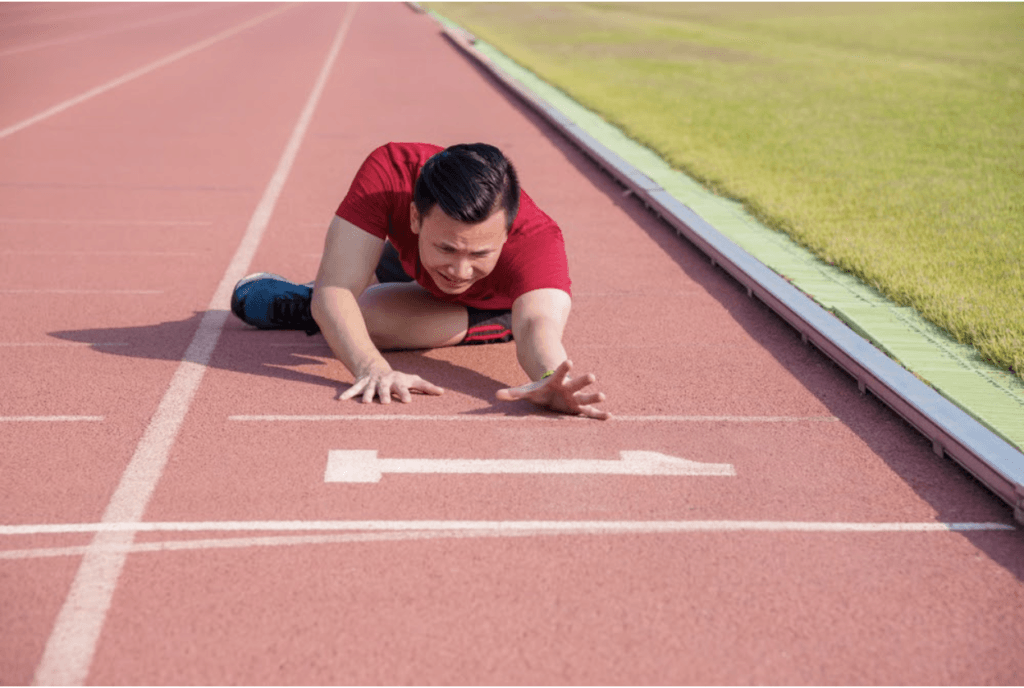
Did you plan to run in an event this year but you didn’t make it to the start line? What went wrong?
What went wrong? Is it because you’ve had an injury or a niggle that just won’t go away or have you just not been able to stick to your well-intentioned training plan that you set last year? Why aren’t you going to get to the start line? Was it something to do with your training? Is it something you didn’t do or that you did do?
Did you include any strength training or Pilates for runners in your program? As a runner, what you like to do best is just to get your shoes on and go out for a run. That’s the beauty of it. It’s simple, it’s easy. And actually, all the other stuff, the strength training, the Physio Pilates, the yoga, the swimming, cross-training, is all just a bit of a complicated faff!
However, what if you knew that Pilates could help you get to that start line injury free and ready for a PB? Here we answer the question s Pilates good for runners?” Find out more below and decide for yourself.

Why Is Pilates Good For Runners?
Why do health and fitness professionals repeatedly recommend that runners do Pilates, strength training and cross-training? Here are six good reasons.
1. Resilience For Running!
We need our bodies to be incredibly resilient. When we run we put a lot of stress and a lot of load through our body repeatedly over time. When we are running longer distances we need our bodies, our muscles, our tendons and joints to be able to cope with this stress.
We know that the majority of injuries from running happen because of overload. We’re doing too much and our bodies just can’t cope. We know that when we’re running, we can get up to five times our body weight going through the soft tissues of our lower limbs. So you need to make sure that there’s something in your training program that’s getting your body ready for that and that is going to be some strength training - which means doing some loaded weight training.
2. Energy Efficiency For Runners
Energy efficiency is vital in long-distance running.
Once you do get to the start line, you need to have energy reserves to be able to get to the finish line. This is particularly relevant for longer-distance running and you don’t want to waste any of that energy.
Maybe your spine is a bit stiff or a bit flexed and so your head is poking forwards. This will make your body work extra hard to resist gravity.
Having to work hard to maintain that posture over a long period of time will use up essential energy that you need to be putting into your legs.
If you do some exercise to work on your posture and spinal mobility this will make you as efficient as possible so that you’re using your energy systems in the best way possible to get you to the finish line.

3. Core Strength For Runners
What is the core? Everyone talks about it but we don’t necessarily understand what they mean or how to get it stronger. It can be more helpful to think about it being your trunk strength.
So it’s the front, the back, the sides of your trunk, and that’s really your foundation. The core is the base from which everything else can work efficiently. The core gives you efficient use of your lower limb muscles and efficient use of your arms when you’re running. Having better core strength will reduce the risk of you overloading your muscles, tendons and your lower limbs, so you’re going to reduce the risk of injury.
Choosing Pilates for your core strength training can also improve your running technique. The stronger and more stable and controlled you are from your centre, the better your technique can be, and the better and more efficiently you can use your limbs, which again is going to reduce the risk of injury and maybe make you able to run a little bit faster.
4. Recovery For Runners
Pilates can aid our recovery after training runs. Running is a high-impact exercise, so every time you take a step, you’re pounding down into the floor.. All of that force is coming back up into your body and you’re having to absorb that shock through your joints and muscles.
No impact or low-impact exercise such as Pilates or swimming or yoga gives your body the ability to actively recover from the higher intensity of running. You are still working on mobility and muscle activation, but you are giving your body that recovery time where it’s not doing repeated impact loading.
This will reduce the risk of injury, and get you to the start line healthy.
We can’t mention recovery without talking about sleep. Over the past few years, there is an accumulation of evidence from sports science showing that getting enough sleep is necessary for muscle regeneration following exercise damage and for the regulation of our hormones and immune system. It is important to get 7 - 9 hours of good quality sleep when you are training intensively.
Related Reading: why is sleep important for injury recovery?

5. Breathing For Runners
One of the main principles of Pilates is breathing. During Pilates, you may practise breathing exercises or use breathing to assist your movements. Pilates enhances your awareness of your breathing patterns.
It is common, for example, for people to breathe at a shallow depth. This shallow breathing means you are not using the full capacity of the ribcage and diaphragm to get more oxygen into your system. If you can translate improved breathing patterns into your running, it can have a positive effect in terms of energy efficiency. If you are overusing the muscles in your neck and shoulders when you’re breathing, you’re not going to be expending energy there.
Instead, you’re going to be using your diaphragm and breathing through the whole of your chest and lungs.
If you improve your breathing pattern, you will be getting plenty of oxygen transferring through your lungs and into your blood flow. This is essential for the energy systems of the body.
Another reason why breathing is so important is that your diaphragm is part of your core. The diaphragm works with the deep abdominals, pelvic floor and spinal muscles to give you a strong and stable centre. Breathing well and using your breath when you move can really help with that.
6. Specificity Of Training For Runners
Specificity is a classic training principle. The idea of specificity in training is that your body adapts specifically to the type of demand placed upon it.
For example, your gluteal muscles work in different ways depending on whether your foot is in contact with the floor or not, and whether you are upright or in a seated position. So working your gluteals in a sitting position or squat position may be more suitable for a cyclist and working the gluteals in a standing position may be more suitable for a runner. Including jumping and hopping training will be appropriate for a runner but is not necessary for the cyclist.
You want to make sure that you are working specifically for running and that’s going to be whether it’s strength training or Pilates training.
Pilates for running gives the body the ability to work more through the complex movements that are actually required for running. People often think running is simple, and that we should all just be able to do it. However, we need a good amount of hip flexion, extension, and rotation in the hips. We need rotation in the spine and in the body. e need good control of the movement through our shoulders and our head and neck posture.
If you train with either a strength and conditioning coach or a Pilates instructor, they can work with you to make sure that you have a programme that takes into consideration the physical requirements for running. This will mean that your body is as efficient as possible. In turn, this will increase the likelihood that you can get to the start line fully healthy.
So those are the six important benefits of Pilates for runners, explaining why runners should be including Pilates and strength training in their programs.
What if you are one of those people who is perhaps injured and can’t get to the start line?

What Our Experts Say
I believe Pilates is one of the most useful cross-training tools for runners because it helps address the areas running alone often misses. It improves trunk control, breathing, posture, mobility and single-leg stability, all of which are essential for efficient running. For runners managing niggles or repeatedly missing the start line through injury, a tailored Pilates programme can be a powerful way to build resilience and confidence.

What Should Every Runner Do?
Firstly, if you’ve got an injury or a niggle and you’re thinking, “I’m not sure what to do,” go and get it checked out. It is important to do it sooner rather than later. There might be things that you can do right now to help you quickly recover from that injury rather than allow the problem to get worse. If you book an appointment with a physiotherapist they will fully assess you and can refer you to a sports doctor if you need to have any further investigations or treatment.
Perhaps you have already seen someone for an injury and you have had it diagnosed? You may know what you have injured and what you need to do to recover, but have you considered the underlying causes of that injury? Has the person that you saw looked at factors that may have contributed to your injury such as muscle imbalances or training errors? When choosing someone to look at your injury, make sure you choose a fully qualified health professional who can assess you, look at your movement patterns and give you a programme that’s going to help you get stronger, fitter, healthier, and better for next time that you tackle that event
Strength And Conditioning For Runners
If you choose to work with a strength and conditioning coach, make sure you find a strength and conditioning coach who is fully qualified and understands running. It is important that your coach understands the mechanics of running and isn’t just going to load you up with heavy weights on both legs.
Running requires that you work with single-leg strength exercises and exercises that recreate the movements of running, such as single-leg squats and deadlifts. It is also important to work with a programme that is tailored to the individual needs of your body.
How Can Pilates Help Runners?
It is beneficial to work with a Pilates instructor because they are experts in movement. A Pilates instructor looks at people moving all the time and looks at their movement patterns and looks at where there might be restrictions on mobility.
Working with a Pilates instructor can highlight areas of weakness that you have never noticed before and have never worked on that are going to really make a difference for you.
A Pilates instructor can assess you on a one-to-one basis and put together a program that you can follow that is tailored specifically to you and your needs. This means that you are following a customised programme instead of a generalised one which is bound to produce better results.

Consistency Is Key For Running Training
It’s really important to be consistent. You know that with your running training, but it applies to your Pilates and strength training as well. Once you’ve got a program in place whether it is strength training, Pilates, or other cross-training, stick with it.
Your body takes time to respond to training. Not only do our tissues such as muscles and ligaments take time but our nervous system also takes time. It takes up to six weeks for your nervous system to adapt to new exercises. As your nervous system adapts, your movement control improves and you will feel stronger. However, your muscles take a lot longer to adapt to training and it can take a minimum of three months. You will need to ensure you give your body that time to respond.
Cross-training is going to be something that you include for the long term to give you the results next time around when you’re trying to get to the start line of that event.
It is important to note that your programme shouldn’t always be the same. Our brains and bodies enjoy lots of variety. Whilst consistency is important, if you’ve been doing the same things for 6 months or so, you can mix up your programme.
You can see a coach, trainer or physiotherapist again to review your programme. Your professional can vary the exercises to keep things interesting or progress exercises that have become too easy.
Our body responds best and most efficiently when we give it variety. We can plateau in our training if we are doing the same thing all the time.
If you have to miss an event because of injury the great thing about the fact that running has become so popular is there is always another event. There’s always a next time. You can use injury time as an opportunity to learn more about rehabilitation, strength training and cross training. All of these things will help you to make your body stronger, more efficient and more resilient and you will be able to perform better next time.
Can Pilates Be Combined With Other Workouts?
When it comes to exercising, usually people have their “one thing” they like doing whether that’s running, going to the gym or swimming but what they often don’t realise is that combining a range of exercises can really aid your ability in one.
Combining different types of exercise enables you to train your body in a variety of ways - from cardiovascular fitness to flexibility and strength. For example, combining running with Pilates and weight lifting will mean you’re ticking the cardio box, improving your flexibility which will ultimately help you move better and you’ll be building strength which will help with injury prevention or endurance.
Key Takeaways
- Pilates can be a valuable addition to a runner’s training programme, helping to improve strength, mobility, breathing, recovery and movement efficiency.
- Most running injuries are linked to overload, so runners need bodies that are strong and resilient enough to tolerate repeated impact.
- Core and trunk strength support running technique, helping the arms and legs move more efficiently while reducing unnecessary strain through the lower limbs.
- Pilates can support active recovery, offering low-impact movement that helps maintain mobility and muscle activation without adding more running load.
- Consistency matters, as the body needs time to adapt to Pilates, strength training and cross-training for lasting benefits.
Join the newsletter
Good news stories, exercise tips and short classes. One email a month.
Conclusion
Running may feel simple, but it places repeated load through the muscles, tendons and joints. To stay injury-free and perform well, runners need more than just running miles. Strength, mobility, trunk control, breathing, recovery and movement efficiency all play an important role.
Pilates can help runners build a more resilient and efficient body. It supports posture, spinal mobility, breathing mechanics, trunk strength and control through the hips, pelvis and shoulders. This can help reduce injury risk, improve technique and make running feel smoother and more sustainable.
For runners returning from injury or preparing for an event, Pilates can be especially helpful when combined with appropriate strength training, recovery and a consistent training plan. The best results come from a tailored programme that matches the individual runner’s body, goals and running demands.
Related Reading
- 8 Last-minute marathon tips
- The Complete Pilates Post marathon recovery plan
Feeling inspired?
If you want to experience the Complete difference and discover the benefits of one-to-one or small group Pilates, book a session at one of our London or Norfolk studios today. Not able to make it to one of our studios? We've got online options to suit you anywhere, anytime.
Our physiotherapist-led Chelsea Pilates studio, our Angel Pilates studio, our Pilates studio in London City, and our Norfolk Pilates studio in East Anglia, offer a highly tailored approach to your Pilates training. Whether your goal is to manage a health condition, rehabilitate from an injury or to improve your strength and fitness, Complete Pilates is the studio for you.
Education is key
These blogs are designed to give information to everyone, however, it is important to remember that everyone is different! If you have not seen one of our therapists and have any questions about injuries, what you have read or whether this may be useful to you, please just ask. We are more than happy to help anyone and point you in the right direction. Our biggest belief is that education is key. The more you understand about your injury, illness and movement, the more you are likely to improve.
If you are not sure whether this is for you, simply get in touch. We are here to help!
FAQs
Is Pilates good for runners?
Yes, Pilates can be very beneficial for runners. It helps improve strength, mobility, posture, breathing, trunk control and movement efficiency, all of which can support better running performance and reduce injury risk. It is also a great form of active recovery so can really help after intense training.
Can Pilates help prevent running injuries?
Pilates may help reduce injury risk by improving strength, control, mobility and body awareness. Since many running injuries are linked to overload, adding Pilates and strength training can help the body tolerate running demands better. It will also mean that it is stronger to perform the task at hand and is working as efficiently as possible.
Should runners do Pilates or strength training?
Ideally, runners should include both. Pilates helps with movement control, mobility, breathing and trunk stability, while strength training helps build the load capacity needed for running. Together, they can be a strong combination and compliment each other well.
How often should runners do Pilates?
This depends on your goals and training load, but many runners benefit from one to two Pilates sessions per week. Consistency is more important than doing a lot at once, as the body needs time to adapt. This also fits in well with being used as an active recovery method.
Can Pilates help runners recover?
Yes, Pilates can support active recovery because it is low impact while still improving mobility, muscle activation and body awareness. It gives the body a break from repeated impact while still supporting movement and strength. This is why it is a great active recovery method as it will also help you to improve whilst you are also 'taking a break' from running.
Published 15 Aug 2023 · Updated 13 Jul 2026