Pregnancy Pilates Benefits: The 5 Reasons
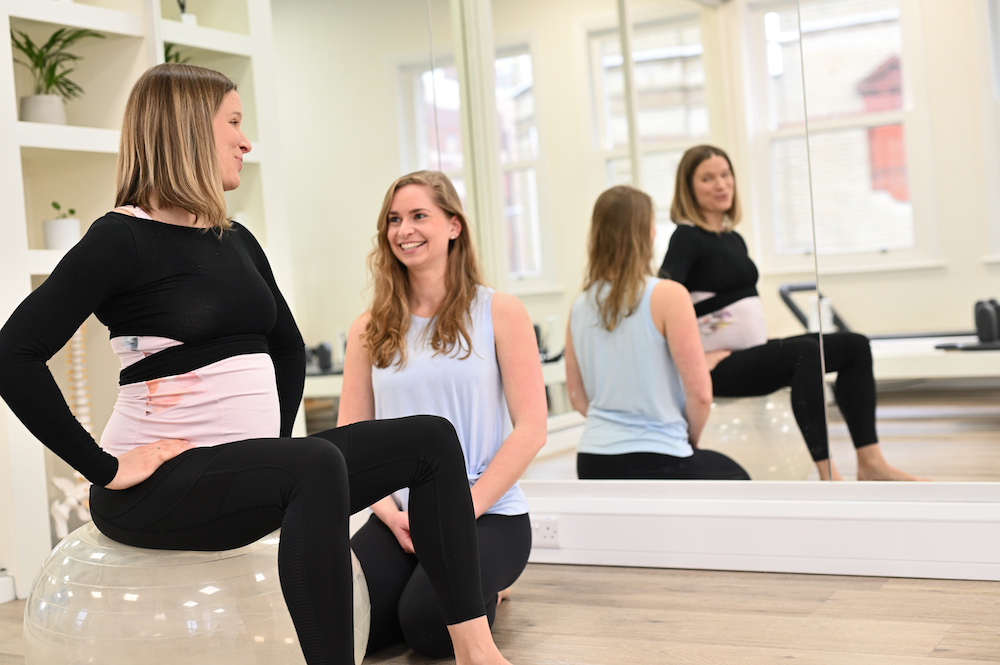
Pregnancy might seem like the perfect time to give up on the gym and put your feet up. But according to baby charity Tommy’s, keeping active during pregnancy is important for both mental and physical wellbeing. Plus, it can also help prevent certain pregnancy-related health conditions from developing.
Not all forms of exercise are safe for prenatal women, however, which is where pregnancy Pilates comes in.
Join the newsletter
Good news stories, exercise tips and short classes. One email a month.
Why Pregnancy Pilates?
Pregnancy Pilates offers all the usual benefits of the method, including strengthening and lengthening muscles, and improving mobility and coordination. In a pregnancy Pilates class, however, all exercises are adapted to make it suitable for prenatal women. This means that pregnancy Pilates is a safe way to exercise throughout your pregnancy.
Pilates also concentrates on areas of the body that need to be strong for carrying a baby bump around and for labour, i.e. the pelvic floor. Practising Pilates is therefore an effective way of maintaining physical health during pregnancy and of preparing your body for birth.
There are countless other benefits of taking regular Pilates sessions during pregnancy, but below you’ll find the 5 most significant ones according to the experts at Complete Pilates.
1. Keeps you strong and stable
Although pregnancy is not the time to start working on those abs, it is important to keep your trunk (an area that covers your abdominals, sides and back) strong throughout the prenatal period.
This is important because a growing bump can result in diastasis recti, meaning the separation of the abdominals. But maintaining strength in your stomach (safely!) through Pilates exercises and good breathing will help prevent this from happening.
A pregnancy bump also adds weight to your front, bringing your centre of gravity forward. This then throws your body out of alignment, which can lead to back pain.
But Pilates can be the solution to this, too. Because the Joe Pilates method is great for keeping your postural muscles, like your back, glutes and hamstrings, strong. This will ensure you stay stable and upright during pregnancy, and so should help you avoid many of the usual bump-related aches.

Pilates is a great way for prenatal women to stay fit
2. Safe at every stage
Aside from being low-impact and keeping your heart rate steady, Pilates is also considered a great choice for pregnant women because its exercises can be adapted to suit you as you progress through the different stages of pregnancy.
Inversions, for instance, can be a no-go for women in their first trimester because of feelings of dizziness. But a good pregnancy class should avoid these, or offer modifications when it comes to any inversion exercises.
Given that each pregnancy is unique, a 1-2-1 session with an expert pre- and post-natal instructor can be an even better choice for prenatal women looking to keep fit.
In an individual session (as opposed to a class) the instructor is able to meet your specific needs through their selection of exercises. Unlike a class, a personalised session with an instructor can also be made more or less intensive to accommodate for changes in hormones and energy levels.
If you’re pregnant and a Pilates beginner then a 1-2-1 session may also the best and safest option for you.
3. Healthy pregnancy and a better birth
Relaxin, one of the hormones produced during pregnancy to prepare for birth, creates a loosening of the ligaments around joints. This results in more instability in the body during pregnancy, which can lead to pelvic and lower back pain.
But strengthening your deep stabilising muscles and glutes – a focus in Pilates classes – can help counter this laxity. And so, a regular Pilates session during pregnancy may mean you are less likely to experience pain in your pelvis and back.
Pilates also works within a controlled range and focuses more on increasing strength and mobility rather than simply stretching. This means that pregnant women experiencing increased laxity in their joints aren’t at risk of hurting themselves.
On top of all that, reports have shown that weight-bearing exercises can result in a shorter and more straightforward delivery. Pilates as a weight-bearing exercise therefore has the potential to improve your labour.

Pilates can help you have an easier labour
4. Strong and stretchy pelvic floor
Most pregnant women will have heard that having a strong pelvic floor is important. And it is true – a strong pelvic floor is essential because it counters the downward pressure on the organs and pelvic floor created by a growing baby.
However, few people are aware of the fact that a healthy pelvic floor needs to be strong and stretchy, and it has to be able to release as well as contract. This is particularly important during labour when the pelvic floor needs to let go so that the baby can be pushed out!
Without this women risk sustaining a trauma to their pelvic floor during pregnancy or labour, which can lead to incontinence issues.
Luckily, Pilates exercises focus on pelvic floor strengthening as well as release work. At some Pilates studios (like at Complete Pilates), pregnancy Pilates teachers will also be able to draw on the expertise of women’s health Physios for added guidance.
These Physios are experts in – you guessed it – women’s health, and can check the strength of the pelvic floor using ultrasound. This means that any potential problems with the pelvic floor can be discovered quickly and then treated using Pilates exercises.

Pilates exercises are safe during pregnancy
5. Better breathing
Studies have shown that learning to breathe properly (as opposed to shallowly and in our chests as most of us do) has many positive side-effects. These include stress reduction and a lowering of blood pressure.
We recognise the power of good breathing in Pilates and use it to treat aches and pains, facilitate movement and to improve the health of the pelvic floor. Pilates also supports good breathing habits through things like diaphragm and abdominal release work, a combination of which allows for a fuller breath.
This means that Pilates can be especially useful for pregnant women who often have trouble breathing. This is caused by a growing baby putting pressure on the diaphragm, which in turn creates physical restrictions preventing pregnant women from inhaling deeply.
Learning to breath properly through Pilates has other benefits for mums-to-be, too: it can keep you calm and help you manage any baby-related stresses – both before and after the birth. Plus, a good strong breath will serve you well during labour!
Benefits of Pregnancy Pilates: How to Stay Safe
If you’re interested in taking Pilates classes during pregnancy then you’ll need to make sure you choose a Pilates teacher who is pre-and postnatal trained. Not all Pilates instructors are qualified to teach pregnant women – and if they haven’t done the training then they won’t know which exercises are appropriate and safe for you and your baby.
The final word: choose an expert Pilates instructor to guide you through your pregnancy. Not only will this keep you and your bump safe, but by doing so you’ll reap the numerous benefits pregnancy Pilates has to offer.Read more about the benefits of Pilates here.
Check out the pre-and postnatal services at Complete Pilates by clicking here.
What Our Experts Say
Pregnancy Pilates is not about pushing for greater intensity. It is about maintaining strength, mobility and confidence as the body changes. With the right modifications, Pilates can support posture, pelvic floor function and breathing throughout pregnancy while helping women prepare physically for birth.
Conclusion
Pregnancy Pilates can help you remain strong, mobile and confident as your body changes. Its focus on posture, breathing, pelvic floor function and controlled strengthening makes it particularly well suited to the physical demands of pregnancy and preparation for birth.
Every pregnancy is different, so exercises should be adapted to your stage of pregnancy, symptoms and previous experience. Working with a qualified pre- and postnatal instructor ensures that your programme remains safe, comfortable and appropriate throughout each trimester.
Key Takeaways
- Pregnancy Pilates is a safe, adaptable way to stay active. Exercises can be modified throughout each trimester to accommodate changes in balance, energy levels and mobility.
- Pilates strengthens the muscles that support your changing body. It targets the deep abdominals, back, glutes and pelvic floor to improve posture and reduce strain.
- A healthy pelvic floor needs strength and relaxation. Pregnancy Pilates teaches both contraction and release, which are important for supporting the baby and preparing for birth.
- Controlled movement may help with pregnancy-related discomfort. Improving core stability, hip strength and spinal mobility can help manage lower-back and pelvic pain.
- Specialist instruction matters. A pre- and postnatal-trained Pilates instructor can modify exercises safely and tailor sessions to your pregnancy.
Feeling Inspired?
If you want to experience the Complete difference and discover the benefits of one-to-one or small group Pilates, book a session at one of our London or Norfolk studios today. Not able to make it to one of our studios? We've got online options to suit you anywhere, anytime.
Our physiotherapist-led Pilates studio in Chelsea, our Angel Pilates studio, our Pilates studio in City, and our Norfolk Pilates studio in East Anglia, offer a highly tailored approach to your Pilates training. Whether your goal is to manage a health condition, rehabilitate from an injury or to improve your strength and fitness, Complete Pilates is the studio for you.
Education is Key
These blogs are designed to give information to everyone, however, it is important to remember that everyone is different! If you have not seen one of our therapists and have any questions about injuries, what you have read or whether this may be useful to you, please just ask. We are more than happy to help anyone and point you in the right direction. Our biggest belief is that education is key. The more you understand about your injury, illness and movement, the more you are likely to improve.
If you are not sure whether this is for you, simply get in touch. We are here to help!
FAQs
1. Is Pilates safe during pregnancy?
Pilates is generally considered safe during an uncomplicated pregnancy, provided exercises are appropriately modified. You should tell your instructor that you are pregnant and seek advice from your midwife or doctor if you have complications, pain or concerns.
2. Can I start Pilates while pregnant if I have never done it before?
Yes, many women can begin Pilates during pregnancy if they have no medical complications. Starting with a pregnancy-specific class or one-to-one session is advisable so that you can learn the correct breathing, alignment and pelvic floor techniques at an appropriate intensity.
3. How often should I do Pilates during pregnancy?
Many pregnant women benefit from two or three sessions per week, although the right frequency depends on your fitness, energy levels and symptoms. You can do a combination of at studio based and at home classes to work around your schedule and budget. Pilates can form part of a wider pregnancy exercise routine that also includes activities such as walking or swimming.
4. When should I stop lying on my back during pregnancy Pilates?
As pregnancy progresses, prolonged exercise lying flat on your back may become uncomfortable and should be modified. Your instructor can use side-lying, seated, standing or elevated positions to keep you comfortable and avoid symptoms such as dizziness or nausea.
5. Can pregnancy Pilates help with back and pelvic pain?
Pilates may help reduce pregnancy-related lower-back and pelvic pain by strengthening the abdominal, back, hip and pelvic floor muscles that support the pelvis and spine. Exercises should remain comfortable and be adapted if pain increases.
Published 5 Jul 2018 · Updated 20 Jul 2026