
Here’s Why This Professional Skier Swears by Pilates
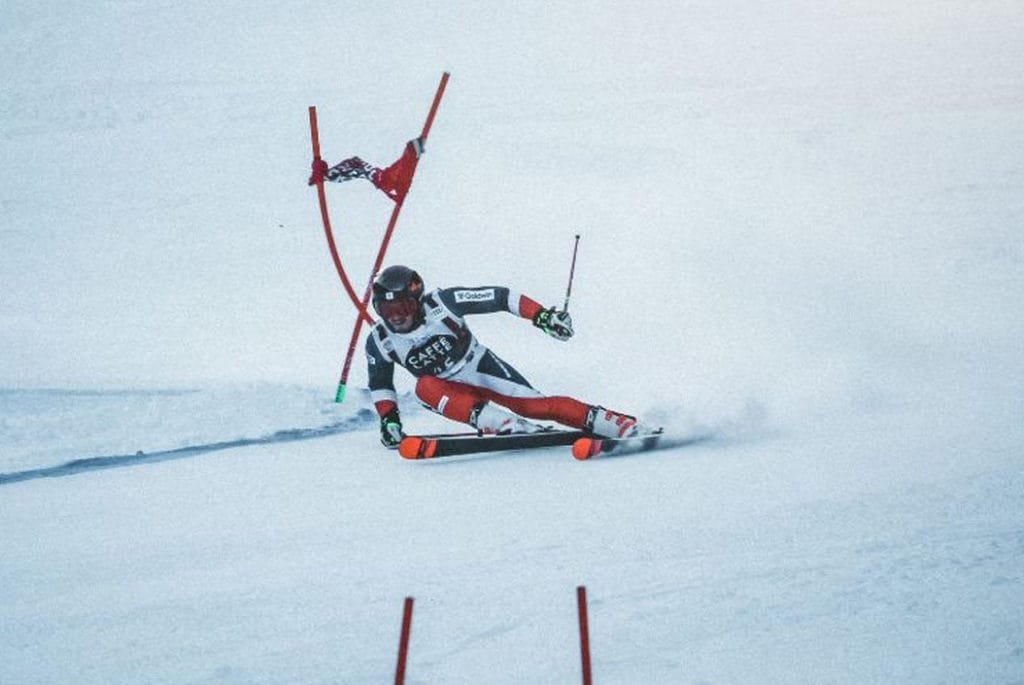
If you’re a skier, having a regular Pilates practice is one of the best things you can do.
Why? Because its focus on stability, mobility and strength prepares your body for the slopes, improves your skiing technique and can help you avoid injuries.
That’s why professional British Alpine skier, Charlie Raposo, swears by the method, practising it 2-3 times a week as part of his training routine.
Here Charlie talks about his experience of Pilates with Complete, and explains how his 1-2-1 sessions have made him a more efficient skier and have helped him avoid the usual ski-related niggles.
Q. Why did you start doing Pilates with Complete?
A. I started to do Pilates because my strength and conditioning coach, Jonny Lomax, thought it would massively compliment my already rigorous physical training schedule.
We also concluded Pilates would be a massive help with some ongoing niggling back issues – little did I know [when I started] how much it would help.
Q. Why did you choose to train with Complete Pilates instead of another studio?
A. Helen O’Leary, founder and CEO of Complete Pilates, is not only an expert in her field of Pilates, but also in sports rehabilitation and has worked for many years in elite sports. Her knowledge has certainly trickled down to the rest of her Pilates team, too.

Q. Do you feel Pilates has improved your skiing technique? If so, how?
A.100%. [Pilates] has been a massive asset over the last few years.
It just allows my body to be firing in the right places and the right small muscle groups. It also helps me to stabilise my pelvis which in turn stops my back from getting incredibly tight.
Q. Are there certain exercises you focus on in your 1-2-1 sessions to help your skiing?
A. We do all kinds of different exercises, but [usually] with a focus on stability and control through my hips and back. I get so much strength training done during my weight lifting sessions so Pilates is a time to learn to control and stabilise that power.
Q. Which aspect of Pilates do you find most enjoyable? Which parts do you find the most challenging?
A. I would say the best part is seeing progress in a certain movement, which usually means it becomes easier.
But I struggle with EVERY movement at first. I also complain a lot, [which I] always get a hard time for!
Q. What does your normal weekly training routine look like? How does Pilates fit into that?
A. I generally have 10-12 sessions of training a week, so it’s pretty busy. I usually do Pilates 2-3 times a week.
Q. Do you practise any mat Pilates exercises when you travel?
A. I certainly take some stuff away from Pilates and use it when I’m on the road. I have some very extensive warm-up, activation, and mobility sessions.
Keen to discover how Pilates can help improve your skiing? Then why not get in touch or book today!
What Our Experts Say
Skiing demands strength, balance, mobility and control all at once. Pilates is particularly useful because it helps skiers organise that strength and maintain good alignment under load. At Complete Pilates, we tailor sessions to the individual so that exercises support their skiing technique, address any problem areas and help reduce unnecessary strain.

Conclusion
Charlie’s experience shows why Pilates is such a valuable addition to a skier’s training programme. It helps bridge the gap between strength and control, allowing the body to use power more efficiently while maintaining stability through the hips, pelvis and spine. Whether you are an elite skier or heading away for a recreational ski trip, Pilates can help you prepare your body for the demands of the slopes and support a more confident return to skiing.
Key Takeaways
- Pilates can help improve skiing performance. Its focus on stability, mobility and control can help skiers move more efficiently and respond better to the demands of the slopes.
- Pelvic and hip stability are especially important. Better control through the hips and pelvis can reduce unnecessary strain on the lower back and improve whole-body coordination.
- Pilates complements strength training. While gym work builds power, Pilates helps you control and transfer that power more effectively.
- Regular practice delivers the best results. Charlie uses Pilates two to three times a week alongside his wider training programme to support performance and manage back tightness.
- Pilates can support injury prevention. By addressing smaller stabilising muscles and movement imbalances, it may help reduce common skiing-related niggles.
Join the newsletter
Good news stories, exercise tips and short classes. One email a month.
Feeling Inspired?
If you want to experience the Complete difference and discover the benefits of one-to-one or small group Pilates, book a session at one of our London or Norfolk studios today. Not able to make it to one of our studios? We've got online options to suit you anywhere, anytime.
Our physiotherapist-led Pilates studio in West London, our North London Pilates studio, our Pilates studio in London City, and our Norfolk Pilates studio in East Anglia, offer a highly tailored approach to your Pilates training. Whether your goal is to manage a health condition, rehabilitate from an injury or to improve your strength and fitness, Complete Pilates is the studio for you.
Education is Key
These blogs are designed to give information to everyone, however, it is important to remember that everyone is different! If you have not seen one of our therapists and have any questions about injuries, what you have read or whether this may be useful to you, please just ask. We are more than happy to help anyone and point you in the right direction. Our biggest belief is that education is key. The more you understand about your injury, illness and movement, the more you are likely to improve.
If you are not sure whether this is for you, simply get in touch. We are here to help!
FAQs
Is Pilates good for skiing?
Yes. Pilates can improve strength, balance, mobility and movement control, all of which are important for skiing. It can also help prepare your body for the repeated turns, changes of direction and sustained lower-body work required on the slopes.
How often should skiers do Pilates?
This depends on your goals and training schedule, but one to three sessions per week can be beneficial. Consistency is more important than intensity, particularly in the lead-up to a ski trip.
Can Pilates help with lower back pain from skiing?
For many people, yes. Pilates can improve hip and pelvic control, spinal mobility and trunk strength, which may reduce the amount of strain placed on the lower back. Persistent pain should always be assessed by a healthcare professional.
Does Pilates replace strength training for skiers?
No. Pilates works best alongside strength and conditioning. Strength training develops force and power, while Pilates helps improve control, coordination and movement efficiency.
What Pilates exercises are useful for skiers?
Exercises that focus on single-leg control, hip stability, spinal mobility, balance and trunk rotation are particularly useful. A personalised programme can also target any specific weaknesses or previous injuries.
Published 18 Feb 2019 · Updated 11 Jul 2026