Podcast Episode 7: The Role of a Pelvic Health Physio
Episode 7: The Role of the Pelvic Health Physio with Clare Pacey
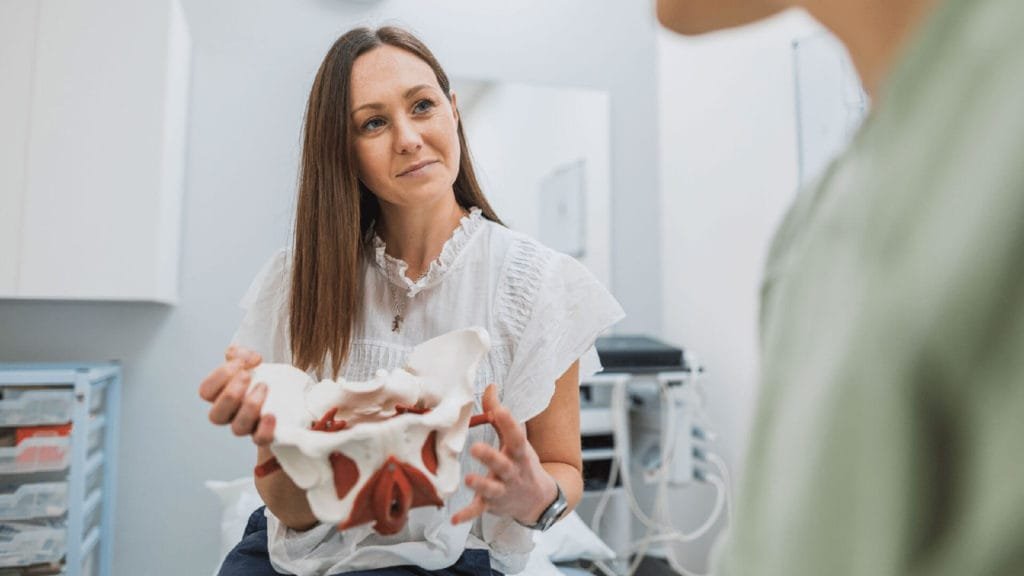
This is the first in a four part conversation with Clare where we look at pelvic health. In this episode we talk about what a pelvic health physio actually does and some of the common things you can look out for as both a clinician and patient. We also look at whether the pelvic floor could be the missing link in treatment of back and hip pain.
What Our Experts Say
One of the most important messages from this episode is that pelvic-floor symptoms should be considered as part of the whole person rather than treated in isolation. Breathing, pressure management, hip and trunk movement, daily habits and confidence can all influence how someone moves and feels. Pilates can complement pelvic health rehabilitation by helping clients develop awareness and coordinated control, but exercises should always be adapted to the individual rather than assuming everyone needs more pelvic-floor strengthening.

Key Takeaways
- Pelvic health physiotherapy covers more than pregnancy and childbirth – Specialist physiotherapists can assess and treat a range of bladder, bowel, pelvic pain and pelvic-floor problems.
- Pelvic-floor symptoms should not simply be accepted as normal – Problems such as leaking, urgency, heaviness or pain may be common, but assessment and treatment may help.
- The pelvic floor may influence back and hip symptoms – When back or hip pain is not improving as expected, pelvic-floor function may be one of several factors worth considering.
- Assessment should look beyond the painful area – Understanding bladder and bowel habits, childbirth history, exercise, daily activities and wider symptoms can help create a more complete clinical picture.
- Treatment should be individual rather than based on strengthening alone – Pelvic-floor muscles need to coordinate, relax and respond appropriately as well as produce strength, so the right approach depends on the assessment findings.
Join the newsletter
Good news stories, exercise tips and short classes. One email a month.
FAQs
1. What happens at a pelvic health physiotherapy appointment?
Your physiotherapist will usually begin by discussing your symptoms, medical history, bladder and bowel habits, activities and personal goals. Depending on your symptoms and consent, they may also assess your posture, breathing, movement and pelvic-floor function. Any internal examination should be explained beforehand, is optional and can be stopped at any time.
2. How do I know whether I am doing pelvic-floor exercises correctly?
A pelvic-floor contraction should feel like a gentle lifting and closing sensation rather than pushing down, gripping the buttocks or holding your breath. If you are unsure, a pelvic health physiotherapist can assess the muscles and help you learn the correct technique. Regularly stopping urine mid-flow is not recommended as an exercise because it can interfere with normal bladder emptying.
3. Can pelvic-floor muscles be too tight?
Yes. Pelvic-floor dysfunction is not always caused by weakness. Muscles that have difficulty relaxing may contribute to pelvic pain, pain during sexual activity, constipation or problems emptying the bladder. This is why repeatedly strengthening the muscles without an assessment may not be appropriate for everyone.
4. Do men need pelvic-floor physiotherapy?
Yes. Men may benefit from pelvic-floor rehabilitation for bladder or bowel symptoms, pelvic pain and recovery following prostate treatment or surgery. Pelvic-floor exercises are commonly used to support urinary control after prostate surgery.
5. What are the symptoms of pelvic organ prolapse?
Symptoms can include a feeling of heaviness or pressure in the lower abdomen or vagina, a bulge or lump, difficulty emptying the bladder or bowel, discomfort during sex and urinary leakage. Speak to a healthcare professional when you notice possible prolapse symptoms so they can assess the cause and discuss suitable treatment.
Feeling Inspired?
If you want to experience the Complete difference and discover the benefits of one-to-one or small group Pilates, book a session at one of our London or Norfolk studios today. Not able to make it to one of our studios? We've got online options to suit you anywhere, anytime.
Our physiotherapist-led Pilates studio in West London, our North London Pilates studio, our Pilates studio in London City, and our Norfolk Pilates studio in East Anglia, offer a highly tailored approach to your Pilates training. Whether your goal is to manage a health condition, rehabilitate from an injury or to improve your strength and fitness, Complete Pilates is the studio for you.
Education is Key
These blogs are designed to give information to everyone, however, it is important to remember that everyone is different! If you have not seen one of our therapists and have any questions about injuries, what you have read or whether this may be useful to you, please just ask. We are more than happy to help anyone and point you in the right direction. Our biggest belief is that education is key. The more you understand about your injury, illness and movement, the more you are likely to improve.
If you are not sure whether this is for you, simply get in touch. We are here to help!
Published 23 Oct 2020 · Updated 5 Aug 2026