
The Benefits of Postnatal Pilates
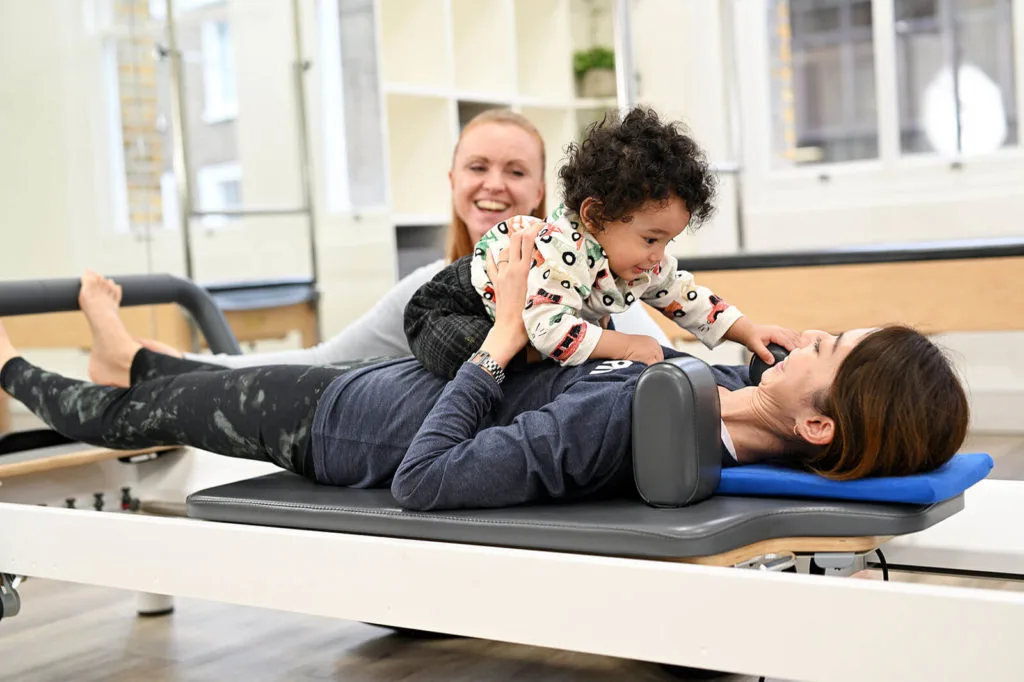
Pilates during your pregnancy is important to sustain a healthy lifestyle, help prepare for labour and delivery, and help reduce some of the negative side effects of pregnancy. But, your participation in Pilates shouldn’t stop there. There are a whole host of benefits of postnatal Pilates to help you in your journey as a mum!
Not only does Pilates enable mums to gently ease their way back into exercise, it also targets the weakened abdomen to aid muscle restoration and mobilises the spine to help you posture.
Join the newsletter
Good news stories, exercise tips and short classes. One email a month.
We understand that exercise post-birth can be the least of your worries, especially if you’ve had a difficult labour. However, when you are feeling ready, we encourage any mums to participate in postnatal Pilates classes in a safe and sensible manner.
In this article we will discuss the benefits of postnatal Pilates and why it is a safe way to reintroduce exercise into your lifestyle post birth.
1. Strengthens Your Pelvic Floor Muscles
The pelvic floor is a collection of muscles that sits in the base of you pelvis and supports your womb, bladder and bowel.
The pelvic floor muscles often loosen during pregnancy and birth due to hormonal changes in the body but also due to the increased pressure of a growing baby on the pelvic floor. Due to a weakened pelvic floor, women often experience a urine leak when they cough, laugh, sneeze or exercise.
Postnatal Pilates can help to strengthen the pelvic floor muscles by teaching women how to reconnect and engage the pelvic floor muscles to improve core strength and stability.
Our physiotherapists and clinical instructors will assess you prior to starting a postnatal Pilates programme to ensure exercises are tailored to your goals and needs.
The important thing to remember is that the pelvic floor is a muscle, just like your biceps. You need to be able to fully contract and lift it, but also fully release it. If you are always holding onto your tummy, or holding your breath during exercise, this can also lead to dysfunction and signs of incontinence.

2. Improve Diastasis Recti
Diastasis Recti, is when the linea alba which separates the two sides of your rectus abdominis, or 6 pack muscle, stretches during pregnancy. This occurs when your growing womb forces the muscles apart, and is completely natural.
More often than not, the stomach muscles and tone around the linea alba, returns to normal after you have given birth and hormones return to pre-pregnancy levels.
Pilates during pregnancy and postnatal Pilates can help to prevent and recover from Diastasis Recti. Once properly assessed, you can bias the movements which you naturally create better tension across the abdominals and linea alba so that you strengthen quicker. Postnatal Pilates can help to improve alignment by restoring your spine to a neutral position and helping you realign your rib cage over your pelvis which is often changed during pregnancy.
During postnatal Pilates, we’ll also teach you the correct breathing techniques to encourage your core activation.
3. Improve Posture
It comes as no surprise that your posture changes during pregnancy, however, these changes can remain some time after pregnancy as well due to breastfeeding and lifting your baby.
Postnatal Pilates can benefit your posture by mobilising the spine through Pilates exercises which will improve your posture dramatically over time. It also strengthens your muscles in a lengthened way to combat the postures we naturally make in the day
What’s more, Pilates also teaches us how to use the deep core muscles - the abdominals, back and pelvic floor - which supports our posture by allowing the shoulders to relax and the neck and head to move freely.

4. Prevent Back Pain and Reduce Tenderness
Many women experience back pain during and after pregnancy which is often as a result of a greater strain on the joints of your lower back and pelvic.
Postnatal Pilates can help reduce back pain by redistributing the forces in our spine and around our hips and pelvis. Pilates exercises can improve mobility in the spine to ensure all components are doing their job. Pilates also ensures that you are moving your hips and pelvis appropriately so that you are not overloading your back every time you walk, lift or sit to stand.
What’s more, postnatal Pilates also aims to target the muscles which protect the spine. If muscles around the spine have weakened, it may contribute to back pain.
For more information, please read our guide to lower back pain.
5. Strengthen Core Muscles
Postnatal Pilates significantly benefits the core muscles. Following pregnancy, a woman's core muscles can become weakened and stretched. Pilates helps to build your deeper core muscles, as well as the muscles through your side, back, and the top and bottom. This ensures you have complete strength and stability.
By strengthening your core, you can benefit from:
- Improved posture
- Improve exercise form and technique
- Increased stability
- Increased control
Providing you have an uncomplicated pregnancy and delivery, you should be able to start core exercises shortly after you give birth.
For more information, please read our guide to Pilates for core strength.

6. Improves Well-Being & Confidence
As women experience pregnancy, their body will go through significant changes. This can sometimes lead to women feeling uncomfortable in their post-pregnancy body and longing for the pre-pregnancy body.
Pilates is a complete mind-body workout which helps mums reconnect with their body in a supportive environment. It also offers time for ‘you’. A break within the day where you can recharge your body, focus on your breathing and relaxing your mind.
Postnatal Pilates is also known to help manage stress. We recognise that looking after a baby can be stressful especially when you have other commitments to occupy your time. Forms of mindful movement, such as Pilates, can help you feel calmer and manage stress more effectively.
For more information please read our guide to Pilates for stress management. Read more about the benefits of Pilates here.
Complete Pilates
At Complete Pilates, we have a postnatal Pilates class specifically designed for women after they have given birth. Postnatal Pilates is low impact so is a great place to start exercising after you have given birth. Postnatal Pilates aims to strengthen your deep muscles, improve your stability, encourages your pelvic floor and helps you to reconnect with your body after birth.
We recommend that you start basic exercises such as the pelvic tilt, as well as breathing and pelvic floor lifts, as soon after giving birth as you feel happy to. From around 6 weeks you can come back to postnatal Pilates classes and look to increase your activity. This should be a gradual return where you allow your body time to get stronger and prepare it for impact and heavier weight activities. Remembering that you will not start at the level you left off is key. But you will get there!
If you are interested in our postnatal Pilates class, our physiotherapists or clinical Pilates instructors will begin with a questionnaire and an assessment to understand any risk factors as well as your goals. Come and try Pilates in the City of London to start your journey.
Please, book your Postnatal Pilates class online or get in touch for more information.
What Our Experts Say
Pilates is very well suited to postpartum recovery because it can be adapted from gentle breathing and pelvic floor exercises through to more challenging mat and Reformer work. However, the focus should initially be on restoring function rather than losing weight or flattening the stomach. A personalised programme can help improve abdominal control, pelvic floor coordination, posture and confidence while allowing the body adequate time to heal.

Conclusion
Pilates can be an excellent form of postpartum exercise because it provides a controlled and adaptable way to reconnect with your body. It can help restore pelvic floor function, strengthen the abdominal wall, improve posture and make daily tasks such as lifting, feeding and carrying your baby feel more manageable.
Although some gentle exercises may be appropriate within the first few weeks, there is no single correct answer for when to start Pilates postpartum. Your delivery, healing, symptoms and previous exercise experience should all be considered. A physiotherapist or Clinical Pilates instructor can assess your recovery and help you progress safely into mat or Reformer Pilates.
Pilates may also support postpartum weight loss by helping you become stronger and more active, but it should form part of a wider approach that includes nutrition, sleep and regular movement. The priority in the early postnatal period should be recovery and rebuilding function rather than rushing to change your body.
Key Takeaways
- Postnatal Pilates offers a gentle return to exercise. Its low-impact, adaptable movements can help new mums rebuild strength safely after pregnancy and birth.
- It supports pelvic floor, abdominal and core recovery. Pilates can improve pelvic floor function, abdominal control and stability, including where there is diastasis recti.
- Pilates can improve posture and reduce back pain. Targeted mobility and strengthening exercises help counteract the demands of feeding, carrying and lifting a baby.
- The right time to start is different for everyone. Gentle breathing and pelvic floor exercises may begin early, while structured mat or Reformer Pilates should be introduced gradually according to healing and symptoms.
- Postnatal Pilates supports overall wellbeing. Alongside physical recovery, mindful movement can help reduce stress, rebuild confidence and support a gradual return to an active lifestyle.
Feeling Inspired?
If you want to experience the Complete difference and discover the benefits of one-to-one or small group Pilates, book a session at one of our London or Norfolk studios today. Not able to make it to one of our studios? We've got online options to suit you anywhere, anytime.
Our physiotherapist-led Chelsea Pilates studio, our Angel Pilates studio, our Pilates studio in London City, and our Norfolk Pilates studio in East Anglia, offer a highly tailored approach to your Pilates training. Whether your goal is to manage a health condition, rehabilitate from an injury or to improve your strength and fitness, Complete Pilates is the studio for you.
Education is Key
These blogs are designed to give information to everyone, however, it is important to remember that everyone is different! If you have not seen one of our therapists and have any questions about injuries, what you have read or whether this may be useful to you, please just ask. We are more than happy to help anyone and point you in the right direction. Our biggest belief is that education is key. The more you understand about your injury, illness and movement, the more you are likely to improve.
If you are not sure whether this is for you, simply get in touch. We are here to help!
FAQs
1. Is Pilates good for postpartum recovery?
Yes. Pilates can be highly beneficial postpartum because it helps rebuild core strength, improve pelvic floor function, restore posture and support spinal and hip mobility. It is low impact and can be adapted to your stage of recovery, symptoms and delivery type.
2. When can I start Pilates postpartum, and can I do Pilates three weeks after giving birth?
Gentle breathing, pelvic floor contractions and basic mobility exercises may be appropriate within the first few weeks if you feel comfortable and have no complications. At three weeks postpartum, more demanding Pilates exercises may still be too challenging, particularly after a caesarean or difficult delivery. Structured classes are often introduced from around six weeks, but you should follow the advice of your healthcare professional.
3. Is Reformer Pilates good and safe postpartum?
Reformer Pilates can be an effective option postpartum because the springs can provide both assistance and adjustable resistance. However, it should be introduced gradually and ideally supervised by a physiotherapist or Clinical Pilates instructor who can adapt exercises for pelvic floor symptoms, abdominal separation, pain and postnatal healing.
4. Does Pilates help with the postpartum belly?
Pilates can improve the strength, coordination and function of the abdominal wall, including where diastasis recti is present. It may help your abdomen feel stronger and more supported, but it cannot target fat loss from one specific area or guarantee that the stomach will return to its pre-pregnancy appearance.
5. Is Pilates good for postpartum weight loss?
Pilates can contribute to postpartum weight management by increasing activity levels, building muscle and helping you return to regular exercise. However, weight loss is also influenced by nutrition, sleep, hormones and overall energy expenditure. Early postpartum Pilates should focus first on healing, strength and function rather than rapid weight loss.
Published 10 Feb 2021 · Updated 14 Jul 2026