
Everything You Need To Know About The Anatomy Of The Spine And Pilates
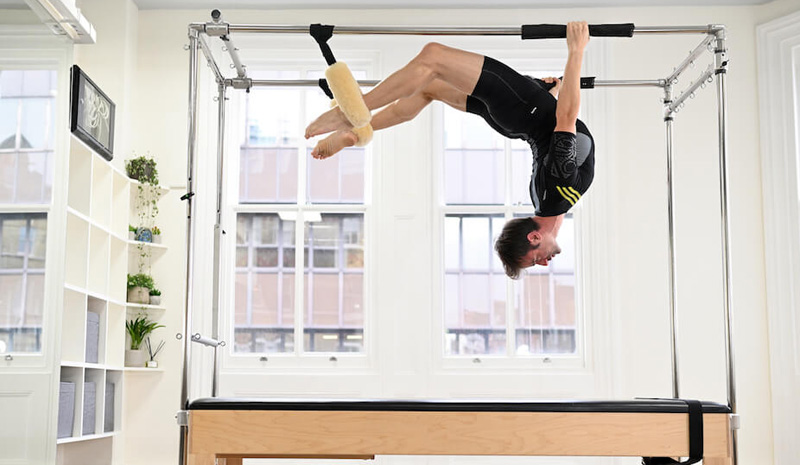
Do you have back pain which will not go away? Do you always get back pain when you are doing abs exercises? Have you got a disc prolapse, seen a consultant and had no idea what they were talking about? Or maybe you simply want to learn more about your spine? How does Pilates relate to the spine?
At Complete Pilates we see thousands of people with problems just like these.
Our biggest advice is education is key.
The more you understand about your body, the more likely you will be to fix it! Remember, we can give you the skills but we cannot come home with you!
The Facts
The spine is made up of 3 natural curves which together form an ‘S’ shape. The muscles in your core, around your back, diaphragm and pelvic floor, help maintain and support these curves. This means weight and force is safely and evenly distributed throughout.
There are 33 bones, or vertebrae, in total in your spine but only the top 25 move as your sacrum and coccyx are fused. Each vertebrae has unique features which help them perform their function.
The Anatomy Of The Spine
The Neck Anatomy (Cervical Spine)
Its main function is to support the weight of the head. It has the most movement because of the top two vertebrae which connect to the skull.
The first vertebrae (C1) is a ring shape which connects directly to the skull and allows you to nod. It is also called the atlas. The second (C2) is a peg shape and has a projection which allows the atlas to pivot on it, enabling you to shake your head. It is also called the axis.
When you are moving around, your neck should always be free to move rather than being fixed. It was designed for mobility so that we could spot danger and run away!
The Mid Back Anatomy (Thoracic Spine)
Its main function is to hold the rib cage and protect the heart and lungs. It is specialised for stability and keeping your body upright. The discs in this area are narrower.
Your thoracic spine curves outwards, so when you are lying on your back you will naturally feel more pressure here. This means that it does not extend very much!
The Lower Back Anatomy (Lumbar Spine)
This part of the spine is designed for weight-bearing and taking heavy load. To help with this the bones are much larger to help absorb the stresses of lifting or carrying large objects. The spinal canal is also larger to allow for more space for the nerves to pass.
The most typical thing we see is that people try to force it down to the floor when they are doing abdominal work or in a bridge. Remember, it has an inwards curve.
When you are doing abdominal work, try not to imprint your spine, but instead maintain its natural curves. This means that you are keeping the same shape you have in standing so will naturally get stronger more functionally!
The Discs
Each bone in your spine is separated and cushioned by a disc which help with shock absorption. These discs get larger as you move down the spine from the neck.
Each disc has an outer ring called the annulus. This has crisscrossing fibres which make it really strong. Inside is the nucleus which is a filled with gel and held in place by the annulus.
With age, our discs naturally become flatter, with less fluid. This is one of the reasons we get shorter. The main reason for the speed of this happening is genetics.
The Spinal Cord
The spinal cord connects the entire nervous system from the brain to the rest of the body and acts like a motorway, sending information back and forth. The brain sends movement signals down and the soft tissue sends sensory information back.
To help protect us we have automatic responses which are called spinal reflexes. This means that you do not have to think about something before you do it. For example, when you touch something very hot, you immediately pull away.
This is an automatic reaction which is us reacting without sending messages back up to the brain.
The spinal cord passes through a hollow column from your neck to your sacrum called the spinal canal. These nerves leave the spine at each level through channels called the intervertebral foreman. Two nerves exit at each level, one to the right and one to the left.
At your lowest thoracic, or highest lumbar vertebrae, the spinal cord splits into the cauda equina. Imagine this like the hairs on a horses tail.
The Nerves
There are 31 pairs of spinal nerves which come off the spinal cord.
Your nerves are like telephone lines which carry messages around your body and help control your movement and sensation.
Each spinal nerve has two roots. One of these carries all the movement signals and the other carries sensory signals. These fuse together to form the nerve and come out of the spinal canal at the intervertebral foramen.
Each nerve supplies a specific area of the body with sensation which is called a dermatome. Medical professionals can use this to identify a problem with a specific area in your the spine.
Why Is The Spine Important?
Without your spine, you would not be able to keep your body upright or even stand up!
It gives you support and structure to allow you to move freely. It helps protect your spinal cord which sends messages to your muscles telling them to work.
Lower back pain is also one of the biggest reasons for people missing work. By taking care of your spine, noticing any problems quickly, and investing the time to fix it is key.
As with any injury, the longer you leave it the harder it is to fix.
Pilates And The Spine
Is Pilates good for the spine?
Pilates is a great way to work on spinal movements. The spine is made up of discs and vertebrae surrounded in a case filled with spinal fluid. Spinal mobility exercise, in particular twisting exercises, help to keep the spinal fluid lubricating the spinal discs which keeps them plump and healthy. Pilates spinal exercises also help to keep the joints of the spine mobile, and the muscles attaching to the spine flexible. Pilates exercises also help to work the muscles that give support and stability to the spine, which help to protect from strain and injury.
What are the 5 actions of the spine Pilates?
The 5 actions of the spine in Pilates refers to the different directions that the spine can move in. Flexion is the forward bending motion - such as when you bend down to pick something up off the floor. Extension is the backward bending movement, such as when you look up to the sky. Side flexion refers to a side bending movement, such as when you lean to pick up a bag from the floor. Rotation is the twisting movement you need, for example, if you turn to look behind you. The fifth movement is called circumduction and refers to movement in a circle. This can be a combination of all the movements.
Can Pilates realign your spine?
Pilates is a great way of getting your spine moving, particularly through its focus on exercises that concentrate on sequential movement of the spine. It also has a great variety of exercises that move the spine in all directions and in combinations of different directions. Pilates can help you to become aware of your posture and to be able to alter your posture where appropriate. This is especially helpful where altered postures or movement patterns appear to be contributing to pain. However, Pilates cannot alter structural alignment issues in the spine. If you have a deviation away from “ideal” posture that is related to changes in muscle strength, tightness in your muscles, or stiff sections of the spine, Pilates can help you to work on these.
What does ‘neutral spine’ mean?
The ‘neutral’ spine position refers to the natural resting position of the spine. The natural resting position of the spine is not straight up and down. If you look a the spine sideways on, it is shaped like an elongated ‘S’. The lower back slightly curves in and the upper back slightly curves outwards, with the back of the neck curving in at the top of the ‘S’. The neutral spine refers particularly to the gentle curve of the lower back, which is called the ‘lordosis’.
What are the best Pilates back exercises?
Pilates has a great many exercises that mobilise the spine in all directions. However, if you are looking specifically for exercises to strengthen your back, look no further than our dedicated article on the 8 best back exercises.
Are there any spine-related Pilates equipment?
All the Pilates equipment are great for working the strength and mobility of the spine, depending on the exercises that are used. However, the ladder barrel and spine corrector are particularly useful, due to their curved surfaces, for working on spinal mobility.
Top Tips For A Healthy Spine
To help keep your spine healthy, try the following things:
- Rotate please link to book openings exercise video page to each direction regularly. You can do this in your office chair!
- Try and sleep well to help recovery
- Stay active with a variety of activity, not just heavy impact classes or heavy weights
- Maintain a healthy weight
- Stay hydrated
- Work smart: organise your space and move regularly
- Pay attention to warning signs and seek advice please load up a contact us form quickly.
What Our Experts Say
One of the most important things people can learn is that the spine is not meant to be held rigid or forced flat. It has natural curves for a reason, and those curves help us absorb load, move efficiently and stay strong.

Pilates Exercises For A Healthy Spine
Seated Spinal Rotation
Book Openings
Cat-Cow
Thread The Needle
Key Takeaways
- The spine is designed to move, with natural curves that help distribute load and absorb force.
- Each part of the spine has a different role, with the neck built for mobility, the mid back for stability and the lower back for load-bearing.
- Neutral spine is not a flat back, but the natural resting position of the spine, including the gentle inward curve of the lower back.
- Pilates can support spinal health, by improving mobility, strength, control and awareness through the full range of spinal movement.
- Education is key for managing back pain, as understanding how the spine works can help reduce fear and support better movement choices.
Join the newsletter
Good news stories, exercise tips and short classes. One email a month.
Conclusion
The spine is an incredible structure. It supports the body, protects the spinal cord, absorbs shock and allows us to move in many different directions. Its natural curves are important, helping to distribute weight and force safely throughout the body.
Pilates is particularly well suited to spinal health because it encourages the spine to move through flexion, extension, rotation, side bending and combined movements. It also helps strengthen the muscles that support the spine, including the abdominals, back muscles, diaphragm and pelvic floor.
Rather than trying to force the spine into a flat or “perfect” position, the goal should be to understand your own natural curves, keep the spine moving well and build enough strength and control to support everyday life. If you have persistent back pain, symptoms down the leg or are unsure how to move safely, it is best to seek professional advice.
Feeling Inspired
If you want to experience the Complete difference and discover the benefits of one-to-one or small group Pilates, book a session at one of our London or Norfolk studios today. Not able to make it to one of our studios? We've got online options to suit you anywhere, anytime.
Our physiotherapist-led Chelsea Pilates studio, our Angel Pilates studio, our Pilates studio in London City, and our Norfolk Pilates studio in East Anglia, offer a highly tailored approach to your Pilates training. Whether your goal is to manage a health condition, rehabilitate from an injury or to improve your strength and fitness, Complete Pilates is the studio for you.
Education is key
These blogs are designed to give information to everyone, however, it is important to remember that everyone is different! If you have not seen one of our therapists and have any questions about injuries, what you have read or whether this may be useful to you, please just ask. We are more than happy to help anyone and point you in the right direction. Our biggest belief is that education is key. The more you understand about your injury, illness and movement, the more you are likely to improve.
If you are not sure whether this is for you, simply get in touch. We are here to help!
FAQs
Is Pilates good for the spine?
Yes, Pilates can be very good for spinal health. It encourages mobility, strength, control and body awareness, helping the spine move through its natural ranges while supporting the muscles around it. This is really important as the spine is not supposed to be a rigid structure.
What are the main movements of the spine in Pilates?
The main spinal movements in Pilates are flexion, extension, side flexion, rotation and circumduction. These movements help keep the spine mobile and adaptable. This is all them movements that the spine naturally does, Pilates can just combine them in a supportive environment.
What does neutral spine mean?
Neutral spine means the natural resting position of the spine. It is not completely flat or straight. The lower back has a gentle inward curve, the mid back curves slightly outwards and the neck curves inwards. This position changes depending on your position against gravity, how your hips and pelvis is positioned and whether it is dynamic or static postures.
Can Pilates realign your spine?
Pilates cannot change fixed structural alignment issues, but it can improve posture, strength, mobility and movement habits. If stiffness, weakness or muscle tightness is contributing to your posture or discomfort, Pilates may help. It is important to note that if you have back pain, Pilates can help but you need to see a specialist who understands what can be changed and what cannot.
What are good Pilates exercises for spinal mobility?
Good Pilates exercises for spinal mobility include seated spinal rotation, book openings, cat-cow and thread the needle. These exercises help move the spine through rotation, flexion, extension and gentle side movement.
Published 4 Feb 2024 · Updated 16 Jul 2026