
Can Pilates Help to Relieve Sore Muscles After a Workout?
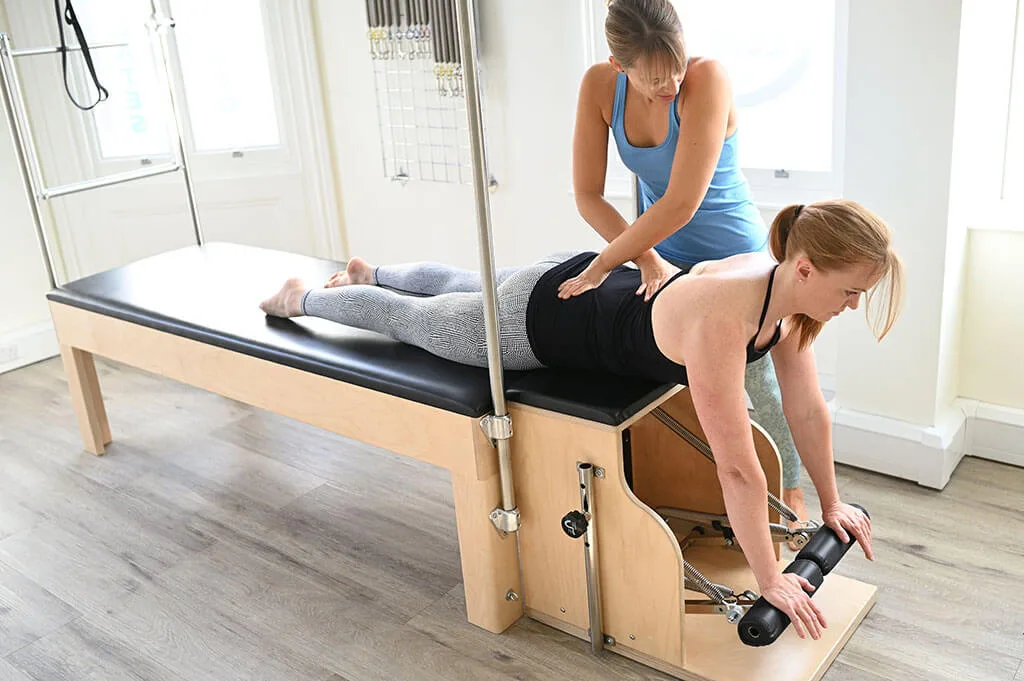
Have you ever experienced sore muscles after a new workout or when you’ve pushed yourself harder than you usually would?
If the answer is yes, do not worry. This is called “delayed onset muscle soreness”, also known as DOMS and is common when you increase the intensity or duration of your workout or when you try a new activity for the first time. Research also suggests muscle stiffness, contraction velocity, fatigue and angle of contraction can play a role in contributing to DOMS.
Symptoms associated with DOMS include:
- Strength loss: peaks immediately or within 48hrs
- Pain: peaks 1-3 days after exercise
- Muscle tenderness: peaks 1-3 days after exercise
- Stiffness: peaks 3-4 days after exercise
- Swelling: peaks 3-4 days after exercise
DOMS occur as a result of myofibril tears, also known as muscle strains. This causes an inflammatory response with intramuscular fluid and electrolyte shifts which results in the arising symptoms of DOMS. This is nothing to be worried about, it is a normal and natural process for our muscles to adapt and strengthen.
Can recovery Pilates help? In this article, we’ll walk you through 6 Pilates exercises to relieve sore muscles after a workout!
5 Recovery Pilates Exercises to Help With Muscle Soreness
1. Thread the Needle
The thread the needle exercise is the perfect start for your recovery. It allows you to mobilise, stretch and open out the shoulders, chest, neck and upper back while allowing for a gentle twist of the spine. Start this exercise in a reduced range and build to a greater stretch feeling as the body allows.
2. Pilates Mermaid
The Pilates Mermaid will help you alleviate soreness and improve your feeling of mobility in the mid and lower back, as well as the side of your body and hips. If being on the floor is difficult, you can start with a version seated on a chair
3. Pilates Hip Stretch
The Pilates hip stretch will help you stretch and relieve soreness at the front of your thigh, an area of the body that is often sore following running, hiking or lower leg gym exercises.
4. Pilates Roll Down
The Pilates roll down will help you gently stretch and mobilise your whole posterior chain – that includes your neck, upper back, lower back, hamstrings and calves. If you’re feeling really tight and sore in these areas, you can start off with a small roll down and gradually build your range as the tension starts to relieve.
5. Shoulder Extension
This seated shoulder extension stretch is great if you’re feeling soreness in your shoulders, arms and chest. This video shows the movement in sitting, but you can also do it in standing to get more movement through the hips and lower back.
If you’re looking for a full recovery exercise flow session to follow along to, give our 25 minute stretch and mobility class a go:
You can find us at one of our Pilates studios in London and speak to us about your muscle recovery and how Pilates can help. You can find us at Complete Pilates in Angel or any of our studios (see our Chelsea Pilates studio or our Pilates studio in London City) for more information, please get in touch online or contact us on 0203 764 5668.
What Our Experts Say
When our bodies feel stiff after strenuous exercise, we know that we’ll feel better after taking a warm bath, going for a massage or spending some time in the sauna. These activities increase the blood supply to our muscles which ‘rinses’ away some of the chemicals contributing to the soreness. The same happens when we use our muscles at a lower intensity, like when doing Pilates. With gentle movement and loading of sore muscles, the circulation to these muscles improves and we leave the session feeling less stiff than when we started.
Conclusion
Muscle soreness after exercise is a normal part of building strength and fitness, but it doesn't have to stop you moving. Gentle, controlled exercise such as Pilates can help reduce stiffness, improve circulation and support your body's natural recovery process without overloading already fatigued muscles.
Incorporating Pilates into your recovery routine can help you stay active between training sessions, improve movement quality and reduce the impact of DOMS, allowing you to return to your preferred activities feeling stronger and more mobile.
Key Takeaways
- Delayed onset muscle soreness (DOMS) is a normal response to exercise. Muscle soreness, stiffness and tenderness commonly occur after increasing training intensity, trying a new activity or returning to exercise after a break.
- Gentle movement can speed up recovery. Low-impact exercise such as Pilates helps increase circulation, reduce stiffness and improve mobility without placing excessive strain on recovering muscles.
- Recovery is about more than stretching. Good sleep, appropriate exercise and allowing your muscles time to adapt all play an important role in reducing soreness and supporting recovery.
- Pilates targets the whole body. Exercises that improve mobility, flexibility and control can help relieve muscle tightness while preparing your body for future training sessions.
- Listen to your body. While mild soreness is normal, persistent or severe pain may indicate an injury that should be assessed by a healthcare professional.
Join the newsletter
Good news stories, exercise tips and short classes. One email a month.
Feeling Inspired?
If you want to experience the Complete difference and discover the benefits of one-to-one or small group Pilates, book a session at one of our London or Norfolk studios today. Not able to make it to one of our studios? We've got online options to suit you anywhere, anytime.
Our physiotherapist-led Pilates studio in Chelsea, our Angel Pilates studio, our Pilates studio in City, and our Norfolk Pilates studio in East Anglia, offer a highly tailored approach to your Pilates training. Whether your goal is to manage a health condition, rehabilitate from an injury or to improve your strength and fitness, Complete Pilates is the studio for you.
Education is Key
These blogs are designed to give information to everyone, however, it is important to remember that everyone is different! If you have not seen one of our therapists and have any questions about injuries, what you have read or whether this may be useful to you, please just ask. We are more than happy to help anyone and point you in the right direction. Our biggest belief is that education is key. The more you understand about your injury, illness and movement, the more you are likely to improve.
If you are not sure whether this is for you, simply get in touch. We are here to help!
FAQs
1. Is Pilates 'active recovery?'
Active recovery exercise involves low-impact movements, typically of the whole body, where the heart rate is kept around 50% of your maximum effort. Pilates exercise classes always incorporate movements of all muscle groups of the body including the upper and lower limbs and the spine. The movements are often performed in a series or flow which encourages constant circulation of the blood and lymph systems.
2. Is Pilates good for recovery after the gym?
Yes. Many people use Pilates on rest days or after strength training to improve flexibility, mobility and circulation. It complements gym training by helping muscles recover while maintaining movement and reducing post-exercise stiffness.
3. Should I exercise if I have DOMS?
In most cases, yes. Light exercise such as walking, cycling or Pilates can help relieve symptoms of delayed onset muscle soreness (DOMS). However, if you have severe pain, swelling or suspect an injury rather than normal muscle soreness, you should seek medical advice before exercising.
4. Is Pilates a workout?
The NHS recommends adults participate in 150 minutes of moderate exercise per week. Pilates incorporates a range of exercise activities including strength training which is essential for healthy muscles and bones. Pilates is a work out of the whole body and can be adapted to suit the needs and abilities of everyone. Our classes run for 55 minutes, meaning you’ve already hit a third of your weekly target with a Complete Pilates class!
5. What is the best exercise for muscle recovery?
Low-impact activities such as Pilates, walking, swimming and gentle cycling are all effective forms of active recovery. They help maintain circulation, improve flexibility and reduce stiffness while allowing your muscles time to repair and adapt.
Published 11 Sep 2024 · Updated 18 Sep 2026