
Dead Bug Exercise – Your Step by Step Guide with Video!
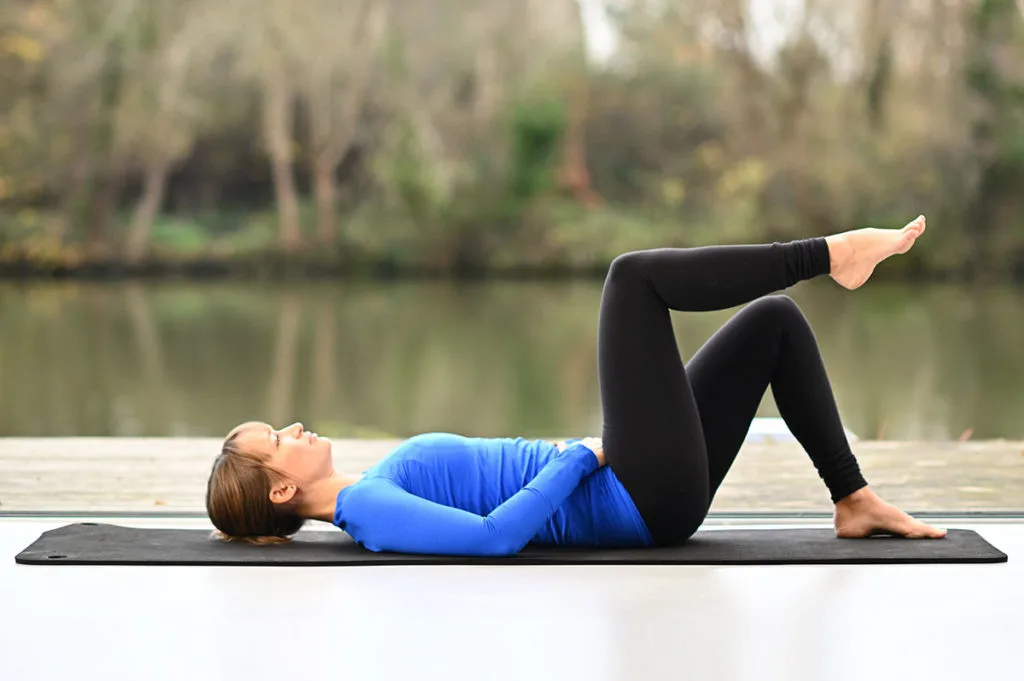
The dead bug exercise will help you improve your pelvic stability, activate your deep abdominal muscles, and help you learn how to differentiate the movement between your hips, pelvis and lower spine. Perfect for creating a strong base!
Incorporating core moves into your workout routine is essential for improving your overall strength. If you play lots of sports such as tennis or basketball where you have to extend opposing limbs or stretch, jump or reach for a ball, then it is important to have a strong core to make these types of movements possible.
But it’s not just athletes who need back-protecting core stabilisation - essentially everyone does. You use your core for everything in your day-to-day life, such as getting out of bed, walking to work, and picking up your shoes from the floor. It's the base that supports your entire body. And the dead bug core exercise can help you understand this.
In this article, we’ll be discussing:
- What is a Dead Bug Exercise?
- Dead Bug Exercise for Beginners
- What Muscles Does The Dead Bug Exercise Work?
- How Do Do The Dead Bug Exercise
- Common Dead Bug Exercise Mistakes
- Modified Dead Bug Exercise
- Dead Bug Exercise Progression
- What are the benefits of the dead bug exercise?
- Who is the dead bug exercise suitable for / not suitable for?
What is a Dead Bug Exercise?
The dead bug is a beginner-friendly movement that's excellent for overall basic core stability. It targets multiple core muscles (including those hard-to-reach deep core transverse abdominis), without putting strain on your lower back. Ultimately, it focuses on building up core strength whilst keeping the spine neutral and pelvis quiet.
Simply put, the dead bug is a supine abdominal exercise. Meaning it is carried out lying down on the back.
As you keep your torso quiet and continue to breathe, you extend and retract your legs. The aim is to prevent your lower back from arching off the floor or pushing into it. You are trying to breathe through the exercise so you don’t brace in your core but work it through full range.
Once you’ve mastered the dead bug and can easily do a few sets, you can progress to more advanced variations or build up to a longer routine with variations ranging in difficulty.
Dead Bug Exercise for Beginners
The dead bug is a good starting point for beginners because the exercise can be adapted to your current level of strength, coordination and mobility. You do not need to move your arms and legs through a large range to benefit from the exercise. Instead, start with small, controlled movements and gradually increase the range as you become more confident maintaining your pelvic and spinal position.
If you're new to the dead bug, begin by practising the breathing and tabletop position before adding arm and leg movements. If you find that your lower back arches, your pelvis moves, or you need to hold your breath, reduce the range of movement and focus on control before progressing.
What Muscles Does Dead Bug Exercise Work?
The dead bug primarily trains the muscles responsible for stabilising your trunk and pelvis while your arms and legs move. Rather than simply strengthening one abdominal muscle, the exercise encourages several muscles to work together to control your position.
- Rectus abdominis (your 'six pack' muscles) - helps provide deep abdominal support and contributes to trunk stability.
- Transverse abdominis (deep core) - helps control the position of your trunk and pelvis during the movement.
- Lower back - trains the lower back and core to stay rigid and controlled while your limbs move dynamically.
- Obliques (sides) - help resist unwanted rotation as the arms and legs move
- Hip flexors - work to control the position and movement of the thighs.
- Pelvic floor - works as part of the wider pressure and stability system alongside the diaphragm and abdominal muscles.
- Diaphragm - breathing is an important part of the exercise, helping coordinate the trunk and core rather than relying on excessive bracing.
How To Do The Dead Bug Exercise
The dead bug exercise is commonly used in Pilates as a perfect way to create a strong base, improve your pelvic stability and activate those deep abdominal muscles. It also helps you understand how to differentiate the movement between your hips, pelvis and lower spine. This is what needs to happen when you walk, move from sitting to standing or go up and down stairs!
- Lie on your back with your feet flat on the floor and knees bent.
- Legs should be bone-length apart - this is often narrower than you think!
- Do use a pillow underneath your head for support if you feel your head is extending backwards.
- Let your arms rest by your sides with your palms facing up or down.
- Let your sit bones relax so that you come into your ‘neutral spine’ position. Make sure you feel that natural tiny gap behind your lower back and the mat.
- If you are doing this for the first time, use your breath to help you move and create stability.
- On an exhale, lift one leg up to tabletop - when the thigh bones are perpendicular to the floor, and shins are roughly parallel to the floor.
- Pause on the inhale and exhale as you lower the leg.
- Try to move from your hip joint and keep the bend at your knee the same.
- Repeat this a few times, and when you are happy, try inhaling the leg up and exhaling the leg down and do a few more.
- The aim is to keep the breath even and your stomach rising and falling as you breathe.
- Repeat on the other side.
Dead Bug Top Tips
Try to use as little effort as possible throughout the movement.
★ It’s all in the hips!
This movement is about hip extension! Try to avoid simply bending the knee to tap the toe to the floor. Instead, keep the bend at the knee the same and move from your thigh bone.
★ Keep the pelvis still and in neutral throughout the movement.
If you can feel your way through a good quality pelvic clock without it hurting your back, you can start to feel where your ‘neutral spine’ is. Remember, this is a fluid concept and changes depending on the position you are in.
★ Find your heavy parts.
Find the heaviness in the back of your head, ribs and tailbone. Then, instead of concentrating on the front, see whether you can keep the weight in these areas the same. This will help to tell you whether you are forcing yourself to imprint your spine, or increasing the arch.
★ Can you hold a conversation?
To know if you are bracing, it is not just about whether you are breathing or holding your breath…although knowing this definitely helps! Can you hold a conversation without your voice sounding strained? Do you feel tension building up in your neck? Are you gripping with your arms? All these things can contribute to bracing. If the answer is yes to any of these, reduce your range and focus on quality!
★ Find your core
This always comes with your breath so that you are working the whole core, including your pelvic floor and diaphragm. To find your pelvic floor, exhale and imagine you are zipping up internally from your back passage to your front passage up to your tummy button. If you are male, imagine you are lifting your testicles and penis up. Next, feel your hip bones gently draw together to create light tension across your stomach. This should increase as you breathe and start gradually. Finally, allow your rib cage to move on both the inhale and exhale.
Dead Bug Exercise Form
Good dead bug exercise form is about maintaining control rather than achieving the biggest possible movement. Throughout the exercise, aim to keep your pelvis stable, breathe normally and move from the hip rather than simply bending and straightening the knee.
You should not need to flatten your lower back aggressively into the floor. Instead, maintain your natural spinal position and use your abdominal muscles and breathing to control the movement.
If your back begins to arch, your pelvis rocks from side to side, you start holding your breath, or you feel excessive tension in your neck, reduce the range of movement.
Common Dead Bug Exercise Mistakes
- Arching the lower back - if your back lifts away from the floor as your leg moves, the movement may currently be too large. Reduce your range and focus on keeping your pelvis controlled.
- Flattening the back into the floor - the opposite mistake is aggressively pressing your lower back into the mat. The aim isn't necessarily to eliminate the natural curve of your spine, but to control it while you move.
- Holding your breath - holding your breath can be a sign that you're working harder than necessary. Reduce the range and see whether you can breathe comfortably.
- Moving too quickly - slow the movement down so that you can control both the outward and return phases.
- Moving from the knee - focus on the thigh bone moving from the hip rather than simply dropping the foot towards the floor.
Modified Dead Bug Exercise: How to Make It Easier
If the full dead bug feels too challenging, there are several ways to modify the exercise. The aim is to find a variation where you can maintain good pelvic control and breathe comfortably.
- Try moving one leg at a time - rather than moving the opposite arm and leg together, keep the arms still and practise controlled leg movements.
- Reduce the range - you don't need to lower your leg all the way towards the floor. Start with a smaller movement and increase the range as your control improves.
- Keep your feet closer to the floor - starting with your legs in a more supported position can reduce the challenge.
- Practise the breathing first - if coordinating the limbs and breathing feels difficult, spend some time practising the breathing pattern before adding movement.
Signs You Should Make The Dead Bug Exercise Easier
-
- Your lower back starts arching or pressing heavily into the floor.
- Your pelvis rocks as your leg moves.
- You have to hold your breath.
- You feel tension building in your neck or shoulders.
- You cannot control the return movement.
- You need to rush the movement to complete it.
Dead Bug Exercise Progression: How to Make It Harder

- Progress with a full dead bug!
- Lie down flat on your back with your arms extended toward the ceiling and your feet off the floor into tabletop (knees bent to 90 degrees).
- As you exhale, slowly lower one foot until that toe nearly touches the floor, while at the same time lowering the opposite arm to the floor overhead.
- Inhale to return both arm and leg to the starting position and repeat with the opposite arm and leg.
- If you want to make the move harder, try gripping a resistance band between both hands, or adding weighted ankle straps or dumbbells.
- You can also make it harder by moving the same-side arm and leg or moving slowly to extend and bringing it back in quicker.
Dead Bug Exercise Benefits
Improves Core Stability & Posture
As already highlighted, dead bugs help to maintain strength and stability in the core, spine and back muscles, which in turn helps to improve posture and play a part in relieving and preventing lower back pain.
Improves Balance & Coordination
Building up awareness of your core is great for balance and the dead bug exercise is also great coordination especially when progressing to the more advanced variations; the advanced progression arm and leg combinations improves spine stabilisation and builds up strength in your hip flexors.
By doing dead bugs, you may find you have the awareness and stability to move better during daily and athletic activities.
Who is a Dead Bug Suitable For?
Dead bugs are excellent for anyone looking to improve and strengthen their core, but they are particularly good to include as a warm-up for runners and swimmers, people who play sports such as basketball or tennis, women who may be pregnant or who’ve just had a baby or those with back pain.
Dead bugs are also a recommended exercise for:
- People with arthritis
- Older adults working on improving muscle function
- People with chronic pain
- People with Parkinson’s disease to make everyday activities easier and prevent injuries and accidents with a big base of support
Who is a Dead Bug Not Suitable For?
Anyone who has a known irritable lower-back injury should avoid this exercise if it causes pain. Sharp or jabbing pains, or any type of discomfort, is what you want to avoid. You should consult with an exercise specialist, like a Clinical Pilates Instructor, for individual advice if a dead bug just isn’t working for you.
Overall, the dead bug is a safe exercise for most people. However, if your form starts to suffer, it's likely because your muscles are tired. Poor form won't help your efforts to get stronger, and may, in fact, lead to injury.
You may need a modified version if you:
- Cannot maintain control of your pelvis
- Experience back pain
- Struggle to coordinate breathing and movement
- Are recovering from an injury
- Have recently had surgery
- Are pregnant/postpartum and need individual exercise guidance
Why Do a Dead Bug?
As you should know by now, the dead bug core exercise is ideal for developing basic core strength, which can help with overall stability and play a part in preventing lower back pain.
It can be done on its own, as part of a core strengthening routine, or along with other exercises, and the variations make it easy to find the exercises that work best for you.
At Complete Pilates, we would advise you to always speak to your doctor before starting an exercise routine, especially if you have any health concerns or are new to fitness.
If you would like more information about how to do dead bugs or would like to know how Pilates can help you build your core strength, then talk to a Clinical Pilates instructor here at Complete Pilates. Our team is trained to safely treat clients and create manageable, appropriate, ongoing exercise plans to keep you healthy.
We are also able to refer you to other specialist partners if we feel you are at higher risk and need further investigations or medical input.
What Our Experts Say
The dead bug is a great pre-Pilates movement because it teaches the individual basic core connection in neutral and introduces hip dissociation. This is a common movement and pattern used throughout Pilates, so it's great to master early.

Key Takeaways
- Keep your pelvis stable and spine neutral - Maintain a small natural curve in your lower back whilst you are moving. This stability is key for protecting your spine and engaging your deep core muscles effectively.
- Move from your hips, not your knees - The dead bug is about controlled hip extension. Keep your knee bend consistent and let your thigh bone move smoothly in the hip socket to strengthen your core and improve coordination.
- Breathe and avoid bracing - Use steady breathing to activate your core gently rather than tensing or holding your breath. You should be able to speak comfortably throughout the movement.
- Engage your whole core system - Work with your breath to recruit the deep abdominals, pelvic floor, and diaphragm together, building true functional core strength.
- Prioritise control over range - Focus on slow, precise movements rather than big ones. If your form slips or your back arches or pushes flat, reduce the range until you can maintain your alignment and stability.
Join the newsletter
Good news stories, exercise tips and short classes. One email a month.
Conclusion
The dead bug may appear simple, but it provides an excellent foundation for improving movement control, coordination and functional core strength. When performed well, it can support everything from everyday tasks to athletic performance by encouraging efficient, controlled movement.
Like many Pilates exercises, the greatest benefits come from consistency, good technique and progressing at a pace that's appropriate for your individual ability.
Try A Pilates Class with Complete Pilates
If you want to experience the Complete difference and discover the benefits of physio-led one-to-one or small group Pilates, book a session at one of our London or Norfolk studios today. Not able to make it to one of our studios? We've got online options to suit you anywhere, anytime.
Our physiotherapist-led Pilates studio in Chelsea, our Angel Pilates studio, our Pilates studio in City, and our Norfolk Pilates studio in East Anglia, offer a highly tailored approach to your Pilates training. Whether your goal is to manage a health condition, rehabilitate from an injury or to improve your strength and fitness, Complete Pilates is the studio for you.
Related Blogs:
- What Is The Core In Pilates? Pilates Core Exercises
- 8 Ab Exercises You Can Do At Home!
- 6 Pilates Principles And What They Mean To Complete Pilates
- Pilates Mat Exercises
Education is Key
These blogs are designed to give information to everyone; however, it is important to remember that everyone is different! If you have not seen one of our therapists and have any questions about injuries, what you have read or whether this may be useful to you, please just ask. We are more than happy to help anyone and point you in the right direction. Our biggest belief is that education is key. The more you understand about your injury, illness and movement, the more you are likely to improve.
If you are not sure whether this is for you, simply get in touch. We are here to help!
FAQs
How many dead bugs should I do each day?
There's no universal number. Focus on performing a small number of slow, controlled repetitions with excellent technique rather than completing high volumes. Quality movement will always deliver better results than quantity.
Why does the dead bug exercise feel harder than it looks?
Although the movement appears simple, it requires precise coordination between your breathing, core muscles and limbs. Maintaining control throughout the exercise challenges the deep stabilising muscles that aren't always targeted by traditional abdominal exercises.
Can beginners do the dead bug exercise?
Yes. The dead bug is widely considered a beginner-friendly exercise because it can be modified to suit different abilities. Starting with simple variations before progressing helps build confidence and good movement habits.
Is the dead bug better than crunches?
They serve different purposes. Crunches primarily target the superficial abdominal muscles, whereas the dead bug focuses on developing coordinated core stability and movement control. Many rehabilitation and Pilates programmes include the dead bug as part of a balanced core routine.
Can the dead bug exercise improve sports performance?
Yes. By improving core stability, coordination and control between the upper and lower body, the dead bug can support more efficient movement in sports that involve running, throwing, jumping or changing direction.
Reviewed by Ami Odendaal, Physiotherapist & Clinical Pilates Instructor
Published 2 Jul 2021 · Updated 27 Oct 2026