
Tight Hamstrings: What Causes Tight Hamstrings?
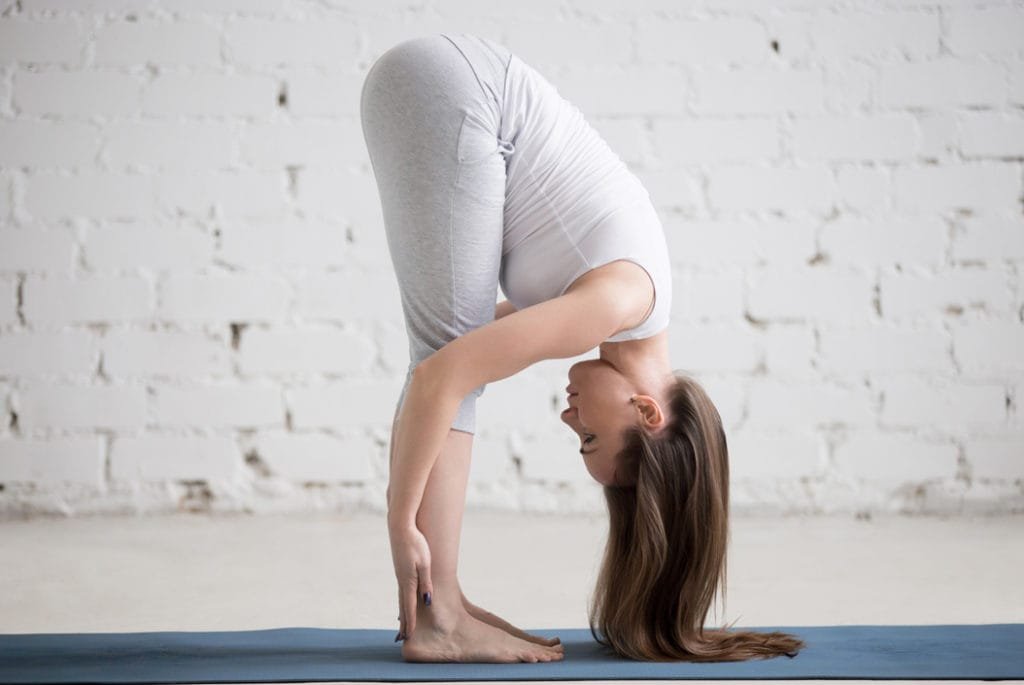
If you often find yourself wondering, ‘Why are my hamstrings so tight?’, then you’re not alone. Tight hamstrings are a common problem that affects both athletes and sedentary office workers.
Most people try to cure feelings of tightness through stretching. But depending on the root cause of the tightness, stretching won’t relieve tension or improve your flexibility.
Many people complain of tight hamstrings when they have the sensation of tightness down the back of the leg between the buttock crease and the knee. Others believe they have tight hamstrings when they can’t touch their toes.
While it might seem like common sense to blame the hamstrings for these problems, the truth is, neither is necessarily caused by limitations in the hamstrings. Instead, weak muscles, your posture, or nerves could be to blame.
One way to test if your hamstrings are the problem is to perform certain tests (check below for a simple test you can try). This will crudely help you differentiate between nerves and muscles.
However, if you are getting any back pain, numbness, tingling or weakness, then you should contact a medical professional. Remember, it is easier to change something when you have only had it for a few weeks rather than letting it get to the chronic phase!
Why Are My Hamstrings So Tight?
Hamstrings can feel tight for several different reasons, and the sensation does not always mean that the muscles themselves are shortened. Tight hamstrings can be associated with muscle weakness, previous injuries, changes in posture or movement, increased muscle tone and sensitivity or tension in the nerves running down the back of the leg. Understanding what is causing the sensation can help you decide whether stretching, strengthening, mobility work, or professional assessment is most appropriate.
Hamstring Anatomy: What Are The Hamstrings?
The hamstrings are a group of three muscles at the back of the thigh: the biceps femoris, semitendinosus and semimembranosus. They cross both the hip and knee joints, which means their length and tension can be influenced by movement at either joint. They play an important role in bending the knee and extending the hip, as well as contributing to stability during activities such as walking, running, squatting and lifting.
- 3 muscles make up the group of hamstring muscles: biceps femoris, semimembranosus, and semitendinosus
- These muscles start at the base of the pelvis, which in Pilates we know as the sit bones.
- The muscles run over both the hip and the knee joint down the back of the thigh and connect the pelvis to the knee.
The main action of the hamstring muscles is hip extension and knee flexion.
Hamstring Tightness or Nerve Tension: What's the Difference?
- The sciatic nerve is the biggest nerve in the body and the one that most people associate with back pain.
- It starts in your lower back and runs down the back of your thigh, between the hamstrings and down the calf to the bottom of the foot.
Because the sciatic nerve travels from the lower back through the buttock and down the back of the leg, sensitivity or increased tension in the nervous system can sometimes feel similar to tightness in the hamstrings. This is one reason why stretching does not always resolve the sensation of a tight hamstring. Symptoms such as tingling, numbness, burning, or pain travelling down the leg can indicate that the issue may involve the nervous system rather than simply shortened muscles.
Are My Nerves Or Hamstrings The Problem?
This simple test can help you identify whether your nerves or muscles are to blame for feelings of tightness.
Place a straight leg out in front of you and bring your ankle towards your head. Swap from this flexed ankle position to a pointed ankle position.
If you find you have a big difference in hamstring flexibility with your ankle flexed vs ankle pointed, then it is likely not to be hamstring tension but rather nerve tension.

What Causes Tight Hamstring Muscles?
So, what is the cause of tight hamstrings? There are several things that could be responsible, which we go into below.
Muscle Weakness and Poor Movement Mechanics
Many of our clients at our Physio clinic and Pilates studio complain of having tight hamstrings. In many of these cases, the hamstrings are tight because they are protecting an injury, meaning they are trying to do a job they are not designed to do. Often this is due to weakness or poor activation in the muscle groups that are better designed to do the job.
This may be the case if you have a large curve in your lower back (known as lordosis). With this postural issue, your hamstrings have to work constantly to try and stop you from getting pain when you lean backwards. Your hamstrings are likely to feel tight as a result – but stretching them to try and get some relief will do more harm than good, as it will take away this protective mechanism.
So, instead of stretching, focus on strengthening and stabilising the pelvis, lower back and hips. By doing exercises like bridging or Nordic hamstrings, you can get better recruitment around the glutes and abdominals. This allows the hamstrings to ‘let go’ as the right muscles are doing their job.

Increased Nerve Tension
The second reason for tight hamstrings can be neural tension.
Nerves don’t like being stretched, and doing so can often cause increased irritation and increased pain. If you do try to stretch, then it is important to remember that you can feel great immediately afterwards, but that it can increase your pain a few hours later.
Plus, if tension in your hamstrings is caused by neutral tension resulting from a structural problem, like in your lower spine, then stretching can make the symptoms worse. Structural problems in this sense refer to people diagnosed with disc problems or widespread degeneration.
Remember, if you are getting any numbness or pins and needles into the buttocks or legs, it is important to see a Doctor or Physio who can assess you properly.
Previous Injures
If you have played a lot of sport which involves lots of changing direction, speed or repetitive impact, you may have a history of injury to the hamstrings, inner thigh or around the pelvis. This will change what you feel, and also how the hamstrings move under load.
Previous hamstring strains or injuries can also contribute to ongoing feelings of tightness. After an injury, the way the muscles around the hip and leg work can change, and this may affect how the hamstring feels during stretching, exercise or everyday movement. If tightness keeps returning after an injury, an assessment can help identify whether strength, mobility, technique or load management needs to be addressed.
Regular exercise to strengthen the surrounding structures to support the hamstrings can help this problem. Foam rolling and massage work can also help. If you have had a history of this, it is best to see a Physio for advice, as simple strengthening may not be enough.
Prolonged Sitting, Posture and Movement Patterns
If you’re someone who sits all day every day slouched over your desk at work, you may find poor posture is giving you that feeling of tight hamstrings.
As a Physio, I can tell if this is the cause of someone’s tight hamstrings by getting them to squat. Those with poor posture from desk work immediately tuck their bum underneath and let their knees go really far over their toes. They also often have to lift their heels and cannot get down very far into a squat position.
For this issue to be resolved, the person’s movement mechanics need to be improved. This can be done through 1-2-1 Pilates sessions with an experienced clinical teacher. During these, an instructor will teach healthy movement patterns that involve parts of the body moving as and when they need to, rather than all in one go.

Tight Hamstrings Symptoms
The sensation of tight hamstrings can feel different from person to person.
Here are some of the symptoms you may experience from having tight hamstrings:
- Tightness or pulling at the back of the thigh
- Difficulty reaching towards the floor
- Reduced hip movement
- Stiffness after prolonged sitting
- Tightness during running or exercise
- A feeling of tension when stretching
However, the feeling of tightness does not necessarily mean that the hamstring muscles are physically shortened. Tightness can also be related to muscle fatigue, increased muscle tone, previous injury, altered movement patterns or sensitivity in the nerves.
If hamstring tightness is accompanied by persistent pain, numbness, pins and needles, weakness or symptoms travelling down the leg, seek advice from a qualified healthcare professional rather than assuming that stretching is the solution.
What Problems Can Tight Hamstrings Cause?
If the hamstrings, rather than nerves, are the problem, then it can have negatively impacted the body in a number of ways.
Tight hamstrings can sometimes affect how the hip, pelvis and lower back move, particularly when the sensation of tightness is associated with weakness, altered movement patterns or previous injury. Depending on the individual, this may contribute to changes in movement during activities such as walking, running, squatting or bending. However, tight hamstrings are not automatically the cause of pain or injury, so it is important to consider the wider movement pattern rather than treating the hamstrings in isolation.
Firstly, your posture will change. This is likely to change the position of your pelvis and lower back, and can flatten the curves in your lower spine as well as change the tension in your pelvic floor, which causes other problems as well. Changes to your posture, which will alter how you sit and stand, can impact the entire body and cause problems elsewhere.
This is why your Physio or Pilates Instructor often spends time looking at areas of the body away from your current complaint: the problem is often coming from higher up!
An important thing to remember: a feeling of tightness does not necessarily mean these muscles are shortened in length. In fact, it could be the fact that the hamstrings are always switched on, or are switched on more than they should be, that is creating these sensations.
Can Tight Hamstrings Cause Injuries?
It is tempting to assume that tight hamstrings directly cause injuries, but the relationship is more complicated. Hamstring tightness can be one factor within a wider pattern involving muscle strength, training load, technique, mobility and previous injury.
For example, athletes may experience hamstring problems when the muscle is exposed to demands that exceed its current capacity. Rather than trying to eliminate tightness through stretching alone, a physiotherapist or qualified exercise professional can assess the factors contributing to your symptoms and help you build strength and capacity progressively.
Stretches For Tight Hamstrings
Tight hamstring muscle stretching exercises may be appropriate for some people, but it is not always the best first approach for tight hamstrings. If the sensation is related to reduced muscle length, stretching may form part of a mobility programme. However, if the tightness is associated with nerve sensitivity, protective muscle activity or weakness elsewhere, repeatedly stretching the hamstrings may not address the underlying problem.
A good starting point is to understand what is contributing to the sensation before choosing a stretching exercise. If stretching consistently increases pain, causes symptoms to travel further down the leg or produces numbness or tingling, stop and seek advice from a qualified healthcare professional.
How Can I Stretch My Hamstrings?
You stretch your hamstrings by moving your pelvis away from your lower leg to take the origin and insertion further away from each other.
This should be a flat-back position, NOT rounded forward, and your pelvis should be going into anterior tilt. This is where the hip bones at the front point down towards the floor rather than up towards the ceiling.
The ankle position does not matter in a true hamstring stretch. But if the foot is pointing in or out, it will change where you feel it in the hamstring.
How Can I Stretch My Nerves?
You can ‘stretch’ your sciatic nerve with your leg straight and your ankle pulled towards your head. Remember that nerves are really long, so you don’t truly stretch them. Instead, you encourage them to slide and glide in and out of the joints and other tissue more fluidly.

Are My Hamstrings Tight Or Short?
When it comes to hamstrings, the final thing to consider is whether they really are ‘tight’, or if they might actually be ‘short’. These two muscular states are very different and require different treatment approaches.
- A short muscle refers to a muscle at rest (when a muscle is not in use) which is structurally shorter. The muscle fibres are closer together and overlap more.
- A tight muscle does not refer to its resting state, but to when it is in a contractile state. This is when muscle tenses and fibres shorten, usually during movement. In a tight muscle, the nervous system wires the muscle to be constantly contracted at a very low level, even when the muscle isn’t in use. We quite often use the term ‘tone’ to refer to the resting contractile state of the muscle.
- The nervous system is a big part of what affects tone. When we are stressed, over-trained or in pain, muscles tend to have a higher resting tone. When we train well, are coping with general daily stresses and doing active recovery, our resting muscle tone is more normal.
- You can’t easily tell if a muscle is short or tight unless you have expensive equipment/gadgets. Most of the time this is not worthwhile unless you are training for a big sporting event. Generally, a short muscle will not change flexibility drastically over a short period of time, but a tight muscle will.
How Can I Strengthen Tight Hamstrings?
If hamstring tightness is related to weakness or altered movement mechanics, strengthening may be more useful than repeatedly stretching the muscles. Exercises can be used to progressively build capacity in the hamstrings, glutes and surrounding muscles while improving control around the hip and pelvis.
Depending on your symptoms and current strength, this could include exercises such as bridges, hamstring curls, Romanian deadlifts or other progressive strengthening exercises. The appropriate exercise, resistance and range of movement will depend on the individual, particularly if you are returning from an injury.
How to Cure Tight Hamstrings
There isn't one treatment that will cure tight hamstrings because the right approach depends on what is causing the sensation. If your hamstrings feel tight because of reduced muscle strength, altered movement patterns or previous injury, progressive strengthening and movement retraining may be more appropriate than stretching alone. If nerve sensitivity is involved, the approach may be different again.
A physiotherapist or Clinical Pilates Instructor can assess your movement, strength and symptoms to help identify an appropriate approach.
What Our Experts Say
One of the biggest misconceptions is that every tight hamstring simply needs more stretching. More often, the body is responding to weakness, poor movement patterns or nerve sensitivity. Identifying the underlying cause allows treatment to target the real problem, helping people move more comfortably and reducing the risk of recurring injuries.

Key Takeaways
- Tight hamstrings are not always caused by shortened muscles. Weakness, posture, nerve tension and previous injuries can all create the sensation of tightness.
- Stretching is not always the answer. If the hamstrings are acting as a protective mechanism or symptoms are caused by nerve irritation, stretching may provide little benefit or even aggravate symptoms.
- Improving hip, pelvic and trunk strength can often reduce hamstring tightness by allowing the hamstrings to work more efficiently rather than compensating for other muscles.
- Poor posture and prolonged sitting can alter movement patterns, increasing the feeling of tightness and affecting overall movement quality.
- Persistent or recurring tightness is worth assessing. Persistent hamstring tightness, especially when accompanied by back pain, numbness, tingling or weakness, should be assessed by a healthcare professional.
Join the newsletter
Good news stories, exercise tips and short classes. One email a month.
Conclusion
Feeling like your hamstrings are tight does not necessarily mean they need stretching. Understanding whether the problem stems from the muscles themselves, nerve tension, posture or movement mechanics is the key to choosing the right treatment. A tailored programme of strengthening, movement retraining and, where appropriate, mobility work is often far more effective than stretching alone and can help improve flexibility, reduce discomfort and prevent future problems.
Try Physio-Led Pilates Today
If you want to experience the Complete difference and discover the benefits of physio-led one-to-one or small group Pilates, book a session at one of our London or Norfolk studios today. Not able to make it to one of our studios? We've got online options to suit you anywhere, anytime.
Our physiotherapist-led Pilates studio in Chelsea, our Angel Pilates studio, our Pilates studio in City, and our Norfolk Pilates studio in East Anglia offer a highly tailored approach to your Pilates training. Whether your goal is to manage a health condition, rehabilitate from an injury or to improve your strength and fitness, Complete Pilates is the studio for you.
Related Blogs:
- Pilates for legs – 9 effective Pilates leg exercises you can do at home!
- 6 Ways Pilates Improves Sports Performance
- Is Pilates Good for Stretching? Benefits of Pilates Stretching
- Pilates Exercises for Sciatica Pain: How Pilates Can Help Relieve Sciatica
Education is Key
These blogs are designed to give information to everyone; however, it is important to remember that everyone is different! If you have not seen one of our therapists and have any questions about injuries, what you have read or whether this may be useful to you, please just ask. We are more than happy to help anyone and point you in the right direction. Our biggest belief is that education is key. The more you understand about your injury, illness and movement, the more you are likely to improve.
If you are not sure whether this is for you, simply get in touch. We are here to help!
FAQs
Why do my hamstrings always feel tight?
Tight hamstrings can be caused by several factors, including muscle weakness, poor posture, nerve tension, previous injury or altered movement patterns. The feeling of tightness does not always mean the muscles are actually short. For some people, we are never able to touch the floor with our hands when we stretch our hamstrings. However, this doesn't mean they are tight; it could be down to your genetic makeup.
Should I stretch tight hamstrings?
Not always. If the tightness is caused by nerve irritation or the hamstrings are compensating for weakness elsewhere, stretching may be ineffective or could even worsen symptoms. Identifying the cause is important before deciding on treatment. To do this, you may need to see a physiotherapist who can do formal strength testing as well as look at your movement and make a clinical diagnosis.
How can I tell if my hamstrings are tight or if it's nerve tension?
A simple comparison of your flexibility with your ankle pointed versus pulled towards you may help identify nerve involvement. However, persistent symptoms or pain should be assessed by a physiotherapist or other qualified healthcare professional.
Can poor posture cause tight hamstrings?
Yes. Spending long periods sitting or standing with poor posture can alter the position of the pelvis and change how the hamstrings work, creating a sensation of tightness even if the muscles are not shortened. It is important not to assume that this is the case, though, and if you have persistent issues, seek the advice of a physiotherapist.
When should I seek professional advice for tight hamstrings?
You should seek medical or physiotherapy advice if your hamstring tightness is associated with back pain, numbness, tingling, weakness, recurring injuries or if it is not improving despite appropriate exercise and self-management.
Reviewed by Rose Batala, Physiotherapist / Clinical Pilates Instructor
Published 10 Dec 2018 · Updated 11 Oct 2026