Podcast Episode 5: Multi-Directional Instability of the Shoulder
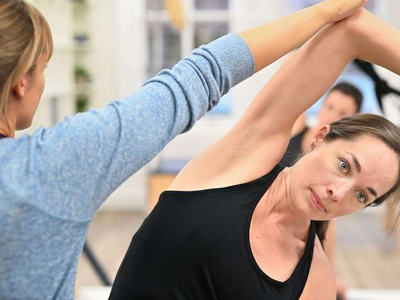
Episode 5: Multidirectional Instability of the Shoudler with Annabel Hawker
The second part of our three part series with Physiotherapist and Clinical Pilates instructor Annabel Hawker.
In this podcast, we chat with Annabel about one of her clinical interests, multidirectional instability of the shoulder. Within this podcast she sets out not only what this means, but how to look out for it and the rehab around it.
What Our Experts Say
It's important to remember that an unstable shoulder does not always need more tension or heavier strengthening. The shoulder first needs to learn how to organise and control movement. Pilates can support this by using feedback, carefully selected resistance and different positions to improve awareness of the shoulder blade, trunk and arm. The programme should be progressed gradually so the client develops confidence without repeatedly provoking a feeling of slipping or instability.
Key Takeaways
- Shoulder instability is not always caused by an injury – Multidirectional instability can develop without a major accident or dislocation and may be influenced by joint laxity, muscle control and the way the shoulder is used.
- Structural and movement-related instability are different – Some instability is linked to damage within the joint, while other cases are more closely related to how the muscles control the shoulder during movement.
- Symptoms can vary from person to person – Shoulder instability does not always involve a complete dislocation. It may present as pain, weakness, clicking or a feeling that the joint is slipping or moving more than it should.
- Rehabilitation should focus on control as well as strength – Simply making the shoulder muscles stronger may not be enough. Exercises should also improve coordination, awareness and control around the shoulder blade and joint.
- Progress needs to be individual and gradual – Rehabilitation should begin at a level the person can manage and progress according to their symptoms, movement quality and everyday or sporting goals.
Join the newsletter
Good news stories, exercise tips and short classes. One email a month.
FAQs
1. What is the difference between a shoulder dislocation and a subluxation?
A dislocation occurs when the upper-arm bone comes completely out of the shoulder socket. A subluxation is a partial displacement where the joint moves further than it should but does not come completely out. Both can contribute to ongoing feelings of instability.
2. Why does my shoulder click or clunk when I move it?
Clicking or clunking can occur for several reasons and does not always indicate a serious problem. However, when it is accompanied by pain, weakness, locking or a feeling that the shoulder is slipping, it may be associated with instability and is worth having assessed.
3. Can shoulder instability improve without surgery?
Yes. Many people are initially treated with physiotherapy and a progressive exercise programme designed to improve shoulder control, strength and movement. Surgery may be considered when there is structural damage, repeated dislocation or symptoms that do not improve with appropriate rehabilitation.
4. Can hypermobility cause shoulder instability?
Hypermobility can make the shoulder joint naturally looser and may increase the likelihood of excessive movement or subluxation. However, not everyone with hypermobile joints develops pain or instability. Symptoms often depend on how effectively the surrounding muscles control the joint.
5. When should I seek urgent help for an unstable shoulder?
Seek urgent medical help if your shoulder suddenly looks out of place, changes shape, becomes severely painful or you cannot move your arm after an injury. Do not try to put a dislocated shoulder back into place yourself.
Feeling Inspired?
If you want to experience the Complete difference and discover the benefits of one-to-one or small group Pilates, book a session at one of our London or Norfolk studios today. Not able to make it to one of our studios? We've got online options to suit you anywhere, anytime.
Our physiotherapist-led Chelsea Pilates studio, our Angel Pilates studio, our Pilates studio in London City, and our Norfolk Pilates studio in East Anglia, offer a highly tailored approach to your Pilates training. Whether your goal is to manage a health condition, rehabilitate from an injury or to improve your strength and fitness, Complete Pilates is the studio for you.
Education is Key
These blogs are designed to give information to everyone, however, it is important to remember that everyone is different! If you have not seen one of our therapists and have any questions about injuries, what you have read or whether this may be useful to you, please just ask. We are more than happy to help anyone and point you in the right direction. Our biggest belief is that education is key. The more you understand about your injury, illness and movement, the more you are likely to improve.
If you are not sure whether this is for you, simply get in touch. We are here to help!
Published 13 Oct 2020 · Updated 5 Aug 2026